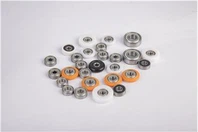
Pre-loading big ball bearings is a crucial process that significantly impacts their performance, longevity, and overall efficiency. As a reputable supplier of big ball bearings, I understand the importance of this procedure and am here to share valuable insights on how to pre-load these essential components effectively.
Understanding the Concept of Pre-loading
Before delving into the pre-loading process, it's essential to understand what pre-loading means in the context of big ball bearings. Pre-loading refers to the application of an axial load to a bearing before it is subjected to its normal operating loads. This initial load eliminates internal clearance within the bearing, ensuring that the balls are in constant contact with the raceways. By doing so, pre-loading enhances the bearing's stiffness, improves its rotational accuracy, reduces noise and vibration, and extends its service life.
Benefits of Pre-loading Big Ball Bearings
There are several benefits to pre-loading big ball bearings, making it a standard practice in many industrial applications. Some of the key advantages include:
- Improved Stiffness: Pre-loading eliminates internal clearance, which increases the bearing's stiffness. This is particularly important in applications where high precision and rigidity are required, such as machine tools, robotics, and aerospace equipment.
- Enhanced Rotational Accuracy: By eliminating clearance, pre-loading ensures that the bearing rotates smoothly and precisely. This results in improved positioning accuracy and reduced runout, which is crucial for applications that require high levels of precision, such as semiconductor manufacturing and medical equipment.
- Reduced Noise and Vibration: Pre-loading helps to reduce noise and vibration by minimizing the movement of the balls within the bearing. This is especially important in applications where quiet operation is essential, such as in electric motors, pumps, and fans.
- Extended Service Life: By reducing the internal clearance and ensuring constant contact between the balls and raceways, pre-loading helps to distribute the load more evenly across the bearing. This reduces wear and fatigue, extending the bearing's service life and reducing the need for frequent replacements.
Methods of Pre-loading Big Ball Bearings
There are several methods of pre-loading big ball bearings, each with its own advantages and disadvantages. The choice of pre-loading method depends on various factors, such as the application requirements, bearing type, and operating conditions. Some of the most common methods include:
- Spring Pre-loading: Spring pre-loading involves using a spring to apply a constant axial load to the bearing. This method is relatively simple and cost-effective, and it allows for easy adjustment of the pre-load. However, it may not be suitable for applications where high pre-loads are required, as the spring may not be able to provide sufficient force.
- Shim Pre-loading: Shim pre-loading involves using shims to adjust the axial position of the bearing and apply a pre-load. This method is commonly used in applications where a precise pre-load is required, as the shims can be accurately machined to the desired thickness. However, it requires careful measurement and installation, and it may not be suitable for applications where the pre-load needs to be adjusted frequently.
- Hydraulic Pre-loading: Hydraulic pre-loading involves using a hydraulic system to apply a pre-load to the bearing. This method allows for precise control of the pre-load and is suitable for applications where high pre-loads are required. However, it requires a complex hydraulic system and may be more expensive than other methods.
- Thermal Pre-loading: Thermal pre-loading involves heating or cooling the bearing to change its dimensions and apply a pre-load. This method is commonly used in applications where the pre-load needs to be adjusted based on the operating temperature. However, it requires careful control of the temperature and may not be suitable for applications where rapid temperature changes occur.
Step-by-Step Guide to Pre-loading Big Ball Bearings
Now that we have a better understanding of the concept of pre-loading and the different methods available, let's take a look at a step-by-step guide to pre-loading big ball bearings:
- Select the Appropriate Pre-loading Method: Based on the application requirements, bearing type, and operating conditions, choose the most suitable pre-loading method. Consider factors such as the required pre-load, precision, adjustability, and cost.
- Prepare the Bearing and Mounting Components: Clean the bearing and mounting components thoroughly to remove any dirt, debris, or contaminants. Inspect the components for any damage or defects and replace them if necessary.
- Install the Bearing: Install the bearing in the housing or shaft according to the manufacturer's instructions. Make sure that the bearing is properly aligned and seated, and that the mounting components are tightened to the recommended torque.
- Apply the Pre-load: Depending on the chosen pre-loading method, apply the pre-load to the bearing. If using a spring pre-loading method, install the spring and adjust its tension to the desired pre-load. If using a shim pre-loading method, insert the shims between the bearing and the mounting components and adjust their thickness to achieve the desired pre-load. If using a hydraulic pre-loading method, connect the hydraulic system and apply the pre-load according to the manufacturer's instructions.
- Verify the Pre-load: Use a suitable measuring instrument, such as a dial indicator or a load cell, to verify that the pre-load has been applied correctly. Make any necessary adjustments to the pre-load if the measured value is outside the specified range.
- Recheck the Alignment and Mounting: After applying the pre-load, recheck the alignment and mounting of the bearing to ensure that it is still properly seated and aligned. Make any necessary adjustments if required.
- Lubricate the Bearing: Apply a suitable lubricant to the bearing according to the manufacturer's recommendations. This will help to reduce friction and wear, and ensure smooth operation of the bearing.
Common Mistakes to Avoid
When pre-loading big ball bearings, it's important to avoid common mistakes that can lead to poor performance, premature failure, or even safety hazards. Some of the most common mistakes to avoid include:
- Overloading the Bearing: Applying too much pre-load can cause excessive stress on the bearing, leading to premature failure. Make sure to follow the manufacturer's recommendations for the maximum pre-load and avoid overloading the bearing.
- Underloading the Bearing: Applying too little pre-load can result in insufficient stiffness and rotational accuracy, leading to increased noise, vibration, and wear. Make sure to apply the correct pre-load to ensure optimal performance of the bearing.
- Incorrect Installation: Improper installation of the bearing or the pre-loading components can cause misalignment, uneven loading, and premature failure. Make sure to follow the manufacturer's instructions carefully and use the correct tools and techniques for installation.
- Neglecting Lubrication: Lubrication is essential for the proper functioning of big ball bearings. Neglecting to lubricate the bearing or using the wrong type of lubricant can cause increased friction, wear, and heat generation, leading to premature failure. Make sure to use a suitable lubricant and follow the manufacturer's recommendations for lubrication intervals and procedures.
- Failure to Monitor the Bearing: Regular monitoring of the bearing's performance is essential to detect any signs of wear, damage, or malfunction early on. Failure to monitor the bearing can result in unexpected downtime, costly repairs, and safety hazards. Make sure to establish a regular maintenance schedule and use suitable monitoring tools and techniques to ensure the long-term reliability of the bearing.
Conclusion
Pre-loading big ball bearings is a critical process that requires careful planning, precise execution, and regular monitoring. By understanding the concept of pre-loading, the different methods available, and the common mistakes to avoid, you can ensure that your big ball bearings are pre-loaded correctly and perform optimally in your application.
As a supplier of high-quality big ball bearings, we are committed to providing our customers with the best products and services. If you have any questions or need further assistance with pre-loading big ball bearings, please do not hesitate to contact us. We would be happy to help you select the right bearings for your application and provide you with expert advice on pre-loading and installation.


If you are interested in our Track Bearing Roller or other big ball bearings, please feel free to reach out to us for a detailed discussion about your specific requirements. We look forward to the opportunity to work with you and contribute to the success of your projects.
References
- Harris, T. A., & Kotzalas, M. N. (2007). Rolling Bearing Analysis. Wiley-Interscience.
- Palmgren, A. (1947). Ball and Roller Bearing Engineering. SKF Industries.
- Zaretsky, E. V. (2001). Ball and Roller Bearing Life Prediction. CRC Press.