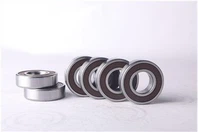
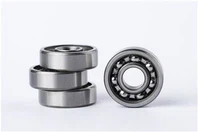
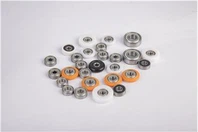
In the field of mechanical engineering, mini roller bearings play a crucial role in a wide range of applications, from precision instruments to small - scale machinery. As a supplier of Mini Roller Bearings, I understand the significance of ensuring the reliability of these components. This blog post aims to explore various strategies to enhance the reliability of mini roller bearings.
Material Selection
The choice of material is fundamental to the reliability of mini roller bearings. High - quality steel is a popular choice due to its excellent mechanical properties. For instance, chrome steel (such as AISI 52100) offers high hardness, good wear resistance, and high fatigue strength. These properties enable the bearings to withstand heavy loads and repeated stress cycles without significant deformation or failure.
Another option is stainless steel, which is particularly suitable for applications in corrosive environments. Stainless steel bearings, like those made from AISI 440C, resist rust and oxidation, ensuring long - term performance in wet or chemically active settings. For extreme - temperature applications, ceramics can be considered. Ceramic materials, such as silicon nitride (Si₃N₄), have low density, high hardness, and excellent thermal stability. They can operate at high speeds and temperatures, reducing the risk of thermal expansion - related failures.
Manufacturing Precision
Precision manufacturing is essential for reliable mini roller bearings. The dimensional accuracy of the bearing components, including the inner and outer races, rollers, and cages, directly affects the bearing's performance. Tight tolerances in diameter, roundness, and surface finish are required to ensure smooth operation and even load distribution.
Advanced manufacturing techniques, such as grinding and honing, are used to achieve the necessary precision. Computer - numerical - control (CNC) machining allows for highly accurate and repeatable production, minimizing variations between individual bearings. Additionally, strict quality control measures are implemented throughout the manufacturing process. Non - destructive testing methods, like ultrasonic testing and magnetic particle inspection, are used to detect internal defects in the bearing components. This helps to identify and remove any sub - standard parts before assembly, ensuring that only high - quality bearings reach the market.
Lubrication
Proper lubrication is vital for the reliability of mini roller bearings. Lubricants reduce friction between the moving parts, prevent wear, and dissipate heat. There are several types of lubricants available, including oils and greases.
Oil lubrication is suitable for high - speed applications. It provides better cooling and can carry away debris more effectively. The viscosity of the oil is an important factor. A lower - viscosity oil is preferred for high - speed bearings, as it reduces drag and power consumption. However, it must still have sufficient film strength to separate the contacting surfaces.
Grease lubrication is more commonly used in mini roller bearings due to its simplicity and long - lasting properties. Greases are composed of a base oil, a thickener, and additives. The choice of grease depends on factors such as operating temperature, load, and speed. For example, lithium - based greases are widely used because they offer good mechanical stability and oxidation resistance over a wide temperature range.
Regular lubricant replenishment and monitoring are necessary to maintain optimal performance. Over time, lubricants can degrade due to oxidation, contamination, and mechanical shear. Inspecting the lubricant condition and replacing it at appropriate intervals can prevent premature bearing failure.
Installation and Alignment
Correct installation and alignment are critical for the reliability of mini roller bearings. Improper installation can cause damage to the bearing components, such as nicks, scratches, or misalignment. When installing mini roller bearings, it is important to use the correct tools and follow the manufacturer's guidelines.
Press - fitting is a common installation method, where the bearing is pressed onto the shaft or into the housing using a hydraulic press or a mechanical press. Care must be taken to ensure that the force is applied evenly to avoid damaging the bearing. Thermal expansion can also be used for installation in some cases, where the bearing is heated to expand it slightly before being placed on the shaft.
Alignment of the bearing is equally important. Misaligned bearings can cause uneven load distribution, increased friction, and premature wear. Shaft and housing alignment should be checked and adjusted during installation. Laser alignment tools can be used to achieve high - precision alignment, especially in applications where the bearing operates at high speeds or under heavy loads.


Environmental Protection
Mini roller bearings are often exposed to various environmental factors that can affect their reliability. Dust, dirt, moisture, and chemicals can contaminate the bearings and cause wear, corrosion, or lubricant degradation.
Sealing is an effective way to protect the bearings from environmental contaminants. There are different types of seals available, such as rubber seals and metal shields. Rubber seals provide a tight barrier against dust and moisture, while metal shields offer some protection while allowing for better ventilation.
In harsh environments, additional protective measures may be required. For example, in dusty industrial settings, bearing housings can be designed with dust - proof covers or filters. In wet environments, coatings can be applied to the bearing surfaces to enhance corrosion resistance.
Monitoring and Maintenance
Regular monitoring and maintenance are essential for ensuring the long - term reliability of mini roller bearings. Condition - monitoring techniques can be used to detect early signs of bearing problems. Vibration analysis is a widely used method. By measuring the vibration levels and frequencies of the bearing, it is possible to identify issues such as unbalance, misalignment, or wear.
Temperature monitoring is another important aspect. An increase in bearing temperature can indicate excessive friction, lubricant degradation, or other problems. Infrared thermometers or temperature sensors can be used to monitor the bearing temperature during operation.
Based on the monitoring results, appropriate maintenance actions can be taken. This may include lubricant replacement, bearing cleaning, or alignment adjustment. Scheduled maintenance intervals should be established based on the bearing's operating conditions and manufacturer's recommendations.
Case Studies
Let's take a look at some real - world examples to illustrate the importance of these reliability - improvement strategies. In a precision medical device, 608 Roller Bearing are used to ensure smooth and accurate movement. By using high - quality chrome steel, precise manufacturing, and proper lubrication, these bearings have achieved a long service life and high reliability, meeting the strict requirements of the medical industry.
In a semiconductor manufacturing equipment, Micro Roller Bearings are exposed to high - speed rotation and a cleanroom environment. The use of ceramic materials and advanced sealing technologies has enabled these bearings to operate reliably under extreme conditions, minimizing the risk of contamination and failure.
Conclusion
Improving the reliability of mini roller bearings requires a comprehensive approach that encompasses material selection, manufacturing precision, lubrication, installation, environmental protection, and monitoring. By implementing these strategies, we can ensure that our mini roller bearings provide long - lasting and consistent performance in a variety of applications.
As a supplier of mini roller bearings, we are committed to providing high - quality products and technical support. If you are interested in our products or have any questions regarding the reliability of mini roller bearings, we encourage you to contact us for further discussion and potential procurement opportunities.
References
- Harris, T. A., & Kotzalas, M. N. (2007). Rolling Bearing Analysis. Wiley.
- Khonsari, M. M., & Booser, E. R. (2001). Applied Tribology: Bearing Design and Lubrication. Wiley.
- SKF. (2019). Rolling Bearing Handbook. SKF Group.