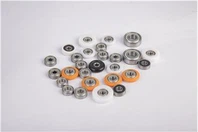
As a reliable supplier of Bearing 6200, I've encountered numerous inquiries regarding the heat dissipation of this particular bearing. In industrial applications, efficient heat dissipation is crucial for the optimal performance and extended lifespan of bearings. Bearing 6200, a commonly used deep groove ball bearing, often operates under various loads and speeds, which can generate significant heat. In this blog, I'll share some effective ways to improve the heat dissipation of Bearing 6200 based on my experience and industry knowledge.
Understanding the Heat Generation Mechanism of Bearing 6200
Before delving into the heat dissipation methods, it's essential to understand how heat is generated in Bearing 6200. There are mainly three factors contributing to heat generation:
- Friction: When the bearing is in operation, friction occurs between the rolling elements (balls) and the raceways, as well as between the cage and the rolling elements. This friction converts mechanical energy into heat energy, leading to an increase in temperature.
- Load: High loads can cause deformation of the rolling elements and raceways, increasing the contact area and friction. As a result, more heat is generated.
- Speed: The faster the bearing rotates, the more kinetic energy it has. The conversion of this kinetic energy into heat through friction also increases with speed.
Improving Heat Dissipation from the Lubrication Aspect
Lubrication plays a vital role in reducing friction and heat generation in bearings. Here are some lubrication - related measures to improve heat dissipation:
- Select the Right Lubricant:
- Different lubricants have different thermal properties. For Bearing 6200, high - quality lubricants with good thermal conductivity and low viscosity at high temperatures are preferred. Grease lubrication is commonly used for Bearing 6200. Lithium - based greases are a popular choice as they offer good lubrication performance and heat resistance. For applications with high - speed and light - load conditions, synthetic greases can be considered, as they have better thermal stability and lower friction coefficients.
- Regularly check the lubricant condition. Over time, lubricants can degrade due to oxidation, contamination, and mechanical shear. Degraded lubricants lose their lubricating properties and can cause increased friction and heat generation. Replace the lubricant at the recommended intervals to ensure optimal performance.
- Proper Lubrication Quantity:
- Applying the right amount of lubricant is crucial. Too little lubricant may not provide sufficient protection, leading to increased friction and heat. On the other hand, too much lubricant can cause churning losses, where the excess lubricant is stirred by the rotating elements, generating additional heat. Refer to the bearing manufacturer's guidelines to determine the appropriate lubrication quantity for Bearing 6200 based on the operating conditions.
Optimizing the Bearing Installation and Operating Environment
The installation and operating environment of Bearing 6200 also have a significant impact on its heat dissipation.


- Correct Installation:
- Ensure proper alignment during installation. Misalignment can cause uneven loading on the bearing, increasing friction and heat generation. Use alignment tools to accurately align the shaft and housing.
- The fitting of the bearing on the shaft and in the housing should be appropriate. An interference fit that is too tight can cause excessive pre - load, increasing the contact stress and heat. Conversely, a loose fit can lead to relative movement between the bearing and the shaft or housing, resulting in wear and heat. Follow the manufacturer's specifications for the fitting tolerance.
- Enhance the Cooling Environment:
- Increase the ventilation around the bearing. If the bearing is installed in an enclosed space, consider adding ventilation holes or fans to improve air circulation. The flowing air can carry away the heat generated by the bearing, reducing its temperature.
- For applications with high - heat generation, cooling systems such as water - cooling jackets can be used. A water - cooling jacket is installed around the bearing housing, and cool water is circulated through the jacket to absorb and carry away the heat.
Bearing Design and Material Selection
The design and material of the bearing itself can also influence heat dissipation.
- Bearing Design:
- Some advanced bearing designs are optimized for heat dissipation. For example, bearings with larger internal clearances can allow better lubricant flow, which helps to carry away heat. Additionally, bearings with improved cage designs can reduce friction and heat generation. Cages made of materials with low friction coefficients, such as engineered plastics, can reduce the interaction between the cage and the rolling elements, thereby reducing heat.
- Material Selection:
- The choice of bearing materials can affect heat dissipation. Bearings made of materials with good thermal conductivity can transfer heat more efficiently. For example, some high - performance bearing steels have better thermal conductivity than traditional steels, which can help to dissipate heat from the bearing more quickly.
Monitoring and Maintenance
Regular monitoring and maintenance are essential to ensure the long - term efficient heat dissipation of Bearing 6200.
- Temperature Monitoring:
- Install temperature sensors near the bearing to continuously monitor its temperature. By setting up temperature alarms, any abnormal temperature rise can be detected in a timely manner. This allows for proactive measures to be taken before the bearing is damaged due to overheating.
- Vibration Monitoring:
- Vibration analysis can also provide insights into the bearing's operating condition. Excessive vibration may indicate problems such as misalignment, worn - out rolling elements, or degraded lubrication, all of which can contribute to increased heat generation. Regularly perform vibration monitoring and analyze the data to detect and address potential issues early.
Related Products and Resources
If you are interested in other small - size bearings, you can check out our Small Bearings page. Another popular small - size bearing in our product line is the Bearing 6001ZZ. And of course, for more information about Bearing 6200, visit our Bearing 6200 page.
Conclusion
Improving the heat dissipation of Bearing 6200 requires a comprehensive approach, considering factors such as lubrication, installation, operating environment, bearing design, and maintenance. By implementing the above - mentioned measures, the heat generation of the bearing can be effectively reduced, and its performance and service life can be significantly improved.
If you are looking for high - quality Bearing 6200 or need more advice on bearing heat dissipation, please feel free to contact us for procurement and further discussion. We are committed to providing you with the best solutions for your bearing needs.
References
- Harris, T. A., & Kotzalas, M. N. (2007). Rolling Bearing Analysis. Wiley.
- Zaretsky, E. V. (2010). Ball and Roller Bearing Engineering. CRC Press.
- Gupta, P. K. (2002). Fundamental of Rolling Bearing Technology. Taylor & Francis.