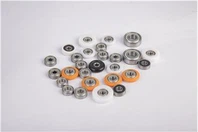
As a supplier of Bearing 6200, I understand the critical role that bearings play in various mechanical systems. The fatigue life of a bearing is a key factor that determines its performance and reliability over time. In this blog post, I will share some effective strategies to improve the fatigue life of Bearing 6200 based on my experience in the industry.
Understanding Bearing Fatigue
Before delving into the methods of improving fatigue life, it's essential to understand what bearing fatigue is. Fatigue in bearings occurs due to repeated loading and unloading cycles. When a bearing is in operation, the rolling elements and raceways experience cyclic stress. Over time, these stresses can lead to the formation of cracks on the surface or subsurface of the bearing components. As these cracks propagate, they can cause spalling, which is the flaking off of small pieces of material from the bearing surface. Eventually, spalling can lead to bearing failure, resulting in costly downtime and potential damage to the entire mechanical system.
Selecting High - Quality Materials
The choice of material is fundamental in determining the fatigue life of Bearing 6200. High - quality bearing steels, such as chromium steel (e.g., AISI 52100), are commonly used for manufacturing bearings. These steels have excellent hardness, toughness, and wear resistance properties. The high carbon content in AISI 52100 steel allows it to be heat - treated to achieve a hard surface layer while maintaining a tough core. This combination of hardness and toughness helps the bearing withstand high contact stresses and resist crack propagation.
When sourcing materials for Bearing 6200, we ensure that our suppliers meet strict quality standards. We conduct thorough material testing, including chemical analysis, hardness testing, and microstructure examination, to verify the quality of the steel. By using high - quality materials, we can significantly enhance the fatigue resistance of our bearings.
Precision Manufacturing Processes
Precision manufacturing is another crucial aspect of improving the fatigue life of Bearing 6200. The manufacturing process must ensure accurate dimensions, smooth surfaces, and proper geometric tolerances. Any deviation from the design specifications can lead to uneven loading on the bearing, which increases the stress concentration and accelerates fatigue failure.
In our manufacturing facilities, we use advanced machining techniques, such as grinding and honing, to achieve high - precision surfaces. Grinding is used to obtain the required surface finish and dimensional accuracy of the raceways and rolling elements. Honing further improves the surface texture, reducing friction and wear. Additionally, we employ strict quality control measures at every stage of the manufacturing process. This includes in - process inspections using coordinate measuring machines (CMM) to verify the dimensions and geometric tolerances of the bearing components.
Appropriate Lubrication
Lubrication is vital for reducing friction and wear in bearings, which in turn improves their fatigue life. A proper lubricant forms a thin film between the rolling elements and raceways, separating them and preventing direct metal - to - metal contact. This film also helps to dissipate heat generated during operation and protects the bearing surfaces from corrosion.
For Bearing 6200, we recommend using high - quality lubricants that are specifically formulated for bearing applications. The choice of lubricant depends on various factors, such as operating temperature, speed, and load. For example, in high - speed applications, a low - viscosity lubricant may be preferred to reduce friction and power consumption. In high - temperature environments, a lubricant with good thermal stability is necessary.
Regular lubricant maintenance is also essential. Over time, lubricants can degrade due to oxidation, contamination, and mechanical shear. Therefore, it's important to monitor the lubricant condition and replace it at the recommended intervals. We provide detailed lubrication guidelines to our customers to ensure the proper use and maintenance of our bearings.
Optimal Installation and Alignment
Proper installation and alignment are critical for the long - term performance of Bearing 6200. Incorrect installation can cause excessive stress on the bearing, leading to premature fatigue failure. When installing the bearing, it's important to use the correct tools and follow the recommended installation procedures.
Alignment of the bearing is equally important. Misalignment can cause uneven loading on the bearing, increasing the stress concentration and reducing the fatigue life. In some applications, flexible couplings or alignment devices can be used to compensate for minor misalignments. We offer installation and alignment training to our customers to ensure that our bearings are installed and aligned correctly.
Load Management
Managing the load on Bearing 6200 is essential for improving its fatigue life. Excessive loads can significantly reduce the bearing's fatigue resistance. Therefore, it's important to select the appropriate bearing size and type based on the application requirements.
In some cases, it may be necessary to use multiple bearings in a system to distribute the load more evenly. For example, in high - load applications, using a double - row bearing or a combination of bearings can help reduce the stress on each individual bearing. Additionally, monitoring the load during operation can provide valuable information about the bearing's performance. If the load exceeds the design limits, appropriate measures, such as reducing the load or upgrading the bearing, should be taken.
Regular Inspection and Monitoring
Regular inspection and monitoring of Bearing 6200 can help detect early signs of fatigue and prevent catastrophic failure. Visual inspection can reveal surface damage, such as spalling or corrosion. Non - destructive testing methods, such as ultrasonic testing and magnetic particle inspection, can be used to detect subsurface cracks.
In addition to visual and non - destructive testing, condition monitoring techniques, such as vibration analysis and temperature monitoring, can provide real - time information about the bearing's condition. Vibration analysis can detect abnormal vibrations caused by bearing defects, such as worn rolling elements or misalignment. Temperature monitoring can indicate excessive friction or overloading in the bearing. By regularly inspecting and monitoring the bearing, we can take proactive measures to address any issues before they lead to failure.
Conclusion
Improving the fatigue life of Bearing 6200 requires a comprehensive approach that includes selecting high - quality materials, precision manufacturing, appropriate lubrication, optimal installation and alignment, load management, and regular inspection and monitoring. As a supplier of Bearing 6200, we are committed to providing our customers with high - quality bearings and technical support to ensure their long - term performance.


If you are interested in purchasing Bearing 6200 or need more information about improving bearing fatigue life, please feel free to contact us. We are ready to discuss your specific requirements and provide you with the best solutions. You can explore our product range further by visiting our links: Small Bearings, Bearing 6200, and Bearing 6001ZZ.
References
- Harris, T. A., & Kotzalas, M. N. (2007). Rolling Bearing Analysis. Wiley.
- SKF. (2010). Rolling Bearing Handbook. SKF Group.
- ISO 281:2007. Rolling bearings - Dynamic load ratings and rating life. International Organization for Standardization.