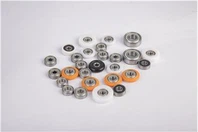
As a supplier of Bearing 6203llu, I understand the critical importance of detecting early - stage damage in these bearings. Early detection can prevent costly breakdowns, extend the lifespan of machinery, and ensure smooth operations in various industrial applications. In this blog, I will share some effective methods for detecting early - stage damage of Bearing 6203llu.
1. Vibration Analysis
Vibration analysis is one of the most widely used techniques for detecting bearing damage. Bearings in good condition produce relatively regular and low - level vibrations. However, when damage occurs, such as pitting, spalling, or cracking on the raceways or rolling elements, the vibration pattern changes significantly.
To perform vibration analysis, we can use a vibration sensor or accelerometer. These sensors are typically attached to the bearing housing or the machine structure near the bearing. The sensor measures the vibration signals in different directions (radial, axial, and tangential) and converts them into electrical signals.
The collected vibration data is then analyzed using specialized software. The software can calculate various vibration parameters, such as amplitude, frequency, and phase. By comparing the current vibration data with the baseline data of a healthy bearing, we can detect any abnormal vibrations that may indicate early - stage damage.
For example, an increase in the vibration amplitude at specific frequencies can be a sign of damage. The characteristic frequencies associated with bearing damage depend on the bearing geometry, rotational speed, and the type of damage. For Bearing 6203llu, the frequencies corresponding to inner - race, outer - race, and rolling - element damage can be calculated using specific formulas.
2. Temperature Monitoring
Temperature is another important indicator of bearing health. A healthy bearing operates at a relatively stable temperature. However, when damage occurs, the friction between the rolling elements and the raceways increases, which leads to an increase in temperature.
We can use temperature sensors, such as thermocouples or infrared thermometers, to monitor the temperature of Bearing 6203llu. Thermocouples are usually installed in the bearing housing or on the bearing itself. They provide continuous temperature measurements and can be connected to a monitoring system for real - time data analysis.
Infrared thermometers, on the other hand, are non - contact temperature measurement devices. They can be used to quickly measure the surface temperature of the bearing from a distance. This is particularly useful for bearings in hard - to - reach locations or in high - speed applications.
If the temperature of the bearing exceeds the normal operating range, it may indicate early - stage damage. However, it is important to note that other factors, such as lubrication issues, excessive load, or high ambient temperature, can also cause an increase in bearing temperature. Therefore, temperature monitoring should be combined with other detection methods for more accurate results.
3. Lubrication Analysis
Proper lubrication is essential for the smooth operation of bearings. Lubricants reduce friction, prevent wear, and dissipate heat. However, over time, the lubricant can degrade, become contaminated, or lose its effectiveness, which can lead to bearing damage.
Lubrication analysis involves collecting a sample of the lubricant from the bearing and analyzing its properties. The analysis can include tests for viscosity, acidity, water content, and the presence of contaminants.
A change in the lubricant's viscosity can indicate degradation or contamination. For example, if the viscosity of the lubricant decreases, it may mean that the lubricant has been diluted by water or other substances. An increase in acidity can be a sign of oxidation, which can cause corrosion and wear on the bearing surfaces.
Contaminants in the lubricant, such as metal particles, dirt, or debris, can also be detected through lubrication analysis. These contaminants can cause abrasive wear on the bearing raceways and rolling elements. By regularly analyzing the lubricant, we can detect early signs of lubrication problems and take appropriate measures to prevent bearing damage.
4. Acoustic Emission Monitoring
Acoustic emission (AE) monitoring is a sensitive technique for detecting early - stage damage in bearings. When a bearing is damaged, the microscopic cracks and deformations on the bearing surfaces generate elastic waves, which are known as acoustic emissions.
AE sensors are used to detect these acoustic emissions. These sensors are usually mounted on the bearing housing or the machine structure near the bearing. The sensors convert the acoustic emissions into electrical signals, which are then amplified and analyzed.
The advantage of AE monitoring is that it can detect damage at a very early stage, even before it can be detected by vibration analysis or temperature monitoring. AE signals are sensitive to the initiation and propagation of cracks in the bearing material. By analyzing the AE signals, we can determine the location and severity of the damage.
5. Visual Inspection
Although it may seem simple, visual inspection is still an important method for detecting early - stage damage in bearings. A visual inspection can be performed during routine maintenance or when the bearing is disassembled for repair.
During a visual inspection, we should look for signs of wear, such as scratches, pitting, or spalling on the bearing raceways and rolling elements. We should also check the condition of the bearing cage, which holds the rolling elements in place. A damaged or deformed cage can cause the rolling elements to move out of position, leading to uneven loading and premature failure.
In addition, we should check the lubrication condition of the bearing. If the lubricant is dirty, dry, or has a strange odor, it may indicate a lubrication problem. Visual inspection can also reveal any signs of corrosion or contamination on the bearing surfaces.
As a supplier of Bearing 6203llu, I recommend that our customers regularly monitor the condition of their bearings using these methods. By detecting early - stage damage, you can avoid costly breakdowns and ensure the reliable operation of your machinery.


If you are interested in purchasing Bearing 6203llu or need more information about bearing maintenance and damage detection, please feel free to contact us for a detailed discussion. We also offer 20mm Roller Bearing and Small Rollers with Bearings for various applications.
References
- Harris, T. A., & Kotzalas, M. N. (2007). Rolling Bearing Analysis. Wiley.
- Townsend, D. P. (1992). Basic Concepts of Rolling Element Bearings. CRC Press.
- Eschmann, P., Hasbargen, D., & Weigand, H. (1985). Rolling Bearings: Theory, Design, and Application. John Wiley & Sons.