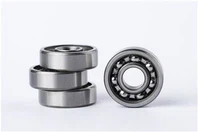
Selecting the right big ball bearings for your equipment is a critical decision that can significantly impact the performance, efficiency, and longevity of your machinery. As a seasoned big ball bearings supplier, I've witnessed firsthand the importance of making informed choices in this regard. In this blog, I'll share valuable insights and practical tips to help you navigate the process of choosing the perfect big ball bearings for your specific needs.
Understanding Big Ball Bearings
Big ball bearings are designed to handle high radial and axial loads while maintaining smooth operation. They consist of an outer ring, an inner ring, a set of balls, and a cage that separates and guides the balls. These components work together to reduce friction and support the rotation of shafts or other moving parts in various industrial applications.


The size of big ball bearings can vary significantly, with diameters ranging from a few inches to several feet. The choice of bearing size depends on factors such as the load capacity, speed requirements, and available space in your equipment. Additionally, big ball bearings come in different types, including deep groove ball bearings, angular contact ball bearings, and self-aligning ball bearings, each with its own unique characteristics and applications.
Factors to Consider When Choosing Big Ball Bearings
Load Capacity
One of the most important factors to consider when selecting big ball bearings is the load capacity. The bearing must be able to support the weight and forces exerted on it during operation without experiencing excessive wear or failure. To determine the required load capacity, you need to consider both the static and dynamic loads acting on the bearing.
Static load refers to the weight or force applied to the bearing when it is stationary, while dynamic load refers to the forces generated during operation, such as vibration, shock, and acceleration. It's essential to choose a bearing with a load capacity that exceeds the maximum expected load to ensure reliable performance and prevent premature failure.
Speed Requirements
Another crucial factor is the speed at which the bearing will operate. High-speed applications require bearings that can withstand the centrifugal forces and heat generated by rapid rotation. The speed rating of a bearing is typically specified by the manufacturer and indicates the maximum rotational speed at which the bearing can operate safely.
When selecting big ball bearings for high-speed applications, it's important to choose a bearing with a high speed rating and proper lubrication to minimize friction and heat generation. Additionally, you may need to consider the use of special materials or coatings to improve the bearing's performance at high speeds.
Lubrication
Proper lubrication is essential for the smooth operation and longevity of big ball bearings. Lubrication helps to reduce friction, prevent wear, and dissipate heat generated during operation. There are several types of lubricants available, including grease, oil, and solid lubricants, each with its own advantages and disadvantages.
The choice of lubricant depends on factors such as the operating conditions, speed, load, and temperature. Grease is the most commonly used lubricant for big ball bearings due to its ease of application, long service life, and ability to seal out contaminants. However, oil lubrication may be preferred for high-speed or high-temperature applications where better heat dissipation is required.
Environmental Conditions
The environmental conditions in which the bearing will operate can also have a significant impact on its performance and lifespan. Factors such as temperature, humidity, dust, and chemicals can affect the lubrication, corrosion resistance, and mechanical properties of the bearing.
For applications in harsh environments, it's important to choose big ball bearings that are designed to withstand the specific conditions. This may include bearings with special coatings or seals to protect against corrosion, dust, and moisture. Additionally, you may need to consider the use of lubricants that are resistant to chemicals or high temperatures.
Mounting and Alignment
Proper mounting and alignment are crucial for the optimal performance of big ball bearings. Incorrect mounting can cause excessive stress, vibration, and premature wear, while misalignment can lead to uneven loading and reduced bearing life.
When mounting big ball bearings, it's important to follow the manufacturer's instructions carefully and use the appropriate tools and techniques. This may include using a press fit, heating the bearing, or using a hydraulic nut to ensure a proper fit. Additionally, you need to ensure that the bearing is properly aligned with the shaft and housing to prevent misalignment.
Types of Big Ball Bearings
Deep Groove Ball Bearings
Deep groove ball bearings are the most commonly used type of big ball bearings. They are designed to handle both radial and axial loads and are suitable for a wide range of applications, including electric motors, pumps, and conveyors. Deep groove ball bearings have a simple design and are relatively easy to install and maintain.
Angular Contact Ball Bearings
Angular contact ball bearings are designed to handle both radial and axial loads in a single direction. They have a contact angle between the balls and the raceways, which allows them to support higher axial loads than deep groove ball bearings. Angular contact ball bearings are commonly used in applications such as machine tools, automotive transmissions, and aerospace equipment.
Self-Aligning Ball Bearings
Self-aligning ball bearings are designed to accommodate misalignment between the shaft and housing. They have a spherical outer ring raceway that allows the inner ring and balls to align themselves automatically, reducing the stress and wear caused by misalignment. Self-aligning ball bearings are commonly used in applications where shaft deflection or misalignment is likely to occur, such as conveyor systems and agricultural machinery.
Finding the Right Big Ball Bearings Supplier
Choosing the right big ball bearings supplier is just as important as choosing the right bearings. A reliable supplier can provide you with high-quality bearings, technical support, and timely delivery. Here are some tips to help you find the right supplier:
- Experience and Reputation: Look for a supplier with a proven track record in the industry and a good reputation for quality and customer service.
- Product Range: Choose a supplier that offers a wide range of big ball bearings to meet your specific needs. This may include different sizes, types, and materials.
- Technical Support: A good supplier should be able to provide you with technical support and advice on bearing selection, installation, and maintenance.
- Quality Assurance: Make sure the supplier has a quality assurance program in place to ensure that the bearings meet the highest standards of quality and performance.
- Price and Delivery: Compare prices and delivery times from different suppliers to find the best value for your money.
Conclusion
Choosing the right big ball bearings for your equipment is a complex decision that requires careful consideration of several factors. By understanding the load capacity, speed requirements, lubrication, environmental conditions, and mounting and alignment requirements, you can select the bearings that are best suited for your specific needs.
As a big ball bearings supplier, I'm committed to providing my customers with high-quality bearings, technical support, and exceptional customer service. If you have any questions or need assistance with bearing selection, please don't hesitate to contact me. I'll be happy to help you find the perfect big ball bearings for your equipment and ensure that your machinery operates at its best.
If you're interested in our Track Bearing Roller, feel free to reach out to discuss your specific requirements. We're eager to engage in procurement discussions and find the best solutions for your business.
References
- Harris, T. A., & Kotzalas, M. N. (2007). Rolling Bearing Analysis. Wiley.
- Jones, A. R. (1992). Ball and Roller Bearing Engineering. McGraw-Hill.
- SKF Bearing Handbook. (2010). SKF Group.