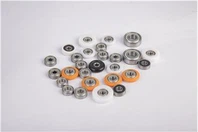
When it comes to high - load applications, selecting the right small bearings is crucial for the smooth operation and longevity of machinery. As a reliable Small Bearings supplier, I understand the challenges that engineers and maintenance professionals face in making this critical decision. In this blog, I will share some key factors to consider when choosing small bearings for high - load applications.
Load Capacity
The first and most important factor is the load capacity of the bearing. High - load applications require bearings that can withstand significant radial, axial, or combined loads. The load capacity of a bearing is determined by its size, design, and the materials used in its construction.
For example, deep - groove ball bearings are a popular choice for many high - load applications. They can handle both radial and axial loads to a certain extent. Bearing 6001ZZ is a small - sized deep - groove ball bearing with a double - shielded design. The shields help to keep contaminants out and retain lubricant, which is essential for high - load applications where the bearing may be subject to harsh operating conditions. It has a relatively high radial load capacity for its size, making it suitable for various high - load scenarios such as small motors and precision instruments.
Another option is the Bearing 6200. This is also a deep - groove ball bearing, but it is slightly larger than the 6001ZZ. With a larger size, it generally has a higher load capacity. It can be used in applications where the load is more substantial, such as in small pumps or conveyor systems.
Speed Rating
In high - load applications, the speed at which the bearing operates is also a significant consideration. High - speed operation can generate heat, which can reduce the bearing's load - carrying capacity and shorten its lifespan. Therefore, it is essential to choose a bearing with a speed rating that matches the operating speed of the application.
The speed rating of a bearing is influenced by factors such as the bearing's design, internal clearance, and the type of lubricant used. For high - load, high - speed applications, bearings with a high - quality lubricant and a design that allows for efficient heat dissipation are preferred. For instance, some small bearings are designed with special internal geometries that reduce friction and heat generation, enabling them to operate at higher speeds while still maintaining their load - carrying capacity.
Lubrication
Proper lubrication is vital for small bearings in high - load applications. Lubrication reduces friction between the bearing components, dissipates heat, and protects the bearing from wear and corrosion. There are different types of lubricants available, including grease and oil.
Grease lubrication is commonly used in small bearings due to its simplicity and ability to retain lubricant within the bearing. It is suitable for applications with moderate speeds and loads. However, for high - speed or high - temperature high - load applications, oil lubrication may be a better choice. Oil lubrication provides better heat dissipation and can handle higher speeds.
As a Small Bearings supplier, I can offer a range of bearings pre - lubricated with high - quality greases or provide guidance on the appropriate oil lubrication systems for different applications.
Tolerance and Precision
In high - load applications, the tolerance and precision of the bearing can have a significant impact on its performance. Bearings with tight tolerances ensure accurate alignment and reduce vibration, which is crucial for high - load machinery. Precision bearings are designed to meet strict manufacturing standards, resulting in better performance and longer service life.
For example, in some high - precision, high - load applications such as aerospace or medical equipment, bearings with extremely tight tolerances are required. These bearings are manufactured with high - precision machining techniques and undergo strict quality control to ensure they meet the exacting requirements of the application.
Material Selection
The material used in the construction of the bearing is another important factor. The most common material for small bearings is chrome steel, which offers good hardness, wear resistance, and fatigue strength. However, for high - load applications in harsh environments, other materials such as stainless steel or ceramic may be more suitable.
Stainless steel bearings are resistant to corrosion, making them ideal for applications where the bearing may be exposed to moisture, chemicals, or other corrosive substances. Ceramic bearings, on the other hand, have several advantages in high - load applications. They are lighter, harder, and have a lower coefficient of friction compared to steel bearings. This results in reduced heat generation and improved performance, especially at high speeds and under heavy loads.
Mounting and Alignment
Proper mounting and alignment of small bearings are essential for their performance in high - load applications. Incorrect mounting can lead to uneven loading, increased friction, and premature bearing failure. It is important to follow the manufacturer's guidelines when mounting the bearing, including using the correct tools and techniques.
Alignment is also crucial. Misaligned bearings can cause excessive wear on the bearing components and reduce its load - carrying capacity. In some high - load applications, special alignment tools and techniques may be required to ensure the bearing is properly aligned within the machinery.
Environmental Factors
The operating environment of the bearing is an important consideration. High - load applications may be subject to various environmental factors such as temperature, humidity, dust, and vibration.
In high - temperature environments, bearings need to be able to withstand the heat without losing their mechanical properties. Special high - temperature lubricants and materials may be required. In dusty or dirty environments, bearings with effective sealing are necessary to prevent contaminants from entering the bearing and causing damage.
As a Small Bearings supplier, I have a wide range of products designed to meet the needs of different environmental conditions. Whether it's a high - temperature industrial furnace or a dusty mining operation, I can provide the appropriate small bearings.
Cost - Effectiveness
While it is important to choose high - quality small bearings for high - load applications, cost - effectiveness is also a consideration. It is necessary to balance the performance requirements of the application with the cost of the bearing.


As a supplier, I understand the importance of providing cost - effective solutions. I offer a range of small bearings at different price points, allowing customers to choose the bearing that best meets their needs and budget. By working closely with customers, I can help them select the most suitable bearing for their high - load application without overspending.
In conclusion, choosing the right small bearings for high - load applications requires careful consideration of multiple factors, including load capacity, speed rating, lubrication, tolerance, material selection, mounting, environmental factors, and cost - effectiveness. As a Small Bearings supplier, I am committed to providing high - quality bearings and expert advice to help you make the best choice for your specific application. If you are in need of small bearings for a high - load application, please feel free to contact me for more information and to discuss your procurement requirements.
References
- Harris, T. A., & Kotzalas, M. N. (2007). Rolling Bearing Analysis. John Wiley & Sons.
- SKF Rolling Bearing Handbook (2010). SKF Group.
- Timken Engineering Handbook (2015). The Timken Company.