How often should I lubricate Bearing 6305?
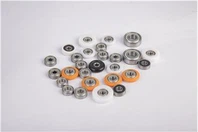
As a supplier of Bearing 6305, I understand that proper lubrication is crucial for the optimal performance and longevity of these bearings. Bearing 6305 is a widely used deep - groove ball bearing in various industrial applications, and the frequency of lubrication can significantly impact its functionality.
Understanding the Role of Lubrication in Bearing 6305
Lubrication in Bearing 6305 serves multiple important purposes. Firstly, it reduces friction between the rolling elements (balls) and the raceways. Friction can generate heat, which not only accelerates wear and tear but also can lead to premature failure of the bearing. By providing a thin film between the contact surfaces, lubrication minimizes this frictional force.
Secondly, lubrication helps to prevent corrosion. The metal components of Bearing 6305 are susceptible to rust and corrosion, especially in environments with high humidity or the presence of corrosive substances. A good lubricant acts as a protective barrier, shielding the bearing from these harmful elements.
Finally, lubrication can also serve as a medium to carry away contaminants. In industrial settings, dust, dirt, and small particles can find their way into the bearing. The lubricant can trap these contaminants and carry them out of the critical contact areas, reducing the risk of abrasive wear.
Factors Affecting the Lubrication Frequency of Bearing 6305
Several factors influence how often Bearing 6305 should be lubricated.
-
Operating Speed
The rotational speed of the bearing is a major determinant. Higher speeds generate more heat and friction. For Bearing 6305 operating at high speeds, the lubricant may degrade more quickly due to the increased shear forces and heat. As a general rule, bearings running at speeds above 3000 RPM may require more frequent lubrication compared to those operating at lower speeds. For example, in a high - speed electric motor application where Bearing 6305 is used, lubrication might be needed every few hundred hours of operation. -
Load
The load applied to the bearing also affects lubrication frequency. Heavy loads increase the pressure on the rolling elements and the raceways, which can squeeze out the lubricant film. If Bearing 6305 is subjected to heavy radial or axial loads, the lubricant may need to be replenished more often. In a machinery application where the bearing is supporting a large mass, such as in a conveyor system, the lubrication interval may be shorter than in a light - load application like a small fan. -
Operating Environment
The environment in which Bearing 6305 operates plays a significant role. In dirty or dusty environments, contaminants can quickly enter the bearing and contaminate the lubricant. This may require more frequent lubrication to ensure that a clean and effective lubricant film is maintained. For instance, in a mining or construction site, where there is a high concentration of dust, the lubrication interval could be reduced to a few dozen hours. On the other hand, in a clean, climate - controlled environment like a laboratory, the lubrication frequency can be much lower. -
Lubricant Type
Different types of lubricants have different service lives. Grease is a commonly used lubricant for Bearing 6305. The quality and type of grease can vary, with some high - performance greases having a longer service life. Synthetic greases, for example, often have better temperature resistance and oxidation stability compared to mineral - based greases. This means that if a synthetic grease is used, the lubrication interval can be extended.
General Guidelines for Lubrication Frequency
Based on industry standards and practical experience, here are some general guidelines for lubricating Bearing 6305:
-
Light - Load and Low - Speed Applications
In applications where the bearing is subjected to light loads (less than 10% of the bearing's rated load) and operates at low speeds (less than 1000 RPM) in a clean environment, lubrication with high - quality grease may be sufficient every 2000 - 3000 hours of operation. For example, in a small household appliance like a blender, where Bearing 6305 is used, this relatively long lubrication interval can be applied. -
Medium - Load and Medium - Speed Applications
For medium - load applications (10% - 50% of the rated load) and medium speeds (1000 - 3000 RPM), lubrication should be carried out every 500 - 1000 hours. A typical example is a small industrial pump where the bearing is exposed to normal operating conditions. -
Heavy - Load and High - Speed Applications
In heavy - load (more than 50% of the rated load) and high - speed (above 3000 RPM) applications, especially in harsh environments, lubrication may be required every 100 - 300 hours. This is common in large industrial machinery such as high - speed presses or heavy - duty gearboxes.
How to Determine the Optimal Lubrication Frequency
To accurately determine the optimal lubrication frequency for Bearing 6305 in a specific application, it is recommended to conduct regular condition monitoring. This can include methods such as vibration analysis, temperature monitoring, and oil analysis.
Vibration analysis can detect early signs of bearing problems, such as wear or misalignment. An increase in vibration levels may indicate that the lubricant is no longer providing sufficient protection. Temperature monitoring is also important, as an abnormal rise in bearing temperature can be a sign of insufficient lubrication.
Oil analysis, in the case of oil - lubricated bearings, can provide detailed information about the condition of the lubricant, including its viscosity, contamination level, and the presence of wear particles. By analyzing these factors, it is possible to adjust the lubrication frequency accordingly.
Importance of Proper Lubrication for Bearing 6305
Proper lubrication of Bearing 6305 is essential for several reasons. Firstly, it extends the service life of the bearing. By reducing friction and wear, the bearing can operate for a longer period without failure, which reduces maintenance costs and downtime.
Secondly, it improves the efficiency of the machinery in which the bearing is used. A well - lubricated bearing allows the machinery to run more smoothly, consuming less energy. This is especially important in large - scale industrial applications where energy savings can have a significant impact on the bottom line.
Finally, proper lubrication enhances the reliability of the equipment. In critical applications such as in the aerospace or medical industries, the failure of a bearing can have serious consequences. By ensuring that Bearing 6305 is lubricated at the right intervals, the risk of unexpected breakdowns is minimized.

Conclusion
As a supplier of Bearing 6305, I emphasize the importance of understanding the factors that affect the lubrication frequency of this bearing. By considering the operating speed, load, environment, and lubricant type, it is possible to determine the optimal lubrication schedule for each specific application. Regular condition monitoring can further refine this schedule, ensuring that the bearing operates at its best.
If you are in need of Bearing 6305 or have questions about its lubrication and maintenance, we are here to help. Our team of experts can provide you with detailed advice and high - quality products to meet your industrial needs. Feel free to contact us to discuss your requirements and start a procurement negotiation.
References
- "Bearing Handbook" by SKF
- "Mechanical Design and Manufacturing" textbooks
- Industry - specific technical papers on bearing lubrication and maintenance