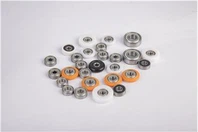
Hey there! As a supplier of Bearing 6200, I often get asked the question, "How often should I lubricate Bearing 6200?" Well, let's dive right into it and figure out the best lubrication schedule for these little guys.
First off, let's understand why lubrication is so important for Bearing 6200. Bearings are like the unsung heroes of machinery. They reduce friction between moving parts, which in turn helps in smooth operation, prevents wear and tear, and extends the lifespan of the bearing. Without proper lubrication, the bearing can overheat, seize up, and eventually fail. And trust me, you don't want that happening, especially if you're relying on your equipment to keep running smoothly.
Now, the frequency of lubrication for Bearing 6200 depends on a few factors. One of the most important factors is the operating conditions. If the bearing is operating in a clean, dry environment with low speeds and light loads, it might not need to be lubricated as often. On the other hand, if it's in a dirty, wet environment, or if it's subjected to high speeds and heavy loads, it'll need more frequent lubrication.
Let's start with the basics. If your Bearing 6200 is in a normal operating environment - say, in a small machine in a workshop where the temperature is moderate, the speed is around 1000 - 1500 RPM, and the load is light to medium - a good rule of thumb is to lubricate it every 2000 - 3000 operating hours. This is a general guideline, though, and you should always keep an eye on the bearing's performance.
If the bearing is running at higher speeds, say above 2000 RPM, the lubricant will break down faster due to the increased heat and friction. In this case, you might need to lubricate it every 1000 - 1500 operating hours. High - speed operation generates more heat, which can cause the lubricant to lose its viscosity and effectiveness.
Heavy loads also put more stress on the bearing. When a Bearing 6200 is carrying a heavy load, the lubricant has to work harder to keep the moving parts separated. So, if your bearing is under heavy load conditions, you should consider lubricating it every 1500 - 2000 operating hours.
Another factor to consider is the type of lubricant you're using. There are different types of lubricants available for bearings, such as grease and oil. Grease is a popular choice for many applications because it's easy to apply and stays in place better. However, grease has a limited lifespan and can dry out over time. If you're using grease, you'll need to replace it more frequently compared to oil. Oil, on the other hand, provides better cooling and can handle higher speeds, but it can leak more easily.


If you're using a high - quality synthetic grease, it might last a bit longer than a conventional grease. You might be able to stretch the lubrication intervals to 3000 - 4000 operating hours in normal conditions. But if you're using a basic mineral - based grease, you'll probably need to lubricate every 2000 - 3000 hours.
The environment also plays a huge role. If the bearing is exposed to dust, dirt, or moisture, the lubricant can get contaminated quickly. In a dusty environment, the dirt particles can mix with the lubricant and act like abrasives, wearing down the bearing surfaces. In this case, you should lubricate the Bearing 6200 every 1000 - 1500 operating hours, or even more frequently if the contamination is severe.
Similarly, in a wet environment, water can mix with the lubricant, causing it to emulsify and lose its lubricating properties. You might need to lubricate the bearing every 1000 operating hours or less, and also make sure to use a water - resistant lubricant.
Now, how do you know if the bearing needs lubrication? There are a few signs to look out for. One of the most obvious signs is increased noise. If the bearing starts making a grinding or squealing noise, it could be a sign that the lubricant is running low. Another sign is increased vibration. If you notice that the machine is vibrating more than usual, it could be due to a lack of lubrication in the bearing.
You can also check the temperature of the bearing. If it's getting too hot to touch, it's a clear indication that there's a problem, and it might be due to insufficient lubrication.
As a Bearing 6200 supplier, I always recommend using high - quality lubricants. There are many different brands and types available on the market, and choosing the right one can make a big difference in the performance and lifespan of your bearing. You can consult the bearing manufacturer's guidelines or a lubrication specialist to find the best lubricant for your specific application.
If you're looking for more information about small bearings like Bearing 6200, you can check out Small Bearings. This page has a lot of useful details about different types of small bearings. And of course, if you want to know more about Bearing 6200 specifically, head over to Bearing 6200. You can also compare it with Bearing 6001ZZ to see which one suits your needs better.
In conclusion, there's no one - size - fits - all answer to how often you should lubricate Bearing 6200. It depends on a variety of factors such as operating conditions, speed, load, and the type of lubricant. By keeping an eye on the bearing's performance and following the general guidelines I've mentioned, you can ensure that your Bearing 6200 stays in good working condition for a long time.
If you're in the market for high - quality Bearing 6200, don't hesitate to reach out. We have a wide range of bearings available, and our team can help you find the right one for your application. Whether you're a small business owner or a large industrial manufacturer, we're here to assist you with all your bearing needs.
References
- Machinery's Handbook, 31st Edition
- SKF Bearing Handbook