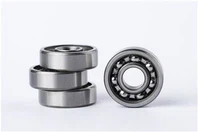
As a supplier of Track Bearing Rollers, the question of whether these components need pre - loading is one that often arises in technical discussions with our clients. This blog post aims to delve into the science behind pre - loading in track bearing rollers, exploring both the advantages and potential drawbacks, and providing guidance on when pre - loading is necessary.
Understanding Track Bearing Rollers
Before we discuss pre - loading, it's essential to understand what track bearing rollers are. Track Bearing Roller are specialized bearings designed to carry heavy loads while moving along a track. They are commonly used in various industrial applications, such as construction equipment, material handling systems, and automotive manufacturing. These rollers typically consist of an outer ring, an inner ring, rolling elements (balls or rollers), and a cage to separate and guide the rolling elements.
What is Pre - loading?
Pre - loading refers to the application of an initial force or load to a bearing before it is subjected to its normal operating load. This force is applied in a way that eliminates the internal clearance between the rolling elements and the raceways of the bearing. In track bearing rollers, pre - loading can be achieved through various methods, such as adjusting the fit between the bearing and its housing, using shims, or applying a specific torque to mounting bolts.
Advantages of Pre - loading Track Bearing Rollers
1. Increased Rigidity
One of the primary benefits of pre - loading track bearing rollers is increased rigidity. When a bearing is pre - loaded, the rolling elements are in constant contact with the raceways, which reduces the elastic deformation of the bearing under load. This results in a stiffer bearing system, which is particularly important in applications where precise positioning and minimal deflection are required. For example, in machine tools, pre - loaded track bearing rollers can improve the accuracy of the cutting process by reducing the amount of movement in the machine's components.
2. Improved Rotational Accuracy
Pre - loading also enhances the rotational accuracy of track bearing rollers. By eliminating internal clearance, the rollers can rotate more smoothly and with less wobbling. This is crucial in applications where high - speed rotation and precise motion control are necessary, such as in robotics and aerospace equipment. In these applications, even a small amount of play in the bearing can lead to significant errors in the movement of the machine.
3. Enhanced Load Distribution
Another advantage of pre - loading is improved load distribution among the rolling elements. When a bearing is not pre - loaded, the load may be concentrated on a few rolling elements, leading to premature wear and failure. Pre - loading ensures that the load is evenly distributed across all the rolling elements, increasing the bearing's load - carrying capacity and extending its service life.
4. Reduced Vibration and Noise
Pre - loaded track bearing rollers can also reduce vibration and noise during operation. The constant contact between the rolling elements and the raceways dampens vibrations, which not only improves the comfort of the machine's operators but also reduces the risk of damage to the bearing and other components due to excessive vibration.
Potential Drawbacks of Pre - loading
1. Increased Friction and Heat Generation
One of the main disadvantages of pre - loading is the increase in friction and heat generation. When the bearing is pre - loaded, the rolling elements are in closer contact with the raceways, which increases the frictional forces between them. This can lead to higher operating temperatures, which may require additional cooling measures to prevent the bearing from overheating. In some cases, excessive heat can also cause the lubricant to break down, reducing its effectiveness and potentially leading to bearing failure.
2. Higher Installation and Maintenance Requirements
Pre - loading also requires more precise installation and maintenance procedures. The amount of pre - load must be carefully controlled to ensure that it is neither too high nor too low. If the pre - load is too high, it can cause excessive stress on the bearing, leading to premature failure. On the other hand, if the pre - load is too low, the bearing may not achieve the desired benefits. Additionally, pre - loaded bearings may require more frequent inspection and adjustment to maintain the proper pre - load level.
When is Pre - loading Necessary?
The decision to pre - load track bearing rollers depends on several factors, including the application requirements, the operating conditions, and the desired performance of the bearing. Here are some situations where pre - loading is typically recommended:

1. High - Precision Applications
In applications where high precision is required, such as in machine tools, measuring instruments, and semiconductor manufacturing equipment, pre - loading is often necessary to ensure accurate positioning and minimal deflection.
2. High - Speed Applications
For applications involving high - speed rotation, pre - loading can improve the rotational accuracy and reduce vibration, which is essential for the smooth operation of the machine.
3. Heavy - Load Applications
In applications where the bearing is subjected to heavy loads, pre - loading can enhance the load - carrying capacity and distribute the load more evenly among the rolling elements, extending the bearing's service life.

4. Applications with Vibration or Shock Loads
Pre - loading can help to dampen vibrations and absorb shock loads, making it suitable for applications such as construction equipment and automotive suspension systems.
Conclusion
In conclusion, whether track bearing rollers need pre - loading depends on the specific requirements of the application. While pre - loading offers several advantages, such as increased rigidity, improved rotational accuracy, enhanced load distribution, and reduced vibration and noise, it also has some potential drawbacks, including increased friction and heat generation and higher installation and maintenance requirements. As a Track Bearing Roller supplier, we understand the importance of providing our clients with the right solutions for their needs. If you are unsure whether pre - loading is necessary for your application, our team of experts can help you evaluate your requirements and make an informed decision.
If you are interested in purchasing track bearing rollers or have any questions about pre - loading or other technical aspects, please feel free to contact us. We are committed to providing high - quality products and excellent customer service, and we look forward to discussing your needs with you.
References
- Harris, T. A., & Kotzalas, M. N. (2007). Rolling Bearing Analysis. John Wiley & Sons.
- SKF. (2019). Rolling Bearing Handbook. SKF Group.
- Timken Company. (2018). Engineering Handbook. The Timken Company.