Can Mini Roller Bearings be used in robotics?

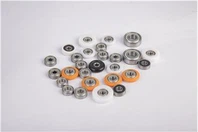
In the ever - evolving field of robotics, the quest for high - performance, compact, and reliable components is a continuous journey. One such component that has been gaining attention is the mini roller bearing. As a supplier of Mini Roller Bearings, I am excited to explore the potential of these small yet powerful bearings in the realm of robotics.
Characteristics of Mini Roller Bearings
Mini roller bearings, as the name suggests, are small - sized bearings designed to support radial and, in some cases, axial loads. They come in various types, including cylindrical, tapered, and needle roller bearings. Their small size makes them ideal for applications where space is limited, a common constraint in robotics.
The Mini Roller Bearings we supply offer several advantages. First, they have a high load - carrying capacity relative to their size. This is due to the line contact between the rollers and the raceways, which distributes the load more evenly compared to ball bearings. Second, they have low friction, which reduces energy consumption and heat generation. This is crucial in robotics, as it can lead to longer battery life and less wear on the components. Third, they are highly precise, ensuring smooth and accurate movement, which is essential for the proper functioning of robotic systems.
Applications in Robotics
Joints and Actuators
Robotic joints are the key points where movement occurs. Mini roller bearings can be used in these joints to provide smooth rotation. For example, in industrial robotic arms, the joints need to move with high precision and repeatability. Our Mini Roller Bearings can withstand the radial and axial loads generated during the operation of these joints, ensuring that the arm can perform tasks such as picking and placing objects accurately.
Actuators, which are responsible for converting energy into motion, also benefit from the use of mini roller bearings. Whether it is a servo - motor - driven actuator or a hydraulic actuator, the bearings can reduce friction and improve the efficiency of the actuator. This results in faster response times and more precise control of the robotic movement.
End - effectors
End - effectors are the tools or devices attached to the end of a robotic arm. They can include grippers, welders, or sensors. Mini roller bearings can be used in the mechanisms of these end - effectors to enable smooth movement. For instance, in a robotic gripper, the bearings can be used to ensure that the fingers open and close smoothly, allowing for a firm and precise grip on objects.

Mobile Robots
Mobile robots, such as autonomous guided vehicles (AGVs) and drones, also require high - performance bearings. In AGVs, mini roller bearings can be used in the wheels and steering mechanisms. They can handle the dynamic loads generated during movement, including acceleration, deceleration, and turning. In drones, the bearings can be used in the motors and propeller shafts to ensure smooth and efficient rotation, which is essential for stable flight.
Comparison with Other Bearing Types
When considering the use of bearings in robotics, it is important to compare mini roller bearings with other types of bearings, such as ball bearings and plain bearings.
Ball bearings are widely used in various applications due to their low friction and high - speed capabilities. However, they have a point contact between the balls and the raceways, which limits their load - carrying capacity. In contrast, mini roller bearings have a line contact, which allows them to support higher loads. This makes them a better choice for applications where heavy loads are involved, such as in industrial robotic arms.
Plain bearings, also known as bushings, are simple and inexpensive. They are often used in applications where low - cost and low - precision are acceptable. However, they have higher friction compared to mini roller bearings, which can lead to increased energy consumption and wear. Mini roller bearings, on the other hand, offer lower friction and higher precision, making them more suitable for high - performance robotic applications.
Micro Roller Bearings and 608 Roller Bearings in Robotics
In addition to standard Mini Roller Bearings, we also offer Micro Roller Bearings and 608 Roller Bearings, which have their own unique applications in robotics.
Micro Roller Bearings are even smaller than mini roller bearings. They are ideal for micro - robots and nano - scale applications. These bearings can provide support in extremely limited spaces, such as in the joints of micro - robotic insects or in the actuators of micro - surgical robots.
608 Roller Bearings are a popular type of mini roller bearing. They have a standard size and are widely used in various applications, including robotics. Their availability and affordability make them a practical choice for many robotic projects. They can be used in small - scale robotic joints, wheels, and other moving parts.

Challenges and Considerations
While mini roller bearings offer many advantages for robotics, there are also some challenges and considerations that need to be taken into account.
One challenge is the lubrication of the bearings. Proper lubrication is essential to reduce friction and wear. In robotic applications, where the environment can be harsh, choosing the right lubricant is crucial. For example, in a dusty or dirty environment, a lubricant with good anti - contamination properties is required.
Another consideration is the installation of the bearings. Incorrect installation can lead to premature failure of the bearings. It is important to follow the manufacturer's guidelines for installation, including proper alignment and pre - loading.
Conclusion
In conclusion, mini roller bearings have great potential in the field of robotics. Their small size, high load - carrying capacity, low friction, and high precision make them suitable for a wide range of robotic applications, from industrial robotic arms to mobile robots and micro - robots. As a supplier of Mini Roller Bearings, we are committed to providing high - quality bearings that meet the demanding requirements of the robotics industry.
If you are involved in a robotics project and are considering using mini roller bearings, we would be more than happy to discuss your specific needs. Our team of experts can provide you with detailed information about our products and help you choose the right bearings for your application. Contact us to start a procurement discussion and take your robotic project to the next level.
References
- Harris, T. A., & Kotzalas, M. N. (2007). Rolling Bearing Analysis. Wiley.
- Nikas, G. P. (2010). Tribology of Rolling Element Bearings. Elsevier.