In the realm of industrial machinery and equipment, big ball bearings play a crucial role. As a seasoned supplier of big ball bearings, I've witnessed firsthand the diverse applications and requirements that these components fulfill. The question often arises: Are there different types of big ball bearings? The answer is a resounding yes. In this blog, we'll explore the various types of big ball bearings, their unique features, and their applications.
Deep Groove Ball Bearings
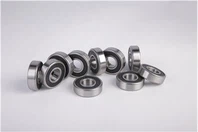
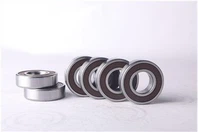
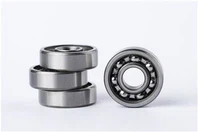
Deep groove ball bearings are one of the most common types of big ball bearings. They are characterized by their deep raceway grooves, which can accommodate both radial and axial loads. These bearings are designed to provide smooth and low-friction operation, making them ideal for high-speed applications.
The construction of deep groove ball bearings allows for a large number of balls to be used, which increases their load-carrying capacity. They are also relatively easy to install and maintain, making them a popular choice in many industries. For example, in electric motors, deep groove ball bearings are used to support the rotating shaft, ensuring efficient and reliable operation.
One of the key advantages of deep groove ball bearings is their versatility. They can be used in a wide range of applications, from small household appliances to large industrial machinery. Their ability to handle both radial and axial loads makes them suitable for applications where the load direction may change.
Angular Contact Ball Bearings
Angular contact ball bearings are designed to handle both radial and axial loads, but they are particularly well-suited for applications where there is a significant axial load component. These bearings have raceways that are offset relative to each other, which allows them to support axial loads in one direction.
The angle of contact between the balls and the raceways determines the amount of axial load that the bearing can handle. Angular contact ball bearings are available in different contact angles, such as 15°, 25°, and 40°. The larger the contact angle, the greater the axial load capacity of the bearing.
In applications such as machine tool spindles, angular contact ball bearings are used to provide high-precision support and to withstand the axial forces generated during machining operations. They are also commonly used in automotive transmissions and aerospace applications.
Self-Aligning Ball Bearings
Self-aligning ball bearings are designed to compensate for misalignment between the shaft and the housing. These bearings have two rows of balls and a spherical outer raceway, which allows the inner ring and the balls to self-align within the outer ring.
This self-aligning feature makes self-aligning ball bearings ideal for applications where there is a risk of misalignment, such as in long shafts or in applications where the housing may be subject to deformation. They are commonly used in conveyor systems, agricultural machinery, and textile machinery.
Self-aligning ball bearings can handle both radial and axial loads, but their axial load capacity is relatively limited compared to other types of ball bearings. However, their ability to compensate for misalignment makes them a valuable choice in many applications.
Thrust Ball Bearings
Thrust ball bearings are designed to handle axial loads only. They consist of two washers (a shaft washer and a housing washer) and a cage with balls. The balls are located between the two washers and roll along the raceways.
Thrust ball bearings are available in both single-direction and double-direction designs. Single-direction thrust ball bearings can support axial loads in one direction, while double-direction thrust ball bearings can support axial loads in both directions.
These bearings are commonly used in applications where there is a high axial load, such as in automotive transmissions, machine tool spindles, and heavy machinery. They are also used in applications where there is a need to support a rotating shaft against axial movement, such as in pumps and compressors.


Track Bearing Roller
In addition to the traditional types of big ball bearings, there is also a specialized type called the Track Bearing Roller. Track bearing rollers are designed for applications where there is a need to support a load while allowing for linear motion.
These bearings typically have a cylindrical outer surface that rolls along a track or guide rail. They are commonly used in material handling equipment, such as conveyors and cranes, as well as in automotive and aerospace applications.
Track bearing rollers can handle both radial and axial loads, and they are available in different sizes and designs to meet the specific requirements of each application. Their ability to provide smooth and reliable linear motion makes them an essential component in many industrial systems.
Applications of Different Types of Big Ball Bearings
The different types of big ball bearings are used in a wide variety of applications across various industries. Here are some examples:
- Automotive Industry: In automotive applications, deep groove ball bearings are used in engines, transmissions, and wheel hubs. Angular contact ball bearings are used in steering systems and differential gears. Thrust ball bearings are used in automatic transmissions to support the axial loads generated by the gears.
- Industrial Machinery: In industrial machinery, such as machine tools, pumps, and compressors, deep groove ball bearings, angular contact ball bearings, and self-aligning ball bearings are commonly used. These bearings provide support for rotating shafts and help to ensure smooth and efficient operation.
- Aerospace Industry: In the aerospace industry, high-precision angular contact ball bearings and self-aligning ball bearings are used in aircraft engines, landing gear systems, and flight control systems. These bearings must be able to withstand extreme conditions, such as high speeds, high temperatures, and vibration.
- Material Handling Industry: In material handling equipment, such as conveyors, cranes, and forklifts, track bearing rollers and self-aligning ball bearings are used. These bearings provide support for the moving parts of the equipment and help to ensure smooth and reliable operation.
Choosing the Right Type of Big Ball Bearing
When choosing the right type of big ball bearing for a specific application, several factors need to be considered. These factors include the type and magnitude of the load (radial, axial, or both), the speed of rotation, the operating temperature, the level of misalignment, and the required precision.
It is also important to consider the quality and reliability of the bearing. As a supplier of big ball bearings, we understand the importance of providing high-quality products that meet the specific requirements of our customers. We work closely with our customers to understand their needs and to recommend the most suitable type of bearing for their application.
Conclusion
In conclusion, there are indeed different types of big ball bearings, each with its own unique features and applications. Whether you need a bearing for high-speed operation, to handle significant axial loads, to compensate for misalignment, or to support linear motion, there is a type of big ball bearing that is suitable for your needs.
As a trusted supplier of big ball bearings, we are committed to providing our customers with the highest quality products and the best possible service. If you have any questions or need assistance in choosing the right type of big ball bearing for your application, please do not hesitate to contact us. We look forward to working with you to meet your bearing requirements.
References
- Harris, T. A., & Kotzalas, M. N. (2007). Rolling Bearing Analysis. Wiley.
- SKF. (2021). SKF Bearing Handbook. SKF Group.
- Timken. (2021). Timken Bearing Engineering Handbook. Timken Company.