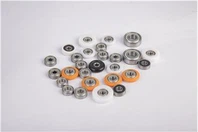
Hey there! As a supplier of small - size bearings, I often get asked the question: "Are small - size bearings suitable for heavy - duty applications?" It's a valid concern, and today, I'm gonna break it down for you.
First off, let's talk about what we mean by small - size bearings. These are typically bearings with a relatively small outer diameter, inner diameter, and width. They're used in a wide range of applications, from consumer electronics to precision machinery. You can find some great examples of small - size bearings on our website, like the 625ZZ --Low Noise High Speed Miniature Bearing/Auto Parts and Miniature V Groove Bearings.
Now, when it comes to heavy - duty applications, we're talking about situations where the bearings have to handle high loads, high speeds, or both. Think industrial machinery, construction equipment, and automotive engines. Traditionally, people might think that big, chunky bearings are the only ones up to the task. But that's not always the case.
One of the key factors in determining whether a small - size bearing can handle heavy - duty applications is the material it's made of. For example, Carbon Steel Ball Bearings are known for their strength and durability. Carbon steel has a high carbon content, which gives it excellent hardness and wear resistance. This means that even a small - size bearing made of carbon steel can withstand a fair amount of stress.
Another important aspect is the design of the bearing. Modern small - size bearings are often engineered with advanced geometries and internal clearances. These designs can help distribute the load more evenly across the bearing, reducing the stress on individual components. For instance, some small - size bearings have special raceway profiles that optimize the contact between the balls and the raceways. This not only improves the load - carrying capacity but also enhances the bearing's performance at high speeds.
Let's take a look at some real - world examples. In the aerospace industry, where weight is a critical factor, small - size bearings are used in many heavy - duty applications. Jet engines, for example, require bearings that can handle extremely high speeds and loads while keeping the overall weight of the engine down. Small - size bearings made from high - performance materials like ceramics or specialty steels are often the go - to choice. These bearings can provide the necessary strength and durability without adding unnecessary bulk.
In the automotive sector, small - size bearings are also making their mark. In modern engines, there are numerous small - size bearings used in components such as camshafts and water pumps. These bearings need to operate reliably under high temperatures, high speeds, and varying loads. Thanks to advancements in bearing technology, small - size bearings can now meet these demanding requirements.
However, it's not all sunshine and rainbows. There are definitely limitations to using small - size bearings in heavy - duty applications. One of the main challenges is heat dissipation. Since small - size bearings have a smaller surface area compared to larger bearings, they can generate more heat under heavy loads. If the heat isn't dissipated properly, it can lead to premature wear and failure of the bearing.


Another issue is the limited load - carrying capacity. While modern small - size bearings have come a long way, they still can't handle the same amount of load as larger bearings in some extreme cases. For example, in large - scale industrial presses or mining equipment, where the loads are extremely high, larger bearings are usually the better option.
So, how do you decide whether small - size bearings are suitable for your heavy - duty application? Well, it all boils down to a careful assessment of your specific requirements. You need to consider factors such as the magnitude of the load, the speed of operation, the operating environment (temperature, humidity, etc.), and the expected service life of the bearing.
If you're unsure, it's always a good idea to consult with a bearing expert. At our company, we have a team of experienced engineers who can help you select the right bearing for your application. We can analyze your requirements, perform load calculations, and recommend the most suitable small - size bearing based on your needs.
In conclusion, small - size bearings can be a viable option for many heavy - duty applications. With the right material, design, and proper application engineering, they can provide the necessary strength, durability, and performance. However, it's important to be aware of their limitations and make an informed decision.
If you're interested in learning more about our small - size bearings or have a specific heavy - duty application in mind, don't hesitate to reach out. We're here to help you find the perfect bearing solution for your needs. Whether you're in the aerospace, automotive, or any other industry, we've got the expertise and the products to support you.
So, if you're looking to source high - quality small - size bearings for your heavy - duty applications, give us a shout. Let's start a conversation and see how we can work together to meet your requirements.
References:
- "Bearing Handbook" - A comprehensive guide on bearing technology and applications.
- Industry research reports on bearing usage in aerospace and automotive sectors.