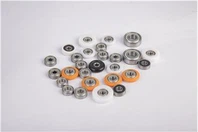
Hey there! As a supplier of Track Bearing Roller, I've seen firsthand the unique challenges that come with using these components in wind turbines. In this blog, I'm gonna break down some of the key issues and share my thoughts on how we can tackle them.
Extreme Environmental Conditions
One of the biggest challenges is the harsh environment in which wind turbines operate. These machines are often located in remote areas, like deserts, mountains, or offshore locations. They have to withstand extreme temperatures, high humidity, and salty air in the case of offshore turbines.


Track bearing rollers are constantly exposed to these conditions, which can lead to corrosion. Corrosion not only weakens the structural integrity of the rollers but also affects their performance. For example, a corroded roller may not roll as smoothly, causing increased friction and wear. This can result in premature failure of the bearing and costly downtime for the wind turbine.
Another environmental factor is the presence of dust and debris. In desert areas, sand particles can easily get into the bearing, causing abrasion. Even in less dusty environments, dirt and other contaminants can accumulate over time. This abrasion can damage the surface of the roller, leading to uneven wear and reduced efficiency.
To combat these issues, we need to use high - quality materials that are resistant to corrosion. Stainless steel is a popular choice, but we're also exploring advanced coatings that can provide an extra layer of protection. Regular maintenance and cleaning are also crucial. We can design the bearings with better sealing mechanisms to prevent dust and debris from entering.
High Loads and Dynamic Forces
Wind turbines generate a lot of power, and with that comes high loads and dynamic forces. The track bearing rollers have to support the weight of the blades, nacelle, and other components. During operation, the forces acting on the rollers can change rapidly due to wind gusts and changes in the direction of the wind.
These high loads and dynamic forces can cause fatigue in the rollers. Fatigue cracks can develop over time, which can eventually lead to the failure of the bearing. Additionally, the uneven distribution of loads can cause some rollers to wear out faster than others.
To address this challenge, we need to design the track bearing rollers with a high load - carrying capacity. This involves using advanced engineering techniques to optimize the shape and size of the rollers. We also need to ensure proper alignment of the bearings to distribute the loads evenly. Regular inspections using non - destructive testing methods can help detect fatigue cracks early, allowing for timely replacement of the damaged components.
Lubrication Challenges
Proper lubrication is essential for the smooth operation of track bearing rollers in wind turbines. Lubrication reduces friction, dissipates heat, and protects the rollers from wear and corrosion. However, lubrication in wind turbines is not without its challenges.
The extreme environmental conditions can affect the performance of the lubricant. High temperatures can cause the lubricant to break down, while low temperatures can make it too viscous. In addition, the dynamic forces acting on the rollers can cause the lubricant to be squeezed out of the contact area.
We need to select lubricants that are suitable for the specific operating conditions of the wind turbine. Synthetic lubricants are often a better choice as they have a wider temperature range and better resistance to oxidation. We can also design the bearings with a lubrication system that can continuously supply fresh lubricant to the contact area.
Maintenance and Accessibility
Wind turbines are often located in hard - to - reach places, which makes maintenance a challenge. When a track bearing roller fails, it can be difficult and expensive to replace. The process may require specialized equipment and skilled technicians.
In addition, the maintenance schedule needs to be carefully planned to minimize downtime. Since wind turbines are a source of renewable energy, any downtime means a loss of power generation.
To make maintenance easier, we can design the track bearing rollers for easy replacement. This could involve modular designs or quick - release mechanisms. We can also provide remote monitoring systems that can track the condition of the bearings in real - time. This allows operators to schedule maintenance based on the actual condition of the components, rather than on a fixed schedule.
Cost - Effectiveness
In the renewable energy industry, cost - effectiveness is a major concern. Wind turbine manufacturers are constantly looking for ways to reduce the cost of production and operation. As a track bearing roller supplier, we need to balance the quality and performance of our products with the cost.
Developing high - performance track bearing rollers that can withstand the challenges mentioned above often requires the use of advanced materials and manufacturing processes, which can be expensive. However, if the cost is too high, it may not be a viable option for the wind turbine industry.
We need to find innovative ways to reduce the cost without compromising on quality. This could involve optimizing our manufacturing processes to increase efficiency, sourcing materials at a lower cost, or developing new designs that use less material without sacrificing performance.
Noise and Vibration
Noise and vibration are not only a nuisance but can also indicate problems with the track bearing rollers. Excessive noise and vibration can be caused by misalignment, uneven wear, or the presence of contaminants in the bearing.
These issues can not only affect the performance and lifespan of the bearing but can also have an impact on the surrounding environment. In residential areas, noise from wind turbines can be a major concern for local residents.
To reduce noise and vibration, we need to ensure proper installation and alignment of the track bearing rollers. We can also use vibration - damping materials or design the bearings to absorb vibrations. Regular monitoring of noise and vibration levels can help detect problems early and take corrective action.
Conclusion
Using track bearing rollers in wind turbines comes with a variety of challenges, from extreme environmental conditions to high loads and cost - effectiveness. But as a supplier, I'm confident that we can overcome these challenges through innovation, advanced engineering, and a focus on customer needs.
If you're in the wind turbine industry and are looking for high - quality track bearing rollers that can handle these challenges, I'd love to talk to you. Whether you have questions about our products, need a custom solution, or are interested in a quote, don't hesitate to reach out. Let's work together to make wind energy more reliable and efficient.
References
- Smith, J. (2020). "Challenges in Wind Turbine Component Design". Renewable Energy Journal.
- Johnson, A. (2021). "Lubrication in Extreme Environments". Tribology Today.
- Brown, R. (2019). "Cost - Effective Solutions for Renewable Energy Components". Energy Economics Review.