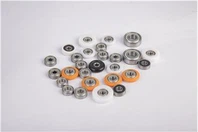
Hey there! I'm a supplier of big ball bearings, and I often get asked whether these bad boys are suitable for high-vibration environments. Well, let's dive right into it and find out.
First off, what are big ball bearings? Big ball bearings are, as the name suggests, bearings with relatively large balls. They're designed to handle heavy loads and can be found in a wide range of applications, from industrial machinery to automotive systems. Now, when it comes to high-vibration environments, things get a bit more complicated.


How Vibration Affects Bearings
Vibration is a common issue in many industrial settings. It can come from various sources, such as unbalanced rotating parts, misaligned shafts, or even external factors like nearby machinery. When bearings are exposed to high levels of vibration, it can have several negative effects.
One of the main problems is increased wear and tear. The constant shaking can cause the balls and raceways of the bearing to rub against each other more aggressively, leading to premature wear. This can reduce the bearing's lifespan and increase the risk of failure.
Another issue is the potential for damage to the bearing's internal components. High vibration can cause the balls to bounce around inside the bearing, which can lead to pitting, spalling, or even cracking of the raceways. These types of damage can significantly affect the bearing's performance and may require costly repairs or replacements.
Can Big Ball Bearings Handle High Vibration?
The answer isn't a simple yes or no. Big ball bearings have some characteristics that make them potentially suitable for high-vibration environments, but it also depends on several factors.
Advantages of Big Ball Bearings in High-Vibration Environments
- Load Capacity: Big ball bearings are designed to handle heavy loads. In high-vibration environments, there are often additional forces acting on the bearing due to the shaking. The large balls in these bearings can distribute the load more evenly, reducing the stress on individual components and making them more resistant to damage.
- Stability: The larger size of big ball bearings can provide greater stability. This can help to dampen the effects of vibration and reduce the likelihood of the bearing becoming misaligned or damaged.
Limitations of Big Ball Bearings in High-Vibration Environments
- Sensitivity to Misalignment: Despite their size, big ball bearings can still be sensitive to misalignment. In high-vibration environments, there's a greater risk of the bearing becoming misaligned due to the constant shaking. Misalignment can cause uneven loading on the balls and raceways, leading to increased wear and potential failure.
- Noise and Heat Generation: High vibration can cause the balls to move more rapidly inside the bearing, which can generate more noise and heat. Excessive heat can degrade the lubricant and reduce the bearing's performance.
Factors to Consider
When deciding whether big ball bearings are suitable for a high-vibration environment, there are several factors you need to take into account.
Application Requirements
- Load Type and Magnitude: The type and magnitude of the load the bearing will be subjected to are crucial. If the load is primarily radial, big ball bearings may be a good choice. However, if there are significant axial loads or a combination of radial and axial loads, you may need to consider other types of bearings.
- Speed: The operating speed of the bearing can also affect its performance in a high-vibration environment. Higher speeds can increase the forces acting on the bearing and make it more susceptible to damage.
Environmental Conditions
- Temperature: High temperatures can reduce the effectiveness of the lubricant and increase the wear rate of the bearing. If the high-vibration environment is also hot, you'll need to choose a bearing that can withstand these conditions.
- Contamination: Dust, dirt, and other contaminants can enter the bearing and cause damage. In high-vibration environments, there's a greater risk of contamination due to the increased movement of particles. You may need to consider using a bearing with a sealed design or additional protective measures.
Bearing Design and Quality
- Material: The material used to manufacture the bearing can have a significant impact on its performance in a high-vibration environment. High-quality materials, such as chrome steel or ceramic, can provide better resistance to wear and damage.
- Manufacturing Tolerances: Tight manufacturing tolerances ensure that the bearing components fit together properly and can reduce the risk of misalignment and damage.
Case Studies
Let's take a look at a couple of real-world examples to see how big ball bearings perform in high-vibration environments.
Example 1: Industrial Conveyor System
In an industrial conveyor system, there's a lot of vibration due to the movement of the conveyor belts and the heavy loads being transported. A company was using standard ball bearings, but they were experiencing frequent failures due to the high vibration. After switching to big ball bearings, they noticed a significant improvement in the bearing's lifespan. The larger balls were able to distribute the load more evenly, reducing the wear on the raceways and extending the bearing's service life.
Example 2: Automotive Engine
In an automotive engine, there's a high level of vibration due to the combustion process and the rotation of the engine components. A car manufacturer was testing different types of bearings for their engines. They found that big ball bearings were able to handle the vibration better than smaller bearings, but they also generated more noise. To address this issue, they made some design modifications to the bearing and used a special lubricant to reduce the noise and heat generation.
Making the Right Choice
So, are big ball bearings suitable for high-vibration environments? It depends on the specific application and the factors we've discussed. If you're dealing with a high-vibration environment and you're considering using big ball bearings, here are some steps you can take:
- Consult with an Expert: Talk to a bearing specialist who can help you evaluate your application requirements and recommend the best type of bearing for your needs.
- Conduct Testing: If possible, conduct some tests to see how the big ball bearings perform in your specific environment. This can help you identify any potential issues and make any necessary adjustments.
- Consider Alternative Options: There may be other types of bearings or bearing technologies that are better suited to your high-vibration environment. Don't be afraid to explore these options.
Conclusion
In conclusion, big ball bearings can be a viable option for high-vibration environments, but it's important to carefully consider all the factors involved. By understanding the advantages and limitations of big ball bearings, and by taking the necessary steps to ensure proper installation and maintenance, you can make an informed decision and choose the right bearing for your application.
If you're interested in learning more about big ball bearings or if you're looking for a reliable supplier, feel free to reach out. We have a wide range of Track Bearing Roller options available, and our team of experts can help you find the perfect solution for your needs. Whether you're dealing with a high-vibration environment or any other application, we're here to assist you with your bearing requirements. Contact us today to start a conversation about your procurement needs and let's work together to find the best bearing solution for you.
References
- Harris, T. A., & Kotzalas, M. N. (2007). Rolling Bearing Analysis. Wiley.
- Jones, A. (2015). Bearing Technology Handbook. McGraw-Hill Education.