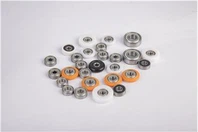
As a supplier of Small Bearings, I often encounter inquiries from customers about the thrust load capacity of small bearings. This is a crucial aspect, especially for those in industries where precision and efficiency are paramount. In this blog, I'll delve into what the thrust load capacity of small bearings means, factors affecting it, and how it impacts various applications.
Understanding Thrust Load Capacity
Thrust load capacity refers to the maximum amount of axial force that a bearing can withstand without experiencing excessive wear, deformation, or failure. Axial force acts parallel to the bearing's axis of rotation. For small bearings, this capacity is a vital specification as they are commonly used in applications where space is limited, and precise load handling is essential.
Small bearings, such as Bearing 6001ZZ and Bearing 6200, are designed to handle different levels of thrust loads depending on their design, materials, and manufacturing processes.
Factors Affecting Thrust Load Capacity
Bearing Design
The design of a small bearing plays a significant role in determining its thrust load capacity. There are different types of small bearings, including ball bearings, roller bearings, and needle bearings, each with unique design characteristics.
Ball bearings, for example, are known for their ability to handle both radial and axial loads. They consist of balls that roll between inner and outer races. The number, size, and arrangement of the balls can affect the bearing's thrust load capacity. A bearing with a larger number of balls or larger ball diameters can generally handle higher thrust loads.
Roller bearings, on the other hand, use cylindrical or tapered rollers instead of balls. Tapered roller bearings are particularly well-suited for handling high thrust loads because their design allows for efficient distribution of axial forces.
Material Selection
The materials used in the manufacturing of small bearings also impact their thrust load capacity. High-quality materials with excellent mechanical properties can withstand greater forces without deforming or failing.
Common materials for small bearings include chrome steel, stainless steel, and ceramic. Chrome steel is widely used due to its high hardness, good wear resistance, and relatively low cost. Stainless steel is preferred in applications where corrosion resistance is required, such as in food processing or marine environments. Ceramic bearings offer superior performance in terms of high-speed operation and resistance to heat and wear, but they are more expensive.
Lubrication
Proper lubrication is essential for maintaining the thrust load capacity of small bearings. Lubricants reduce friction between the moving parts of the bearing, prevent wear, and dissipate heat.
There are different types of lubricants available, including grease and oil. Grease is a popular choice for small bearings because it is easy to apply and provides long-term lubrication. However, the type of grease used should be selected based on the operating conditions, such as temperature, speed, and load. Oil lubrication is often used in high-speed or high-temperature applications where better heat dissipation is required.
Applications and Thrust Load Requirements
Small bearings are used in a wide range of applications, each with specific thrust load requirements.
Automotive Industry
In the automotive industry, small bearings are used in various components, such as electric motors, transmissions, and wheel hubs. Electric motors in vehicles require bearings that can handle both radial and axial loads, especially in applications where the motor is subject to vibrations and shocks.
For example, the bearings used in electric power steering systems need to have a high thrust load capacity to ensure smooth and precise operation. The Small Bearings we supply are designed to meet the stringent requirements of the automotive industry, providing reliable performance and long service life.
Industrial Machinery
In industrial machinery, small bearings are used in equipment such as pumps, compressors, and conveyor systems. Pumps, for instance, require bearings that can handle axial loads generated by the fluid flow. The thrust load capacity of the bearings used in pumps is crucial for maintaining the efficiency and reliability of the pump.
Conveyor systems also rely on small bearings to support the movement of the conveyor belts. The bearings need to be able to handle the axial forces exerted by the belts and any additional loads due to the weight of the conveyed materials.
Consumer Electronics
In consumer electronics, small bearings are used in devices such as hard disk drives, fans, and cameras. Hard disk drives require extremely precise bearings with low noise and vibration levels. The thrust load capacity of these bearings is important for ensuring the stability and accuracy of the read/write heads.
Fans in electronic devices, such as laptops and desktop computers, use small bearings to support the rotation of the fan blades. The bearings need to be able to handle the axial forces generated by the airflow and the rotation of the blades.


Testing and Quality Assurance
As a supplier of Small Bearings, we understand the importance of ensuring the thrust load capacity of our products. We conduct rigorous testing and quality assurance procedures to guarantee that our bearings meet or exceed the specified performance standards.
Our testing methods include both laboratory testing and real-world application testing. In the laboratory, we use specialized equipment to simulate different operating conditions and measure the thrust load capacity of the bearings. We also perform non-destructive testing, such as ultrasonic testing and magnetic particle testing, to detect any internal defects in the bearings.
In real-world application testing, we install our bearings in actual equipment and monitor their performance over an extended period. This allows us to identify any potential issues and make necessary improvements to our products.
Choosing the Right Small Bearing for Your Application
When selecting a small bearing for a specific application, it is important to consider the thrust load requirements, as well as other factors such as radial load, speed, temperature, and lubrication.
Here are some steps to help you choose the right small bearing:
- Determine the Thrust Load Requirements: Calculate the maximum axial force that the bearing will need to handle in your application. Consider factors such as the weight of the components, the forces generated by the operation of the equipment, and any dynamic loads.
- Consider the Radial Load: In addition to the thrust load, the bearing may also need to handle radial loads. Make sure to select a bearing that can handle both types of loads.
- Evaluate the Speed and Temperature: The operating speed and temperature of the application can affect the performance of the bearing. Choose a bearing that is designed to operate within the specified speed and temperature range.
- Select the Right Lubrication: Based on the operating conditions, choose the appropriate lubricant for the bearing. Consider factors such as the type of lubricant, its viscosity, and its compatibility with the bearing materials.
- Choose a Reliable Supplier: Select a supplier with a good reputation for quality and reliability. Look for a supplier that offers technical support and can provide you with detailed product information and specifications.
Conclusion
The thrust load capacity of small bearings is a critical factor in their performance and reliability. By understanding the factors that affect thrust load capacity, considering the specific requirements of your application, and choosing the right bearing from a reliable supplier, you can ensure the efficient and long-term operation of your equipment.
If you have any questions or need assistance in selecting the right small bearing for your application, please feel free to contact us. We are committed to providing high-quality products and excellent customer service. Let's work together to find the best bearing solutions for your needs.
References
- Harris, T. A., & Kotzalas, M. N. (2007). Rolling Bearing Analysis. Wiley-Interscience.
- SKF. (2019). SKF Bearing Handbook. SKF Group.
- Timken. (2020). Timken Bearing Engineering Handbook. Timken Company.