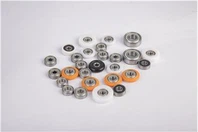
As a supplier of Bearing 6203llu, I often encounter customers who are curious about the starting torque of this particular bearing. In this blog post, I'll delve into the concept of starting torque, explain how it relates to Bearing 6203llu, and provide some useful insights for those considering purchasing this bearing.
Understanding Starting Torque
Starting torque refers to the minimum amount of torque required to initiate the rotation of a bearing from a stationary position. It is a crucial parameter, especially in applications where the bearing needs to start and stop frequently or operate under low - speed conditions. The starting torque of a bearing is influenced by several factors, including the type of lubrication, the internal design of the bearing, the pre - load applied, and the surface finish of the bearing components.


Factors Affecting the Starting Torque of Bearing 6203llu
Lubrication
Lubrication plays a vital role in determining the starting torque of Bearing 6203llu. A well - lubricated bearing reduces friction between the rolling elements and the raceways, thereby lowering the starting torque. The type of lubricant used, its viscosity, and the amount of lubrication all have an impact. For example, a low - viscosity lubricant may provide lower starting torque compared to a high - viscosity one, but it may not offer sufficient protection under high - load or high - speed conditions.
Internal Design
The internal design of Bearing 6203llu, such as the shape and size of the rolling elements and the geometry of the raceways, also affects the starting torque. Bearings with optimized internal designs are engineered to minimize friction and ensure smooth rotation from the start. The precision of the manufacturing process also contributes to the overall performance of the bearing, with higher - precision bearings generally having lower starting torques.
Pre - load
Pre - load is another factor that can influence the starting torque of Bearing 6203llu. A proper pre - load can enhance the bearing's rigidity and accuracy, but an excessive pre - load can increase the friction between the rolling elements and the raceways, leading to a higher starting torque. Therefore, it is essential to apply the correct pre - load according to the specific application requirements.
Surface Finish
The surface finish of the bearing components, including the rolling elements and the raceways, has a significant impact on the starting torque. A smooth surface finish reduces friction and wear, resulting in a lower starting torque. Advanced manufacturing techniques are used to achieve high - quality surface finishes on Bearing 6203llu, ensuring optimal performance.
Measuring the Starting Torque of Bearing 6203llu
Measuring the starting torque of Bearing 6203llu typically involves using specialized torque - measuring equipment. The bearing is mounted on a test rig, and a gradually increasing torque is applied until the bearing starts to rotate. The torque value at the moment of rotation is recorded as the starting torque. It is important to note that the measured starting torque may vary depending on the test conditions, such as the temperature, the alignment of the bearing, and the type of measuring equipment used.
Applications and the Importance of Starting Torque
Bearing 6203llu is widely used in various applications, such as small motors, household appliances, and light - duty machinery. In these applications, a low starting torque is often desirable. For instance, in small motors, a low starting torque means less energy is required to start the motor, which can lead to energy savings and improved efficiency. In household appliances, a smooth - starting bearing can enhance the user experience by reducing noise and vibration during startup.
Comparing with Other Bearings
When comparing Bearing 6203llu with other bearings, its starting torque characteristics can be a distinguishing factor. Some bearings may have higher starting torques due to their design or intended use in high - load applications. However, for applications where low starting torque is a priority, Bearing 6203llu offers a competitive advantage.
Related Products
If you are interested in other small - sized bearings, you might want to check out our Small Rollers with Bearings and 20mm Roller Bearing. These products also have their unique features and applications, and our team can help you select the most suitable one for your needs.
Contact for Purchase and Negotiation
If you are considering purchasing Bearing 6203llu or have any questions regarding its starting torque or other technical specifications, please feel free to contact us. Our team of experts is ready to provide you with detailed information and assist you in finding the best solution for your application. You can explore more about Bearing 6203llu on our official website Bearing 6203llu.
References
- Harris, T. A., & Kotzalas, M. N. (2007). Rolling Bearing Analysis. Wiley.
- SKF Bearing Handbook. (2010). SKF Group.