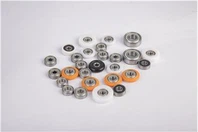
As a trusted supplier of Paper Roller Bearings, I am often asked about the various sealing methods used in these essential components. Sealing is a critical aspect of bearing design, as it protects the internal components from contaminants, retains lubricant, and extends the overall lifespan of the bearing. In this blog post, I will explore the different sealing methods commonly employed in paper roller bearings, their advantages and disadvantages, and how they can impact the performance of your equipment.
1. Non - Sealed Bearings
Non - sealed paper roller bearings, also known as open bearings, do not have any built - in sealing mechanisms. They consist of an outer ring, an inner ring, rolling elements (such as balls or rollers), and a cage to separate the rolling elements. These bearings are simple in design and are often used in applications where the operating environment is clean and free from contaminants.
The main advantage of non - sealed bearings is their low cost. Since there is no additional sealing component, the manufacturing process is less complex, resulting in a more affordable product. They also offer better heat dissipation compared to sealed bearings because there is no barrier to impede the flow of heat.
However, non - sealed bearings are highly vulnerable to contamination. Dust, dirt, moisture, and other foreign particles can easily enter the bearing, causing premature wear and failure. This makes them unsuitable for applications in dirty or wet environments. For example, in a paper mill where there is a lot of paper dust in the air, non - sealed bearings may not be the best choice.
2. Shielded Bearings
Shielded paper roller bearings are equipped with metal shields on one or both sides of the bearing. These shields are typically made of thin steel and are designed to prevent the entry of large particles while allowing some degree of ventilation. The shields are pressed onto the outer ring of the bearing and provide a physical barrier between the external environment and the internal components.
One of the key advantages of shielded bearings is their relatively good protection against contaminants. The shields can keep out most of the dust and debris, which helps to extend the bearing's service life. They also offer a moderate level of lubricant retention, as the shields can prevent the lubricant from leaking out too quickly.

On the downside, shielded bearings are not completely airtight or watertight. Small particles and moisture can still find their way into the bearing over time, especially in harsh operating conditions. Additionally, the shields may add a small amount of friction to the bearing, which can slightly reduce its efficiency.
3. Sealed Bearings
Sealed paper roller bearings have rubber or synthetic seals on one or both sides of the bearing. These seals provide a much higher level of protection against contaminants compared to shields. The seals are designed to form a tight barrier around the bearing, preventing the entry of dust, dirt, water, and other foreign substances.
Sealed bearings are ideal for applications in dirty, wet, or corrosive environments. They can retain the lubricant inside the bearing for a longer period, reducing the need for frequent relubrication. This makes them a popular choice in industries such as paper manufacturing, where the bearings are exposed to a lot of moisture and paper dust.
There are two main types of sealed bearings: contact seals and non - contact seals. Contact seals have a lip that makes direct contact with the inner ring of the bearing, providing excellent sealing performance but also generating more friction. Non - contact seals, on the other hand, do not touch the inner ring, resulting in lower friction but slightly reduced sealing effectiveness.

4. Choosing the Right Sealing Method
When selecting a sealing method for your paper roller bearings, several factors need to be considered.

- Operating Environment: If the bearing will be used in a clean and dry environment, non - sealed or shielded bearings may be sufficient. However, in dirty, wet, or corrosive environments, sealed bearings are the better choice. For example, in a paper recycling plant where there is a lot of water and debris, sealed bearings will provide the necessary protection.
- Lubrication Requirements: If the bearing requires frequent relubrication, non - sealed or shielded bearings may be more suitable as they allow for easier access to the internal components. Sealed bearings, on the other hand, are designed to retain lubricant for longer periods, reducing the need for maintenance.
- Cost: Non - sealed bearings are the most cost - effective option, followed by shielded bearings. Sealed bearings are generally more expensive due to the additional sealing components and the more complex manufacturing process.
5. Our Product Offerings
As a leading supplier of Paper Roller Bearings, we offer a wide range of products with different sealing methods to meet the diverse needs of our customers. Our [6200zz Garage Door Rollers](/slide - pulley - bearings/pulley - bearings/6200zz - garage - door - rollers.html) are designed with high - quality seals to provide reliable performance in various garage door applications. These rollers are built to withstand the rigors of daily use and offer excellent protection against contaminants.
Our [Industrial Roller Bearings](/slide - pulley - bearings/pulley - bearings/industrial - roller - bearings.html) are available in both shielded and sealed versions. They are suitable for a wide range of industrial applications, including paper mills, textile factories, and conveyor systems. These bearings are engineered to provide long - lasting performance and high load - carrying capacity.
We also offer [Door Bearing Wheels](/slide - pulley - bearings/pulley - bearings/door - bearing - wheels.html) that are designed with advanced sealing technology. These wheels are commonly used in residential and commercial doors, providing smooth operation and excellent durability.
6. Contact Us for Procurement
If you are in the market for high - quality Paper Roller Bearings, we invite you to contact us for procurement. Our team of experts can help you select the right sealing method and bearing type for your specific application. We are committed to providing our customers with the best products and services, ensuring that your equipment operates at its peak performance.
References
- Harris, T. A., & Kotzalas, M. N. (2007). Rolling Bearing Analysis. Wiley.
- Stachowiak, G. W., & Batchelor, A. W. (2005). Engineering Tribology. Elsevier.