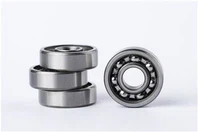
As a dedicated supplier of Paper Roller Bearings, I understand the critical role that proper lubrication plays in the performance and longevity of these essential components. In this blog post, I'll delve into the world of lubricants for paper roller bearings, exploring the types, selection criteria, and best practices to ensure optimal operation.
The Importance of Lubrication in Paper Roller Bearings
Paper roller bearings are subjected to a variety of stresses and conditions in industrial paper - making processes. They need to support heavy loads, operate at high speeds, and often work in environments where there is exposure to paper dust, moisture, and chemicals. Lubrication serves several key functions in these bearings:
- Reducing friction: Friction between the rolling elements and raceways can lead to increased wear, heat generation, and energy consumption. A good lubricant forms a thin film between the moving parts, minimizing direct contact and thus reducing friction.
- Preventing wear: By acting as a protective barrier, the lubricant helps to prevent metal - to - metal contact, which can cause surface damage and premature failure of the bearing.
- Corrosion protection: Paper - making environments can be corrosive due to the presence of water and chemicals. Lubricants can provide a protective layer that shields the bearing surfaces from corrosion.
- Heat dissipation: During operation, bearings generate heat. A proper lubricant can absorb and transfer this heat away from the bearing, helping to maintain a stable operating temperature.
Types of Lubricants for Paper Roller Bearings
Greases
Greases are a popular choice for paper roller bearings. They are a semi - solid lubricant consisting of a base oil, a thickener, and additives.
- Base oils: Common base oils used in greases for paper roller bearings include mineral oils, synthetic oils such as polyalphaolefins (PAO), and esters. Mineral oils are cost - effective and have good general lubricating properties. Synthetic oils, on the other hand, offer better performance in extreme temperature conditions, have longer service lives, and are more resistant to oxidation and degradation. Esters are often used in applications where high - temperature stability and good compatibility with seals are required.
- Thickeners: The thickener in grease determines its consistency. Common thickeners include lithium, calcium, and polyurea. Lithium - based greases are widely used due to their good all - around performance, including excellent water resistance and mechanical stability. Calcium - based greases are known for their water - repellent properties, making them suitable for applications where there is exposure to moisture. Polyurea greases offer high - temperature stability and good oxidation resistance.
Oils
Oils are also used as lubricants for paper roller bearings, especially in applications where continuous lubrication is required or where high - speed operation is involved.
- Mineral oils: Similar to those used in greases, mineral oils are a common choice for oil - lubricated paper roller bearings. They are relatively inexpensive and have good lubricating properties. However, they may have limitations in terms of high - temperature performance and oxidation resistance.
- Synthetic oils: Synthetic oils such as PAO and esters offer superior performance compared to mineral oils. They have better viscosity - temperature characteristics, which means they maintain their lubricating properties over a wider range of temperatures. They also have lower volatility, which reduces oil loss and the need for frequent re - lubrication.
Selection Criteria for Lubricants
Operating Conditions
- Temperature: The operating temperature of the paper roller bearing is a crucial factor in lubricant selection. High - temperature applications require lubricants with good thermal stability, such as synthetic greases or oils. For example, in drying sections of paper - making machines where temperatures can be relatively high, a high - temperature synthetic grease or oil would be more suitable. On the other hand, in cooler areas, a standard mineral - based lubricant may suffice.
- Speed: High - speed operation requires lubricants with low friction and good film - forming properties. Oils are often preferred for high - speed applications as they can provide better cooling and lubrication at high rotational speeds. Greases can also be used, but they need to be carefully selected to ensure they can maintain their consistency and lubricating properties at high speeds.
- Load: Heavy - load applications require lubricants with high load - carrying capacity. Greases with extreme - pressure (EP) additives are often used in such cases. These additives react with the metal surfaces under high pressure to form a protective film that prevents wear and damage.
Environmental Factors
- Contamination: In paper - making environments, there is a risk of contamination from paper dust, fibers, and chemicals. Lubricants should be able to resist contamination and still maintain their lubricating properties. For example, a grease with good water - and dust - repellent properties would be beneficial in an environment where there is exposure to moisture and paper dust.
- Chemical compatibility: Paper - making processes may involve the use of various chemicals. The lubricant should be chemically compatible with these substances to avoid degradation or chemical reactions that could damage the bearing.
Recommended Lubricants for Paper Roller Bearings
Based on the above factors, here are some general recommendations for lubricants for paper roller bearings:
- For general - purpose applications with moderate temperatures, loads, and speeds, a lithium - based grease with a medium consistency (e.g., NLGI 2) is a good choice. This type of grease offers good all - around performance, including water resistance and mechanical stability.
- In high - temperature applications, a synthetic grease or oil with high - temperature stability is recommended. For example, a polyurea - thickened synthetic grease or a PAO - based synthetic oil can withstand high temperatures without significant degradation.
- For high - speed applications, a low - viscosity synthetic oil with good film - forming properties is often the best option. This type of oil can provide efficient lubrication and cooling at high rotational speeds.
Best Practices for Lubrication
- Proper lubricant quantity: Over - lubrication can lead to increased heat generation, churning losses, and seal damage, while under - lubrication can cause premature wear and failure. It is important to follow the manufacturer's recommendations for the correct amount of lubricant.
- Regular inspection and re - lubrication: Regularly inspect the bearings for signs of wear, contamination, or lubricant degradation. Re - lubricate the bearings at the recommended intervals to ensure continuous and effective lubrication.
- Cleanliness during lubrication: When adding lubricant, ensure that the lubrication equipment and the bearing surfaces are clean to prevent contamination.
Conclusion
Selecting the right lubricant for paper roller bearings is essential for ensuring their optimal performance and longevity. By considering the operating conditions, environmental factors, and following best practices for lubrication, you can significantly reduce the risk of bearing failure and improve the overall efficiency of your paper - making operations.
If you are in the market for high - quality Paper Roller Bearing or need more information on lubrication for these bearings, we are here to help. Our team of experts can provide you with detailed advice and support to meet your specific requirements. We also offer a wide range of related products such as U Type Groove Pulley and Industrial Roller Bearings. Don't hesitate to reach out to us for procurement and further discussions.


References
- "Rolling Bearing Technology" by SKF
- "Lubrication Fundamentals" by Machinery Lubrication Magazine