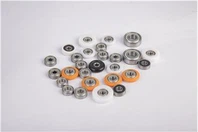
As a supplier of Track Bearing Rollers, I often encounter questions from customers regarding various technical aspects of our products. One of the most frequently asked questions is about the radial clearance of track bearing rollers. In this blog post, I will delve into what radial clearance is, its significance, and how it impacts the performance of track bearing rollers.
Understanding Radial Clearance
Radial clearance refers to the amount of free movement or play between the inner and outer rings of a bearing in the radial direction. In the context of track bearing rollers, it is the space that exists between the rolling elements (rollers) and the raceways of the inner and outer rings when the bearing is in an unloaded condition. This clearance is measured as the difference between the diameter of the outer ring raceway and the combined diameter of the inner ring raceway and the rollers.
There are different types of radial clearance, which are classified according to international standards such as ISO and ABEC. The most common classifications include C2 (less clearance than normal), CN (normal clearance), C3 (more clearance than normal), C4, and C5 (even more clearance). The appropriate radial clearance for a track bearing roller depends on several factors, including the application, operating conditions, and the type of load the bearing will experience.


Significance of Radial Clearance
The radial clearance of a track bearing roller plays a crucial role in its performance and longevity. Here are some key aspects where radial clearance has a significant impact:
1. Load Distribution
Proper radial clearance ensures even distribution of the load across the rolling elements. When the clearance is too small, the load may be concentrated on a few rollers, leading to premature wear and failure. On the other hand, excessive clearance can cause the rollers to move erratically, resulting in uneven load distribution and increased vibration.
2. Temperature Rise
The radial clearance affects the amount of friction generated within the bearing. If the clearance is too tight, the friction between the rollers and the raceways will increase, leading to a rise in temperature. High temperatures can degrade the lubricant, reduce the hardness of the bearing materials, and ultimately shorten the bearing's lifespan. Conversely, too much clearance can also cause increased friction due to the rollers' unstable movement, leading to temperature rise.
3. Noise and Vibration
Optimal radial clearance helps to minimize noise and vibration during the operation of the track bearing roller. When the clearance is within the appropriate range, the rollers can roll smoothly along the raceways, reducing the likelihood of noise and vibration. Excessive clearance can cause the rollers to rattle or bounce, resulting in increased noise levels and vibration, which can be detrimental to the overall performance of the machinery.
4. Installation and Fit
The radial clearance also affects the ease of installation and the fit of the bearing in the housing. A bearing with the correct clearance can be easily installed without excessive force, ensuring a proper fit and alignment. Incorrect clearance can make installation difficult and may lead to misalignment, which can cause premature wear and failure of the bearing.
Factors Affecting Radial Clearance Selection
When selecting the appropriate radial clearance for a track bearing roller, several factors need to be considered:
1. Operating Temperature
The operating temperature of the application can cause the bearing materials to expand or contract. Higher temperatures generally require a larger radial clearance to accommodate the thermal expansion of the bearing components. Conversely, lower temperatures may allow for a smaller clearance.
2. Load Type and Magnitude
The type of load (radial, axial, or combined) and its magnitude also influence the radial clearance selection. Heavier loads typically require a smaller clearance to ensure proper load distribution and prevent excessive deformation of the bearing components.
3. Shaft and Housing Tolerances
The tolerances of the shaft and housing where the bearing is installed can affect the effective radial clearance. Tighter shaft and housing tolerances may require a larger initial radial clearance to compensate for any potential interference during installation.
4. Speed of Rotation
The speed at which the track bearing roller operates can impact the radial clearance requirements. Higher speeds generally require a smaller clearance to maintain stability and reduce vibration.
Determining the Appropriate Radial Clearance
To determine the appropriate radial clearance for a specific application, it is essential to consult the bearing manufacturer's technical documentation or work with an experienced engineer. The manufacturer can provide guidelines based on the bearing type, size, and the specific operating conditions of the application.
In some cases, it may be necessary to conduct tests or simulations to optimize the radial clearance. These tests can help to evaluate the performance of the bearing under different conditions and ensure that the selected clearance meets the requirements of the application.
Our Track Bearing Rollers and Radial Clearance
At our company, we understand the importance of radial clearance in the performance of track bearing rollers. That's why we offer a wide range of track bearing rollers with different radial clearance options to meet the diverse needs of our customers. Our Track Bearing Roller products are manufactured to the highest quality standards, using advanced manufacturing techniques and high-quality materials.
We have a team of experienced engineers who can assist you in selecting the right radial clearance for your specific application. Whether you are working on a heavy-duty industrial application or a precision machinery project, we can provide you with the technical support and guidance you need to ensure the optimal performance of your track bearing rollers.
Contact Us for Your Track Bearing Roller Needs
If you are in the market for high-quality track bearing rollers and need assistance with radial clearance selection or any other technical aspects, please don't hesitate to contact us. Our sales team is ready to answer your questions and provide you with a customized solution that meets your requirements. We are committed to providing our customers with the best products and services, and we look forward to working with you on your next project.
References
- ISO 5753:1991, Rolling bearings - Radial internal clearance
- ABEC Standards for Bearing Tolerance and Clearance