What is the precision grade of small bearings?
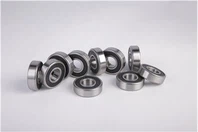
As a supplier of Small Bearings, I often encounter customers who are curious about the precision grade of small bearings. Understanding the precision grade is crucial as it directly impacts the performance and suitability of the bearings for different applications. In this blog, I will delve into the concept of precision grades for small bearings, their significance, and how they are classified.
Understanding Precision Grades
Precision grade refers to the level of accuracy and quality of a bearing. It encompasses various aspects such as dimensional accuracy, roundness, surface finish, and the ability to maintain a consistent performance under different operating conditions. The precision grade of a bearing is determined by a set of standards and specifications established by international organizations.
For small bearings, precision grades play a vital role in ensuring smooth operation, reducing noise, and extending the service life of the bearing. Higher precision grades are typically required for applications that demand high-speed rotation, low vibration, and precise positioning.
Classification of Precision Grades
In the industry, the precision grades of bearings are commonly classified according to the standards set by organizations such as the American Bearing Manufacturers Association (ABMA) and the International Organization for Standardization (ISO). The most widely recognized precision grade classification system is the ABEC (Annular Bearing Engineering Committee) system in the United States and the ISO 492 system internationally.
The ABEC system classifies bearings into different grades, namely ABEC - 1, ABEC - 3, ABEC - 5, ABEC - 7, and ABEC - 9, with ABEC - 1 being the lowest precision grade and ABEC - 9 being the highest. The ISO 492 system has a similar classification, with grades such as P0, P6, P5, P4, and P2, where P0 is the standard precision grade and P2 is the highest precision grade.
Let's take a closer look at the characteristics of different precision grades:
- ABEC - 1 / P0: This is the standard precision grade for most general - purpose applications. Bearings with this grade have relatively lower manufacturing tolerances and are suitable for applications where high precision is not critical, such as household appliances, low - speed machinery, and some light - duty industrial equipment.
- ABEC - 3 / P6: These bearings offer a higher level of precision compared to ABEC - 1. They are commonly used in applications that require moderate speed and accuracy, such as electric motors, small power tools, and some automotive components.
- ABEC - 5 / P5: Bearings with this precision grade have even tighter tolerances and are suitable for applications that demand higher speed, lower vibration, and better positioning accuracy. They are often used in high - performance electric motors, precision machinery, and some aerospace applications.
- ABEC - 7 / P4: This is a high - precision grade. Bearings of this grade are designed for applications that require extremely high speed, low noise, and precise positioning. They are commonly used in high - end machinery, such as CNC machines, robotics, and some medical equipment.
- ABEC - 9 / P2: The highest precision grade available. Bearings with this grade are used in applications where the highest level of accuracy and performance is required, such as in precision measuring instruments, high - speed spindles, and some advanced aerospace and defense applications.
Impact of Precision Grade on Performance
The precision grade of a small bearing has a significant impact on its performance. Here are some key aspects:


- Dimensional Accuracy: Higher precision grades ensure more accurate dimensions, which is crucial for proper fit and alignment in the application. This helps to reduce friction, wear, and the risk of premature failure.
- Roundness and Surface Finish: Bearings with higher precision grades have better roundness and surface finish. This results in smoother rotation, lower noise levels, and reduced vibration, which is especially important in high - speed applications.
- Load - Carrying Capacity: Precision bearings are often designed to handle higher loads more effectively. The improved manufacturing processes and materials used in high - precision bearings contribute to their enhanced load - carrying capacity.
- Speed Capability: Higher precision grades allow bearings to operate at higher speeds without excessive heat generation and wear. This is essential for applications such as high - speed motors and spindles.
Examples of Small Bearings and Their Precision Grades
Let's take a look at some common small bearings and their typical precision grades:
- Bearing 6001ZZ: This is a popular small ball bearing. It is available in different precision grades, with ABEC - 1 or P0 being the most common for general - purpose applications. However, for applications that require higher precision, such as in some precision instruments, it can also be obtained in ABEC - 3 or higher grades.
- Small Bearings: Our range of small bearings offers a variety of precision grades to meet different customer requirements. Whether you need a standard - precision bearing for a simple application or a high - precision bearing for a demanding project, we have the right solution for you.
- Bearing 6200: This bearing is widely used in many industries. It is typically available in ABEC - 1, ABEC - 3, and ABEC - 5 grades, depending on the application requirements. For applications that demand high - speed and low - noise operation, the higher precision grades are more suitable.
Choosing the Right Precision Grade
When choosing the precision grade of a small bearing, several factors need to be considered:
- Application Requirements: Understand the specific requirements of your application, such as speed, load, accuracy, and noise level. For example, if you are using the bearing in a high - speed spindle, a higher precision grade is necessary.
- Cost - Benefit Analysis: Higher precision grades usually come with a higher cost. You need to balance the performance requirements with the cost to ensure that you are getting the best value for your money.
- Compatibility: Make sure that the chosen precision grade is compatible with the other components in your system. For example, if the mating parts have low precision, using a high - precision bearing may not provide significant benefits.
Conclusion
In conclusion, the precision grade of small bearings is a critical factor that affects their performance and suitability for different applications. As a supplier of Small Bearings, we understand the importance of providing high - quality bearings with the right precision grade. Whether you are looking for a standard - precision bearing for a general - purpose application or a high - precision bearing for a specialized project, we can offer you a wide range of options to meet your needs.
If you have any questions about the precision grade of small bearings or need assistance in choosing the right bearing for your application, please feel free to contact us. We are always ready to provide you with professional advice and support. Let's work together to find the best bearing solutions for your business.
References
- American Bearing Manufacturers Association (ABMA) standards.
- International Organization for Standardization (ISO) 492 standard.