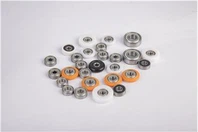
Hey there! As a supplier of Bearing 6305, I often get asked about the operating temperature range of this particular bearing. It's a crucial question, since temperature can have a huge impact on the performance and lifespan of any bearing, and Bearing 6305 is no exception. So, let's dive right into it and learn more about the temperature limits that this bearing can handle.
First off, let's understand why operating temperature is such a big deal. When a bearing is in use, friction is generated between its moving parts. This friction produces heat, and if the temperature gets too high, it can cause a whole host of problems. For instance, the lubricant in the bearing can break down, losing its ability to reduce friction and protect the bearing surfaces. High temperatures can also lead to thermal expansion of the bearing components, altering the clearances and potentially causing the bearing to seize up. On the other hand, extremely low temperatures can make the lubricant too viscous, reducing its flow and making it less effective at lubricating the bearing.

So, what's the operating temperature range of Bearing 6305? Generally speaking, the standard Bearing 6305 can operate within a temperature range from -30°C to +120°C. This range is suitable for most common industrial applications. In normal working conditions, where the bearing is properly lubricated and loaded, it will work smoothly within this temperature span.
But hang on, those aren't the only temperature scenarios it can face. In some specialized applications, the bearing might experience more extreme temperatures. Some modified versions of Bearing 6305, with special lubricants and materials, can operate in even harsher conditions. For example, with high - temperature lubricants and heat - resistant bearing steel, the upper temperature limit can be extended to around +200°C. This makes it suitable for applications like some high - speed machinery or industrial ovens where heat is a persistent issue.
On the other side of the thermometer, for applications in cold storage facilities or in polar regions, specially formulated low - temperature lubricants can be used. These can allow Bearing 6305 to function at temperatures as low as - 40°C or even lower in some cases.
Now, let me tell you about the factors that can affect the actual operating temperature of Bearing 6305 in real - world applications. One major factor is the load. When the bearing is under a heavy load, more friction is generated, which in turn leads to a higher temperature. So, if you're using Bearing 6305 in a high - load application, like a large - scale conveyor system, the temperature is likely to be closer to the upper end of the operating range.
The speed of the rotating shaft is also important. The faster the shaft rotates, the more heat is produced due to increased friction between the rolling elements and the raceways. High - speed machinery, such as some electrical motors, can cause the temperature of Bearing 6305 to rise quickly.
Lubrication plays a critical role too. Using the wrong type of lubricant, or not lubricating the bearing properly, can significantly increase the operating temperature. For example, if the lubricant has a low viscosity or is contaminated, it won't be able to reduce friction effectively, causing the bearing to heat up.
The environment where the bearing is installed matters as well. If the bearing is in a dusty or dirty environment, the contaminants can get into the bearing and cause additional friction and wear, leading to a rise in temperature. Also, if there is poor ventilation around the bearing, the heat won't be able to dissipate properly, which can also make the temperature go up.
As a Bearing 6305 supplier, I know how important it is to choose the right bearing for your specific application. That's why I offer a wide range of options when it comes to Bearing 6305. Whether you need a standard bearing for normal operating conditions or a customized one for extreme temperatures, you can count on me to provide the right solution. You can find more details about Bearing 6305 on our website Bearing 6305.
If you're having trouble choosing the right Bearing 6305 for your needs, feel free to reach out. I have a team of experts who can help you analyze your requirements, taking into account factors like temperature, load, speed, and environment. We'll work together to make sure you get a bearing that operates efficiently and has a long lifespan.
In conclusion, understanding the operating temperature range of Bearing 6305 is essential for getting the best performance out of it. Whether it's a general - purpose application or one with extreme temperature conditions, there's a Bearing 6305 solution for you. Don't hesitate to start a conversation with me if you're thinking about a bearing purchase. Let's work together to find the perfect fit for your business needs.
References
- Engineering textbooks on bearing technology
- Manufacturer's technical data sheets for Bearing 6305