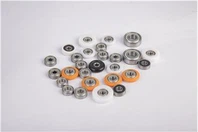
Hey there! As a supplier of Bearing 6305, I'm super stoked to share with you all about the manufacturing standards of this awesome bearing.
First off, let's talk about what Bearing 6305 is all about. Bearing 6305 is a widely used deep groove ball bearing. It's part of the 6000 series, which are known for their simplicity and high performance. These bearings can handle both radial and axial loads, making them super versatile in a whole bunch of applications.
Material Selection
The manufacturing of Bearing 6305 starts with picking the right materials. The most common material for the rings and balls is high - carbon chromium bearing steel, like GCr15. This steel has excellent hardness, wear resistance, and fatigue resistance. It can withstand the high stress and friction that bearings experience during operation.
The inner and outer rings are made from a solid piece of this steel. The raw material goes through a series of strict quality checks before it's approved for use. We make sure that the chemical composition of the steel meets the required standards. For example, the carbon content should be within a specific range to ensure the right balance of hardness and toughness.
Machining Process
Once the materials are selected, it's time for the machining process. The first step is to cut the raw steel into the appropriate size for the rings. Then, the rough machining is done to shape the rings into their basic form. This involves processes like turning, where the steel is rotated on a lathe and a cutting tool removes excess material to create the desired shape.
After rough machining, the rings go through a series of fine - machining operations. Grinding is a crucial step here. The surfaces of the rings are ground to extremely high precision. The roundness, cylindricity, and surface roughness of the rings need to meet very strict tolerances. For Bearing 6305, the roundness tolerance might be in the range of a few micrometers. This high - precision grinding ensures that the bearing runs smoothly and reduces noise and vibration during operation.
The balls are also machined with great care. They are first formed from steel wire or rod. Then, they go through a series of grinding and lapping processes to achieve a perfect spherical shape and a smooth surface finish. The diameter of the balls must be very accurate, with tolerances in the order of micrometers.
Heat Treatment
Heat treatment is a key step in the manufacturing of Bearing 6305. After machining, the rings and balls are heat - treated to improve their mechanical properties. The most common heat - treatment process is quenching and tempering.
Quenching involves heating the steel to a high temperature and then rapidly cooling it in a quenching medium, like oil or water. This process hardens the steel by transforming its microstructure. However, quenching can also make the steel brittle. That's why tempering is done after quenching. Tempering involves heating the hardened steel to a lower temperature and holding it there for a certain period of time. This reduces the brittleness and improves the toughness of the steel, while still maintaining a high level of hardness.
The heat - treatment process is carefully controlled. The heating and cooling rates, as well as the temperature and time of tempering, are all critical factors. Any deviation from the standard can affect the performance and lifespan of the bearing.
Assembly
Once the rings and balls are heat - treated and machined to the required specifications, it's time for assembly. The assembly process is also highly standardized. First, the rings and balls are cleaned to remove any contaminants. Then, the balls are loaded into the raceways of the inner and outer rings.
A cage is used to separate the balls and keep them evenly spaced. The cage can be made of different materials, such as steel, brass, or synthetic resin. The design of the cage is important as it affects the movement of the balls and the overall performance of the bearing.
After the balls and cage are assembled, the bearing is sealed. Seals are used to prevent contaminants from entering the bearing and to retain the lubricant inside. There are different types of seals, such as rubber seals and metal shields. The sealing process must be done carefully to ensure a good seal and prevent leakage.

Quality Control
Throughout the manufacturing process, quality control is of utmost importance. We have a comprehensive quality - control system in place. At each stage of production, inspections are carried out. For example, during machining, the dimensions of the parts are measured using precision measuring instruments, like micrometers and gauges.
Non - destructive testing methods are also used to detect any internal defects in the bearing parts. Ultrasonic testing can be used to detect cracks or other flaws inside the steel. Magnetic particle inspection is another method used to detect surface and near - surface defects.
Final inspection of the assembled bearing includes checking the rotational torque, noise level, and radial and axial clearance. The bearing must meet the specified standards for these parameters. If a bearing fails any of these tests, it is either re - worked or rejected.
Lubrication
Proper lubrication is essential for the performance and lifespan of Bearing 6305. Lubricants reduce friction between the moving parts of the bearing, prevent wear, and dissipate heat. There are different types of lubricants available, such as grease and oil.
Grease is a popular choice for many applications. It has the advantage of being easy to apply and can stay in place for a long time. When we manufacture Bearing 6305, we often pre - lubricate the bearing with a suitable grease. The type of grease used depends on the application. For example, in high - temperature applications, a high - temperature grease is required.
Oil lubrication is used in some applications where high - speed operation or heavy loads are involved. Oil can provide better cooling and lubrication under these conditions. However, oil lubrication systems are more complex and require proper maintenance.
Packaging and Storage
After passing all the quality - control tests, the bearings are packaged. The packaging is designed to protect the bearings from damage during transportation and storage. The bearings are usually placed in a plastic or paper box, and then the boxes are packed in larger cartons.
Proper storage is also important. The bearings should be stored in a clean, dry, and temperature - controlled environment. Exposure to moisture, dust, and extreme temperatures can damage the bearings and reduce their performance.
Conclusion
So, there you have it - the manufacturing standards of Bearing 6305. It's a complex process that involves a lot of precision and attention to detail. From material selection to assembly and quality control, every step is crucial to ensure that the bearing meets the highest standards of performance and reliability.
If you're in the market for high - quality Bearing 6305, don't hesitate to get in touch with us. We're committed to providing you with the best bearings that meet all the manufacturing standards we've talked about. Whether you need a small quantity for a DIY project or a large order for industrial use, we've got you covered. Let's start a conversation and see how we can meet your bearing needs!
References
- "Handbook of Bearings"
- "Manufacturing Technology of Rolling Bearings"