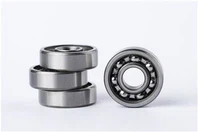
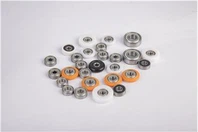
Hey there! As a supplier of 608 roller bearings, I'm super stoked to take you behind the scenes and show you what goes into making these little wonders. So, let's dive right in and explore the manufacturing process of 608 roller bearings.
1. Raw Material Selection
The first step in making 608 roller bearings is picking the right raw materials. We usually go for high - quality steel, like chrome steel or stainless steel. Chrome steel is a popular choice because it's tough, has good wear resistance, and can handle high loads. Stainless steel, on the other hand, is great when the bearings are going to be used in harsh environments where corrosion is a concern.
We source our steel from reliable suppliers. Before we start using it, we test it to make sure it meets our strict quality standards. This includes checking its hardness, chemical composition, and other mechanical properties. You can imagine, if the raw material isn't up to par, the final bearing won't perform well.
2. Cutting and Forging
Once we have the right steel, it's time to cut it into the right size. We use precision cutting tools to slice the steel into blanks that are the right shape and dimensions for the different parts of the 608 roller bearing. These parts typically include the inner ring, outer ring, and the rollers.
After cutting, we move on to forging. Forging is like giving the metal a good workout. We heat the blanks to a really high temperature and then use heavy machinery to shape them. This process makes the metal stronger and more dense. It also helps to align the metal's grain structure, which improves the bearing's overall performance and durability.


3. Machining
Machining is where the real precision work happens. In this step, we use a variety of machines, like lathes, grinders, and milling machines, to shape the forged parts into their final form.
Let's start with the inner and outer rings. First, we use a lathe to turn the rough - forged rings into smooth, circular shapes. We cut away any excess material and make sure the dimensions are accurate to within a few thousandths of an inch. Then, we use a grinder to give the rings a super - smooth surface finish. This smooth finish is crucial because it reduces friction when the bearing is in use.
For the rollers, we also use a combination of turning and grinding processes. We make sure the rollers are perfectly cylindrical and have a consistent diameter along their length. Any small deviation in the roller's shape can cause uneven wear and reduce the bearing's lifespan.
4. Heat Treatment
Heat treatment is a critical step in the manufacturing process. It's like giving the bearing parts a special power - up. We heat the machined parts to a specific temperature and then cool them down at a controlled rate. This process changes the internal structure of the metal, making it harder and more resistant to wear.
There are different types of heat treatments, such as quenching and tempering. Quenching involves heating the parts to a high temperature and then rapidly cooling them in a liquid, like oil or water. This makes the metal very hard but also a bit brittle. To reduce the brittleness, we follow up with tempering. Tempering involves heating the quenched parts to a lower temperature and holding them there for a certain period of time. This makes the metal more ductile and less likely to crack under stress.
5. Grinding and Finishing
After heat treatment, the parts are a bit rough on the surface. So, we go back to the grinders for some final shaping and finishing. We use precision grinding machines to achieve the exact dimensions and surface finish required for the 608 roller bearing.
We also pay a lot of attention to the edges of the parts. We chamfer or deburr them to remove any sharp edges. Sharp edges can cause stress concentrations, which can lead to premature failure of the bearing.
Once the grinding is done, we clean the parts thoroughly to remove any debris or contaminants. Then, we apply a protective coating to prevent rust and corrosion. This coating also helps to reduce friction and improve the bearing's performance.
6. Assembly
Now comes the fun part - putting all the parts together. We start by carefully cleaning all the components one last time to make sure there's no dirt or dust. Then, we use special assembly equipment to fit the inner ring, outer ring, and rollers together.
We add a lubricant to the bearing during assembly. Lubrication is super important because it reduces friction and wear between the moving parts. It also helps to dissipate heat and prevent corrosion. We use high - quality lubricants that are specifically designed for roller bearings.
After assembly, we perform a series of tests to make sure the bearing is working properly. We check for things like rotational smoothness, noise level, and radial and axial play. If the bearing passes all these tests, it's ready to be packaged and shipped.
7. Quality Control
Quality control is a continuous process throughout the manufacturing of 608 roller bearings. At every step, from raw material selection to final assembly, we have strict quality checks in place.
We use advanced measuring tools, like micrometers, calipers, and coordinate measuring machines (CMMs), to check the dimensions of the parts. We also use non - destructive testing methods, like ultrasonic testing and magnetic particle inspection, to detect any internal defects in the metal.
In addition to these physical tests, we also perform performance tests on the assembled bearings. We run them on test benches under different loads and speeds to simulate real - world conditions. If a bearing doesn't meet our quality standards, we either rework it or scrap it.
Why Choose Our 608 Roller Bearings?
We take a lot of pride in our 608 roller bearings. Our strict manufacturing process ensures that every bearing we produce is of the highest quality. Whether you need a Mini Roller Bearings for a small - scale application or a 608 Roller Bearing for a more demanding job, we've got you covered. And if you're looking for something even smaller, our Micro Roller Bearings are also top - notch.
If you're in the market for high - quality 608 roller bearings, we'd love to talk to you. Whether you're a small business or a large corporation, we can provide you with the right bearings at a competitive price. Contact us today to start a conversation about your bearing needs. We're here to help you find the perfect solution for your application.
References
- "Rolling Bearing Technology" by SKF
- "Handbook of Bearings" by CRC Press
- Industry - specific technical papers on roller bearing manufacturing