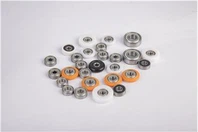
Hey there! I'm a supplier of Track Bearing Rollers, and today I wanna chat about the maintenance cycle of these nifty components.
First off, let's understand what Track Bearing Rollers are. They're crucial parts in many industrial setups, especially those involving heavy - duty machinery. Track Bearing Rollers, you can learn more about them Track Bearing Roller, are designed to handle radial and axial loads while allowing smooth movement along a track.
Now, the maintenance cycle of Track Bearing Rollers isn't a one - size - fits - all deal. It depends on a bunch of factors. One of the main things is the operating environment. If the rollers are used in a clean, dust - free environment, they'll generally last longer between maintenance intervals compared to those in a dirty, gritty place.


In a clean environment, where there's minimal exposure to contaminants like dust, dirt, and moisture, you might be able to stretch the maintenance cycle to around 6 - 12 months. This is assuming normal operating conditions, like moderate loads and speeds. For example, in a precision manufacturing facility where the air is filtered and the machinery is well - protected, the Track Bearing Rollers can go for a relatively long time without major issues.
But if the rollers are in a harsh environment, things change big time. In a mining operation, for instance, where there's a ton of dust, dirt, and vibrations, the maintenance cycle could be as short as 1 - 3 months. The dust and dirt can get into the bearings, causing abrasion and wear. The vibrations can also loosen the components over time, leading to premature failure if not addressed.
Another factor that affects the maintenance cycle is the load and speed at which the Track Bearing Rollers operate. High - load applications put more stress on the rollers. If a roller is constantly carrying heavy loads, the internal components, like the balls or rollers inside the bearing, will experience more wear. Similarly, high - speed operations generate more heat, which can degrade the lubricant and cause the metal parts to expand and contract, leading to wear and tear.
For high - load, high - speed applications, a maintenance cycle of 1 - 2 months might be necessary. On the other hand, if the rollers are used in a low - load, low - speed application, like a small conveyor system in a warehouse, the maintenance cycle could be extended to 3 - 6 months.
Let's talk about what actually happens during maintenance. The first step is usually a visual inspection. You wanna check for any signs of damage, like cracks, chips, or excessive wear on the outer surface of the roller. You also need to look at the seals. If the seals are damaged, it means contaminants can get into the bearing, which is a big no - no.
Next up is lubrication. Proper lubrication is key to the smooth operation of Track Bearing Rollers. Over time, the lubricant can break down, lose its viscosity, or get contaminated. During maintenance, you need to clean out the old lubricant and apply fresh, high - quality lubricant. The type of lubricant you use depends on the operating conditions. For high - temperature applications, you'll need a lubricant that can withstand the heat. For dirty environments, a lubricant with good anti - wear and anti - corrosion properties is a must.
You also need to check the alignment of the rollers. Misaligned rollers can cause uneven wear and premature failure. If the rollers aren't aligned properly, you might need to adjust the mounting brackets or the track itself.
Now, I know all this maintenance stuff might seem like a hassle, but it's super important. Skipping maintenance can lead to costly breakdowns. A failed Track Bearing Roller can bring an entire production line to a halt, resulting in lost time and revenue.
So, how do you figure out the right maintenance cycle for your Track Bearing Rollers? Well, it's a good idea to start with the manufacturer's recommendations. They usually have guidelines based on different operating conditions. But you also need to keep an eye on the actual performance of the rollers. If you notice any changes in the noise level, vibration, or temperature of the rollers, it could be a sign that maintenance is needed sooner than expected.
As a Track Bearing Roller supplier, I've seen firsthand the importance of proper maintenance. I've worked with customers who followed the maintenance schedule religiously and had their rollers last for years. And I've also seen those who neglected maintenance and ended up with expensive replacements.
If you're in the market for Track Bearing Rollers or need advice on maintenance, don't hesitate to reach out. We can help you choose the right rollers for your application and give you tips on how to keep them in top shape. Whether you're in a clean manufacturing facility or a rough mining site, we've got the expertise to assist you.
In conclusion, the maintenance cycle of Track Bearing Rollers varies widely depending on the operating environment, load, and speed. By following a proper maintenance schedule, you can ensure the longevity and reliability of your rollers, saving you time and money in the long run. So, if you're looking to optimize your operations and keep your machinery running smoothly, give us a shout. We're here to help you make the most of your Track Bearing Rollers.
References:
- Industry - standard bearing maintenance manuals
- Manufacturer's specifications for Track Bearing Rollers
- Case studies on the impact of maintenance on bearing performance