What is the hardness of the material of Bearing 6305?
As a supplier of Bearing 6305, I often encounter inquiries about the hardness of the material used in these bearings. Understanding the hardness of the bearing material is crucial as it directly impacts the performance, durability, and service life of the bearing. In this blog post, I will delve into the concept of hardness in relation to Bearing 6305, exploring the materials commonly used, the significance of hardness, and how it affects the overall quality of the bearing.
Common Materials for Bearing 6305
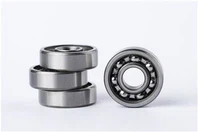
Bearing 6305 is a type of deep groove ball bearing that is widely used in various industrial applications. The most common materials used for manufacturing Bearing 6305 are high - carbon chromium bearing steel, such as GCr15 (in China) or AISI 52100 (in the United States). This type of steel is favored due to its excellent combination of properties, including high hardness, good wear resistance, and high fatigue strength.
High - carbon chromium bearing steel typically contains about 0.95% - 1.10% carbon, 1.30% - 1.65% chromium, and small amounts of other elements like manganese and silicon. These elements contribute to the steel's ability to achieve high hardness through heat treatment processes.
Understanding Hardness
Hardness is a measure of a material's resistance to permanent deformation, such as indentation, scratching, or wear. In the context of bearings, hardness is a critical property because bearings are subjected to high contact stresses and sliding or rolling friction during operation. A harder bearing material can better withstand these forces without undergoing excessive wear or deformation, which helps to maintain the dimensional accuracy and performance of the bearing over time.
There are several methods to measure hardness, and the most commonly used ones in the bearing industry are the Rockwell hardness test and the Vickers hardness test. The Rockwell hardness test measures the depth of penetration of an indenter into the material under a specific load, while the Vickers hardness test measures the size of an indentation made by a square - based pyramid indenter under a load.
Hardness Requirements for Bearing 6305
For Bearing 6305 made from high - carbon chromium bearing steel, the typical hardness requirements after heat treatment are in the range of 58 - 64 HRC (Rockwell hardness scale C). This level of hardness ensures that the bearing can withstand the high contact stresses and wear associated with its operation.
The heat treatment process, which usually includes quenching and tempering, is crucial for achieving the desired hardness. Quenching involves rapidly cooling the steel from a high temperature to transform its microstructure into a hard and brittle martensite phase. However, martensite is too brittle for practical use, so tempering is carried out at a lower temperature to reduce the brittleness and improve the toughness of the material while still maintaining a high level of hardness.
Impact of Hardness on Bearing Performance
The hardness of the bearing material has a significant impact on the performance of Bearing 6305 in several ways:
Wear Resistance
A harder bearing material has better wear resistance. In applications where the bearing is in contact with other components or is subjected to abrasive particles, a high - hardness bearing can resist wear more effectively. This means that the bearing will have a longer service life and will require less frequent replacement, reducing maintenance costs and downtime.
Fatigue Life
Hardness also affects the fatigue life of the bearing. Fatigue failure occurs when the bearing is subjected to repeated cyclic loading over time. A harder material can better withstand these cyclic stresses without developing cracks or spalling, which are common forms of fatigue failure. As a result, a bearing with the appropriate hardness can have a longer fatigue life, providing more reliable performance in long - term operation.
Dimensional Stability
Maintaining dimensional stability is crucial for the proper functioning of the bearing. A harder material is less likely to deform under load, ensuring that the bearing retains its original shape and size. This is important for maintaining the correct clearance between the bearing components and for ensuring smooth and efficient operation.
Quality Control and Assurance
As a supplier of Bearing 6305, we place great emphasis on quality control and assurance to ensure that our bearings meet the required hardness standards. We use advanced testing equipment and techniques to measure the hardness of the bearing materials at various stages of the manufacturing process.
Before heat treatment, we test the raw materials to ensure that they have the correct chemical composition and initial hardness. After heat treatment, we perform hardness tests on a sample of bearings from each production batch to verify that the desired hardness has been achieved. Only bearings that meet our strict quality standards are approved for sale.
Conclusion
In conclusion, the hardness of the material used in Bearing 6305 is a critical factor that determines its performance, durability, and service life. High - carbon chromium bearing steel, with its ability to achieve a hardness of 58 - 64 HRC through proper heat treatment, is the most commonly used material for Bearing 6305 due to its excellent combination of properties.

As a reliable supplier of Bearing 6305, we are committed to providing high - quality bearings that meet or exceed industry standards. If you are in the market for Bearing 6305, we invite you to contact us for more information and to discuss your specific requirements. We look forward to the opportunity to serve you and to provide you with the best - in - class bearing solutions.
References
- "Bearing Steel and Its Heat Treatment" - A technical handbook on bearing materials and heat treatment processes.
- "Fundamentals of Machine Elements" - A textbook that covers the basic principles of bearings and their design.
- Industry standards and specifications related to the manufacturing and testing of bearings.