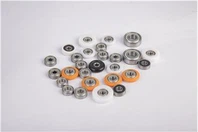
Roller bearings are crucial components in various industries, from automotive to aerospace, and from manufacturing to heavy machinery. As a trusted roller bearings supplier, I am often asked about the materials used to make these essential parts. In this blog, I will delve into the different materials commonly employed in the production of roller bearings, their properties, and their applications.
Steel
Steel is the most widely used material for roller bearings due to its excellent combination of strength, hardness, and durability. There are several types of steel used in bearing manufacturing, each with its own unique properties and applications.
Chrome Steel
Chrome steel, specifically AISI 52100, is a popular choice for high - precision roller bearings. It contains approximately 1% carbon and 1.5% chromium, which gives it high hardness and wear resistance. Chrome steel bearings can withstand heavy loads and high - speed operation. They are commonly used in automotive engines, electric motors, and machine tools. The high carbon content allows for effective heat treatment, which further enhances the bearing's mechanical properties.
Stainless Steel
Stainless steel bearings, such as those made from AISI 440C or AISI 304, are used in applications where corrosion resistance is a primary concern. AISI 440C is a martensitic stainless steel with high carbon content, providing good hardness and wear resistance in addition to corrosion resistance. It is often used in food processing equipment, medical devices, and marine applications. AISI 304, on the other hand, is an austenitic stainless steel known for its excellent formability and good corrosion resistance. It is suitable for less demanding applications where cost is a factor, such as in some consumer products.
High - Speed Steel
High - speed steel (HSS) is used in specialized roller bearings that need to operate at extremely high speeds and temperatures. HSS contains elements such as tungsten, molybdenum, chromium, and vanadium, which give it high red - hardness, meaning it can maintain its hardness at elevated temperatures. These bearings are commonly used in high - speed spindles in machining centers and in some aerospace applications.
Ceramics
Ceramic materials have gained popularity in roller bearing applications in recent years due to their unique properties.
Silicon Nitride (Si₃N₄)
Silicon nitride is a ceramic material that offers several advantages over steel. It has a lower density than steel, which results in less centrifugal force at high speeds. This allows for higher rotational speeds and reduced energy consumption. Silicon nitride is also highly resistant to wear and corrosion, and it has excellent thermal stability. Bearings made from silicon nitride are used in high - performance applications such as jet engines, high - speed machine tools, and electric vehicles.
Zirconia (ZrO₂)
Zirconia is another ceramic material used in roller bearings. It has high toughness and good wear resistance. Zirconia bearings are often used in applications where shock resistance is important, such as in some industrial machinery and automotive transmissions.
Plastics
Plastic materials are used in roller bearings for specific applications where their unique properties are advantageous.

Polytetrafluoroethylene (PTFE)
PTFE, also known as Teflon, is a low - friction plastic material. Bearings made from PTFE or PTFE - lined bearings have extremely low coefficients of friction, which reduces energy consumption and wear. They are often used in applications where lubrication is difficult or where low - noise operation is required, such as in some household appliances and medical equipment.
Polyamide (PA)
Polyamide, commonly known as nylon, is a strong and lightweight plastic. Nylon bearings are self - lubricating to some extent and have good chemical resistance. They are used in applications where corrosion resistance and low cost are important, such as in some agricultural machinery and consumer products.
Other Materials
In addition to the above - mentioned materials, there are some other materials used in specialized roller bearing applications.
Brass
Brass is a copper - zinc alloy that is sometimes used in the production of bearing cages. Brass cages are known for their good formability and corrosion resistance. They are often used in applications where a certain degree of flexibility and resistance to environmental factors is required.
Bronze
Bronze, an alloy of copper and tin, is also used in bearing applications. Bronze bearings have good wear resistance and can operate under heavy loads. They are commonly used in some industrial machinery and marine applications.
Applications and Considerations
The choice of material for a roller bearing depends on several factors, including the application requirements, operating conditions, and cost. For example, in high - speed and high - load applications, chrome steel or ceramic materials may be the best choice. In corrosive environments, stainless steel or plastic bearings are more suitable.
When considering the use of different materials, it is also important to take into account the compatibility of the bearing materials with other components in the system. For example, the hardness and surface finish of the bearing raceways should be compatible with the rollers to ensure proper operation and long service life.
As a roller bearings supplier, I have a wide range of bearings made from different materials to meet the diverse needs of our customers. One of our popular products is the Deep Groove Ball Bearing 6001ZZ. This bearing is made from high - quality chrome steel, providing excellent performance and reliability in various applications.
Conclusion
The materials used to make roller bearings play a crucial role in determining their performance, durability, and suitability for different applications. Steel, ceramics, plastics, and other materials each have their own unique properties and advantages. By understanding the characteristics of these materials, customers can make informed decisions when selecting roller bearings for their specific needs.
If you are in need of roller bearings or have any questions about the materials and applications, please feel free to contact us for further discussion and procurement. We are committed to providing high - quality products and excellent service to meet your requirements.
References
- "Handbook of Bearings" by Peter R. A. Bolander
- "Bearing Technology Handbook" by Nicholas P. Chironis
- "Materials Science and Engineering: An Introduction" by William D. Callister Jr. and David G. Rethwisch