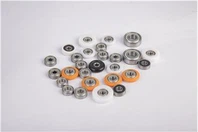
Friction is a fundamental challenge in the operation of track bearing rollers, significantly impacting their efficiency, lifespan, and overall performance. As a supplier of Track Bearing Roller, I am well - versed in the nuances of reducing this friction and ensuring the optimal functionality of these components. In this blog, I aim to share some in - depth knowledge and practical strategies on how to minimize the friction of track bearing rollers.
Understanding Friction in Track Bearing Rollers
Before delving into solutions, it's crucial to understand the nature and causes of friction in track bearing rollers. There are two main types of friction that occur: rolling friction and sliding friction. Rolling friction happens when the roller rolls along the track, while sliding friction can occur when there is relative lateral movement between the roller and the track surface or within the internal components of the bearing.
The sources of friction can be diverse. Surface roughness is a primary factor. If the track or the roller surface is too rough, it increases the contact area between the two, leading to higher frictional forces. Contamination is another culprit. Dust, dirt, and debris can get into the bearing, causing abrasive wear and increasing friction. Additionally, improper lubrication or using the wrong type of lubricant can result in inadequate separation between moving parts, thus increasing friction levels.
Optimizing Surface Finish
One of the most effective ways to reduce friction is by improving the surface finish of both the track and the bearing roller. A smoother surface reduces the asperities (tiny peaks and valleys on the surface), minimizing the real contact area between the two components. For the rollers, precision machining processes such as grinding and polishing can be employed to achieve a very fine surface finish.
On the track side, similar surface - finishing techniques can be used during the manufacturing process. Specialized coatings can also be applied to the track and roller surfaces. For example, diamond - like carbon (DLC) coatings have excellent low - friction properties. They form a hard, smooth layer on the surface, which not only reduces friction but also improves wear resistance.
Lubrication: The Key to Low - Friction Operation
Lubrication is perhaps the most crucial aspect of reducing friction in track bearing rollers. A proper lubricant forms a thin film between the moving parts, separating them and reducing direct metal - to - metal contact.
There are several types of lubricants available, each with its own properties and applications. Greases are a popular choice as they can stay in place for long periods, providing continuous lubrication. They are suitable for applications where the bearing operates at relatively low speeds or in a closed environment. When choosing a grease, factors such as consistency, base oil type, and additives need to be considered.
For high - speed applications, oils are often more appropriate. Oil lubrication systems can provide continuous and precise lubrication, ensuring that the bearing remains well - lubricated under high - speed and high - load conditions. Some advanced oil lubrication systems also have temperature and flow control, which can further optimize the lubrication process.


In addition to the type of lubricant, the lubrication method is also important. Proper lubrication quantity and intervals must be maintained. Over - lubrication can cause excessive drag and energy consumption, while under - lubrication will lead to increased friction and wear.
Contamination Control
As mentioned earlier, contamination can significantly increase friction in track bearing rollers. To combat this, effective contamination control measures should be implemented.
First, proper sealing is essential. High - quality seals can prevent dust, dirt, and moisture from entering the bearing. Seals come in various designs, such as radial lip seals, labyrinth seals, and contact seals. The choice of seal depends on the application environment, operating conditions, and the level of protection required.
In addition to seals, regular cleaning and maintenance of the track and bearing rollers are necessary. For outdoor applications, periodic inspection and cleaning can remove any accumulated dirt or debris. In industrial settings, air filtration systems can be installed to reduce the amount of airborne contaminants.
Bearing Design and Material Selection
The design of the track bearing roller plays a vital role in reducing friction. Optimized roller geometries, such as crown - shaped or tapered rollers, can distribute the load more evenly, reducing stress concentrations and friction. In addition, the internal design of the bearing, including the cage design, can affect the movement of the rollers and the overall friction levels.
Material selection is also crucial. Using high - quality materials with good mechanical properties and low friction coefficients can improve the performance of track bearing rollers. For example, advanced steel alloys with excellent hardness and toughness can be used for the roller and bearing components. Some non - metallic materials, such as ceramics, also have low friction properties and high wear resistance, which can be used in specific applications.
Monitoring and Maintenance
Regular monitoring of the track bearing rollers is essential for ensuring low - friction operation. Parameters such as temperature, vibration, and noise can provide valuable insights into the bearing's condition. An increase in temperature or abnormal vibration levels may indicate increased friction or potential problems within the bearing.
Based on the monitoring results, timely maintenance can be carried out. This may include lubricant replacement, seal inspection and replacement, and component alignment adjustment. By detecting and resolving problems early, the friction of the track bearing rollers can be kept at a minimum, and the service life of the bearing can be extended.
Conclusion
Reducing the friction of track bearing rollers requires a comprehensive approach that includes optimizing surface finish, proper lubrication, contamination control, bearing design and material selection, as well as regular monitoring and maintenance. As a Track Bearing Roller supplier, I am committed to providing high - quality products and expert advice to our customers.
If you are interested in our track bearing rollers or need any assistance in reducing friction in your applications, we invite you to contact us for a detailed discussion. We are ready to work with you to find the best solutions for your specific needs.
References
- "Bearing Tribology" by Erricsson, Tobias and Jacobson, Bengt.
- "Mechanical Design Handbook" by Myer Kutz.
- "Rolling Bearing Analysis" by Tedric A. Harris and Michael N. Kotzalas.