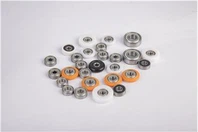
Hey there! As a supplier of U Type Groove Pulleys, I've been in the business long enough to know that optimizing the design of these pulleys is super important. It can make a huge difference in performance, durability, and overall efficiency. So, in this blog, I'm gonna share some tips on how to optimize the design of a U Type Groove Pulley.
Understanding the Basics of U Type Groove Pulleys
First off, let's talk a bit about what U Type Groove Pulleys are. These pulleys have a U - shaped groove that's designed to hold a belt or a rope. They're used in a wide range of applications, from industrial machinery to conveyor systems. You can check out more about U Type Groove Pulley on our website.
The key to a good U Type Groove Pulley design lies in its ability to provide a secure grip on the belt or rope while minimizing friction. This ensures smooth operation and reduces wear and tear on both the pulley and the belt.
Material Selection
One of the first steps in optimizing the design of a U Type Groove Pulley is choosing the right material. The material you select will depend on several factors, such as the application, the load it will bear, and the environment in which it will operate.
For heavy - duty industrial applications, materials like cast iron or steel are often a great choice. They're strong, durable, and can withstand high loads. Cast iron, for example, has good damping properties, which can help reduce vibration and noise during operation.
On the other hand, if the application requires a lightweight pulley, you might consider using aluminum or plastic. Aluminum is corrosion - resistant and has a high strength - to - weight ratio. Plastic pulleys are also lightweight and can be a cost - effective option for less demanding applications. You can also explore related products like Industrial Roller Bearings and Paper Roller Bearing to see if they fit your overall system requirements.
Groove Design
The shape and dimensions of the U - shaped groove are crucial for the pulley's performance. The groove should be designed to match the cross - section of the belt or rope it will be used with. A well - designed groove will provide a snug fit, preventing the belt from slipping off during operation.
The angle of the groove walls is also important. A steeper angle can provide a better grip on the belt, but it may also increase friction. So, you need to find the right balance. Generally, an angle between 30 and 45 degrees is a good starting point, but this can vary depending on the specific application.
Another aspect of groove design is the surface finish. A smooth surface finish can reduce friction and wear on the belt. You can achieve a smooth finish through processes like machining, grinding, or polishing.
Bearing Selection
The bearings used in a U Type Groove Pulley play a vital role in its performance. The right bearings can reduce friction, improve rotational speed, and increase the overall lifespan of the pulley.
When selecting bearings, consider factors such as the load capacity, the speed of rotation, and the operating temperature. For high - speed applications, ball bearings are often a good choice because they can handle high rotational speeds with relatively low friction.
For heavy - load applications, roller bearings may be more suitable. They can distribute the load more evenly and can withstand higher radial and axial loads. Make sure to choose bearings that are properly lubricated to ensure smooth operation and prevent premature wear.
Balancing
Balancing is an often - overlooked aspect of pulley design. An unbalanced pulley can cause vibration, noise, and premature wear on the bearings and other components.
To balance a U Type Groove Pulley, you can use dynamic balancing techniques. This involves measuring the amount and location of the imbalance and then adding or removing material from the pulley to correct it. A well - balanced pulley will operate more smoothly, reducing stress on the system and improving its overall performance.
Testing and Validation
Once you've designed your U Type Groove Pulley, it's important to test it to ensure that it meets your performance requirements. You can conduct various tests, such as load testing, speed testing, and endurance testing.
Load testing involves applying a known load to the pulley and measuring its performance under different conditions. Speed testing helps you determine the maximum speed at which the pulley can operate safely. Endurance testing involves running the pulley for an extended period of time to simulate real - world usage and check for any signs of wear or failure.
Based on the test results, you can make any necessary adjustments to the design to optimize its performance.
Cost - Effectiveness
While optimizing the design of a U Type Groove Pulley, it's also important to consider cost - effectiveness. You want to design a pulley that meets your performance requirements without breaking the bank.
Look for ways to reduce costs without sacrificing quality. For example, you can choose materials that are readily available and cost - effective. You can also optimize the manufacturing process to reduce production time and costs.
Conclusion
Optimizing the design of a U Type Groove Pulley is a multi - step process that involves careful consideration of various factors, from material selection to testing and validation. By following these tips, you can design a pulley that offers excellent performance, durability, and cost - effectiveness.
If you're in the market for high - quality U Type Groove Pulleys or have any questions about pulley design, feel free to reach out. We're here to help you find the best solutions for your specific needs. Let's start a conversation about your requirements and see how we can work together to optimize your pulley systems.


References
- "Mechanical Design Handbook" by Robert C. Juvinall and Kurt M. Marshek
- "Machine Elements in Mechanical Design" by Robert L. Norton