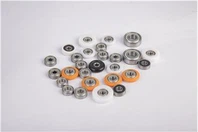
Hey there! As a supplier of Track Bearing Rollers, I often get asked about how to measure the installation torque of these crucial components. In this blog, I'll share some practical tips and insights on this topic.
First off, let's understand why measuring the installation torque of track bearing rollers is so important. The right torque ensures that the rollers are properly installed, which is key to their performance and longevity. If the torque is too low, the rollers might not be securely fastened, leading to movement, vibration, and premature wear. On the other hand, if the torque is too high, it can cause damage to the rollers, the mounting surface, or other related parts.
Tools Needed
To measure the installation torque of track bearing rollers, you'll need a few essential tools. The most important one is a torque wrench. A torque wrench allows you to apply a specific amount of force to the fasteners, ensuring that the correct torque is achieved. There are different types of torque wrenches available, such as click-type, beam-type, and digital torque wrenches. Each has its own advantages, but for most applications, a click-type torque wrench is a popular choice because it's easy to use and provides a clear indication when the set torque is reached.
You'll also need a socket set that fits the fasteners used to install the track bearing rollers. Make sure the sockets are in good condition and match the size and type of the fasteners precisely. Additionally, it's a good idea to have a torque specification chart on hand. This chart will tell you the recommended torque values for the specific track bearing rollers you're working with. These values can vary depending on factors like the size of the rollers, the material they're made of, and the application they're used in.
Step-by-Step Measurement Process
Now, let's go through the step-by-step process of measuring the installation torque of track bearing rollers.
Step 1: Prepare the Work Area
Before you start, make sure the work area is clean and free of debris. Any dirt or foreign particles can affect the accuracy of the torque measurement and also cause problems with the installation. Inspect the mounting surface to ensure it's flat and in good condition. If there are any scratches, dents, or other imperfections, they should be addressed before proceeding.


Step 2: Select the Right Torque Value
Refer to the torque specification chart for your Track Bearing Roller. This chart will provide you with the recommended torque range for the specific rollers and fasteners you're using. It's important to follow these guidelines closely to ensure proper installation.
Step 3: Set the Torque Wrench
Once you've determined the correct torque value, set your torque wrench accordingly. For a click-type torque wrench, you'll usually need to turn the handle to adjust the torque setting. Make sure to set it within the recommended range. Double-check the setting to avoid any errors.
Step 4: Install the Track Bearing Rollers
Place the track bearing rollers in the correct position on the mounting surface. Insert the fasteners through the holes in the rollers and into the corresponding holes in the mounting surface. Use your fingers to tighten the fasteners initially to ensure they're properly seated.
Step 5: Apply Torque
Attach the appropriate socket to the torque wrench and place it over the fastener. Slowly apply force to the torque wrench in a clockwise direction. Keep applying force until the torque wrench clicks, indicating that the set torque has been reached. Repeat this process for all the fasteners used to install the track bearing rollers.
Step 6: Check for Uniformity
After you've tightened all the fasteners, it's a good idea to check for uniformity in the torque application. Go back and recheck each fastener using the torque wrench to make sure they all have the same torque value. This helps to ensure that the track bearing rollers are evenly installed and will perform as expected.
Factors Affecting Torque Measurement
There are several factors that can affect the accuracy of torque measurement during the installation of track bearing rollers. One of the main factors is friction. Friction between the fastener and the mating surface, as well as between the threads of the fastener, can cause variations in the torque required to achieve the desired clamping force. To minimize the effects of friction, you can use a lubricant on the threads of the fasteners. However, make sure to use a lubricant that is compatible with the materials of the fasteners and the track bearing rollers.
Another factor is the type of fastener used. Different types of fasteners, such as bolts, nuts, and screws, have different torque characteristics. For example, a bolt with a fine thread will require a different torque value compared to a bolt with a coarse thread. It's important to take these differences into account when selecting the fasteners and setting the torque wrench.
The condition of the fasteners and the mounting surface also plays a role. If the fasteners are damaged or worn, they may not be able to provide the proper clamping force, even if the correct torque is applied. Similarly, if the mounting surface is not flat or has irregularities, it can affect the distribution of the clamping force and lead to uneven installation.
Tips for Accurate Torque Measurement
Here are some additional tips to help you achieve accurate torque measurement when installing track bearing rollers:
- Calibrate Your Torque Wrench Regularly: Over time, torque wrenches can lose their accuracy. It's recommended to calibrate your torque wrench at least once a year or more frequently if it's used frequently. This ensures that it provides accurate torque readings.
- Use the Right Technique: When using a torque wrench, make sure to apply force smoothly and steadily. Avoid jerky or sudden movements, as this can affect the accuracy of the torque measurement.
- Keep Records: It's a good idea to keep records of the torque values applied during the installation of track bearing rollers. This can be useful for future reference, especially if there are any issues with the performance of the rollers.
Conclusion
Measuring the installation torque of track bearing rollers is a critical step in ensuring their proper performance and longevity. By following the steps outlined in this blog and taking into account the factors that can affect torque measurement, you can install track bearing rollers with confidence.
If you're in the market for high-quality Track Bearing Roller, we're here to help. Our track bearing rollers are designed to meet the highest standards of quality and performance. We offer a wide range of sizes and configurations to suit your specific needs. Whether you're working on a small project or a large industrial application, we have the right solution for you.
If you have any questions or would like to discuss your requirements further, feel free to reach out to us. We're always happy to assist you with your track bearing roller needs and help you make the right choice for your application.
References
- Machinery's Handbook, 31st Edition
- Automotive Engineering Handbook