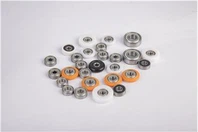
As a supplier of pulley bearings, I understand the critical role that accurate measurement plays in ensuring the optimal performance and longevity of these components. Measuring pulley bearings correctly is not just a technical necessity; it's a key step in maintaining the efficiency of various industrial and mechanical systems. In this blog post, I'll share some essential methods and considerations for measuring pulley bearings.
Why Accurate Measurement Matters
Before diving into the measurement techniques, it's important to understand why accurate measurement is so crucial. Pulley bearings are used in a wide range of applications, from industrial machinery to automotive systems. Incorrectly sized or installed bearings can lead to increased friction, premature wear, and even system failure. By measuring bearings accurately, you can ensure a proper fit, reduce the risk of mechanical issues, and extend the lifespan of the entire system.
Tools for Measuring Pulley Bearings
To measure pulley bearings effectively, you'll need the right tools. Here are some commonly used instruments:
- Calipers: Vernier or digital calipers are essential for measuring the outer diameter (OD), inner diameter (ID), and width of the bearing. They provide precise measurements and are relatively easy to use.
- Micrometers: Micrometers offer even greater accuracy than calipers and are ideal for measuring small dimensions. They are particularly useful for measuring the bearing's tolerance and ensuring it meets the required specifications.
- Dial Indicators: Dial indicators are used to measure the runout, or the amount of deviation from a perfect circle, of the bearing. This is important for ensuring smooth operation and reducing vibration.
- Bearing Measuring Kits: These kits typically include a variety of tools specifically designed for measuring bearings, such as bore gauges, snap gauges, and feeler gauges. They provide a comprehensive solution for measuring different aspects of the bearing.
Measuring the Outer Diameter (OD)
The outer diameter of the bearing is one of the most important dimensions to measure. It determines the fit of the bearing in the housing and affects the overall performance of the system. Here's how to measure the OD:
- Clean the bearing and the measuring tool to ensure accurate results.
- Open the calipers or micrometer wide enough to fit around the bearing.
- Place the measuring tool around the bearing at the widest point and gently close it until it makes contact with the bearing surface.
- Read the measurement on the caliper or micrometer scale. Make sure to take multiple measurements at different points around the bearing to ensure accuracy.
Measuring the Inner Diameter (ID)
The inner diameter of the bearing is equally important as it determines the fit on the shaft. Here's how to measure the ID:
- Clean the bearing and the measuring tool.
- Insert the calipers or bore gauge into the bearing bore. Make sure the measuring tool is centered and perpendicular to the bore.
- Expand the calipers or bore gauge until it makes contact with the inner surface of the bearing.
- Read the measurement on the scale. Again, take multiple measurements at different points around the bore to ensure accuracy.
Measuring the Width
The width of the bearing is another critical dimension that affects its performance. Here's how to measure the width:


- Clean the bearing and the measuring tool.
- Place the calipers or micrometer across the width of the bearing.
- Gently close the measuring tool until it makes contact with the bearing surfaces.
- Read the measurement on the scale. Take multiple measurements at different points along the width to ensure accuracy.
Measuring the Tolerance
Tolerance refers to the allowable variation in the dimensions of the bearing. It is important to measure the tolerance to ensure that the bearing meets the required specifications. Here's how to measure the tolerance:
- Use a micrometer or a bore gauge to measure the actual dimensions of the bearing.
- Compare the measured dimensions with the specified dimensions in the bearing's technical documentation.
- Calculate the difference between the measured and specified dimensions. This difference is the tolerance.
- Check if the tolerance falls within the acceptable range specified by the manufacturer. If it does not, the bearing may need to be replaced.
Measuring the Runout
Runout is the amount of deviation from a perfect circle in the bearing's rotation. It can cause vibration, noise, and premature wear. Here's how to measure the runout:
- Mount the bearing on a shaft or a mandrel.
- Place a dial indicator on the bearing's outer surface.
- Rotate the bearing slowly and observe the reading on the dial indicator. The maximum and minimum readings indicate the amount of runout.
- Compare the measured runout with the specified runout in the bearing's technical documentation. If the runout exceeds the acceptable range, the bearing may need to be replaced.
Considerations for Measuring Pulley Bearings
In addition to using the right tools and techniques, there are some other considerations to keep in mind when measuring pulley bearings:
- Temperature: Temperature can affect the dimensions of the bearing. Make sure to measure the bearing at the same temperature as it will be operating in to ensure accurate results.
- Surface Finish: The surface finish of the bearing can also affect the measurement. Make sure to clean the bearing thoroughly before measuring to remove any dirt, debris, or oil that may affect the accuracy of the measurement.
- Measurement Location: When measuring the bearing, make sure to take the measurements at the correct location. For example, when measuring the OD, make sure to measure at the widest point of the bearing.
- Repeatability: To ensure the accuracy of the measurement, it's important to repeat the measurement multiple times and take an average of the results.
Conclusion
Measuring pulley bearings accurately is essential for ensuring the optimal performance and longevity of these components. By using the right tools, techniques, and considerations, you can measure the bearings with precision and ensure they meet the required specifications. As a supplier of pulley bearings, I'm committed to providing high-quality products and technical support to help you with your bearing measurement needs.
If you're in the market for Industrial Roller Bearings, Paper Roller Bearing, or Sliding Gate Roller Bearings, I encourage you to contact me for more information and to discuss your specific requirements. I'm here to help you find the right bearings for your application and to ensure a successful procurement process.
References
- "Bearing Handbook" by SKF
- "Mechanical Engineering Design" by Joseph E. Shigley and Charles R. Mischke
- "Fundamentals of Machine Elements" by Robert L. Norton