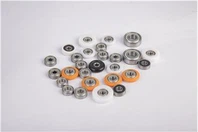
Hey there! As a supplier of Small Bearings, I've seen my fair share of these little but crucial components. Today, I'm gonna share with you how to identify the quality of small bearings. This knowledge can help you make better purchasing decisions and ensure you're getting the best bang for your buck.
1. Appearance Inspection
The first step in checking the quality of small bearings is a visual inspection. High - quality small bearings usually have a smooth and uniform surface. There shouldn't be any visible scratches, dents, or rust spots. If you see rough edges or uneven surfaces, it could be a sign of poor manufacturing processes.
For example, when you look at a Small Bearings, pay close attention to the outer and inner rings. The raceways should be polished to a fine finish. Any burrs or irregularities can cause the balls or rollers to move unevenly, leading to premature wear and failure.


The color of the bearing can also give you some clues. A normal - looking bearing should have a consistent metallic sheen. If it has a dull or discolored appearance, it might have been exposed to harsh environments or improper storage conditions, which can affect its performance.
2. Rotation Test
One of the simplest ways to test the quality of a small bearing is to give it a spin. Hold the inner ring of the bearing firmly and use your other hand to rotate the outer ring. A high - quality bearing should rotate smoothly and quietly. There should be no jerks, vibrations, or unusual noises.
If you feel any resistance or hear a grinding sound when rotating the bearing, it could indicate that there are issues with the internal components. Maybe the balls or rollers are damaged, or there's dirt or debris inside the bearing. For instance, Bearing 6200 should rotate freely without any hindrance. If it doesn't, it's likely not up to the mark.
You can also try applying a little bit of pressure while rotating the bearing. A good - quality bearing will still rotate smoothly under light pressure. But if the rotation becomes difficult or stops completely, there's definitely something wrong with it.
3. Material Analysis
The materials used in small bearings play a huge role in determining their quality. High - grade steel is commonly used for the rings and balls of bearings. You can ask the supplier for information about the material composition. A reliable supplier should be able to provide details about the type of steel, its hardness, and other relevant properties.
For example, bearings made from high - carbon chromium steel are known for their good wear resistance and high hardness. They can withstand heavy loads and high - speed operations. On the other hand, low - quality bearings might use inferior steel, which can lead to faster wear and shorter service life.
Another important aspect is the heat treatment of the materials. Proper heat treatment can improve the hardness and toughness of the bearing components. You can look for signs of heat - treatment, such as a specific color or surface finish, but this might require some experience to identify accurately.
4. Clearance Measurement
Bearing clearance is the amount of free movement between the inner and outer rings of the bearing. It's an important factor that affects the performance and service life of the bearing. You can use a feeler gauge or a specialized measuring instrument to measure the clearance.
The appropriate clearance depends on the application of the bearing. For high - speed applications, a smaller clearance is usually required to ensure smooth operation. For applications with heavy loads, a slightly larger clearance might be necessary to accommodate the deformation of the bearing under load.
If the clearance is too large, the bearing might vibrate excessively, leading to noise and premature wear. If the clearance is too small, it can cause overheating and seizure of the bearing. For Bearing 6001ZZ, make sure to check the clearance according to the manufacturer's specifications.
5. Sealing and Lubrication
Good sealing is essential for small bearings, especially in applications where they are exposed to dirt, dust, and moisture. A well - sealed bearing can prevent contaminants from entering the bearing, which can extend its service life.
Check the seals of the bearing. They should be intact and properly installed. There should be no gaps or damage to the seals. The quality of the lubricant inside the bearing also matters. High - quality bearings usually come pre - lubricated with a suitable lubricant. The lubricant should have the right viscosity and properties for the application.
If the lubricant has dried out or become contaminated, it can cause increased friction and wear. You can try to check the lubricant by carefully removing a small amount from the bearing (if possible). A fresh and clean lubricant indicates a well - maintained bearing.
6. Manufacturer Reputation
The reputation of the manufacturer is also a key factor in determining the quality of small bearings. A well - established and reputable manufacturer is more likely to produce high - quality bearings. You can do some research online to find out what other customers have to say about the manufacturer.
Look for reviews, testimonials, and industry ratings. A manufacturer with a long - standing history of producing reliable bearings is generally a safer bet. You can also ask for references from the supplier. A good supplier should be able to provide you with contact information of other customers who have purchased their bearings.
7. Compliance with Standards
Small bearings should comply with relevant industry standards. For example, in many countries, bearings need to meet ISO (International Organization for Standardization) standards. These standards define the quality, dimensions, and performance requirements of bearings.
Ask the supplier for documentation that shows the bearing's compliance with the relevant standards. This can give you confidence in the quality of the product. If a bearing doesn't meet the standards, it might not perform as expected and could pose risks in your application.
Conclusion
Identifying the quality of small bearings is not rocket science, but it does require some knowledge and attention to detail. By following these steps, you can make a more informed decision when purchasing small bearings.
As a supplier of Small Bearings, I'm always here to help you choose the right bearings for your needs. If you have any questions or are interested in purchasing small bearings, feel free to reach out. I can provide you with more detailed information and assist you in the purchasing process.
Let's work together to ensure you get the best - quality small bearings for your applications. Whether you need Small Bearings, Bearing 6200, or Bearing 6001ZZ, I've got you covered.
References
- "Bearing Handbook" - A comprehensive guide on bearing technology and quality assessment.
- Industry reports on small bearing manufacturing and quality control.