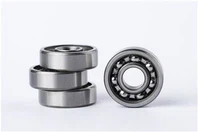
As a supplier of Paper Roller Bearings, I understand the critical importance of evaluating the dynamic performance of these bearings. In the paper industry, where high - speed and continuous operation is the norm, the dynamic performance of paper roller bearings directly affects the quality of paper production, production efficiency, and equipment reliability. In this blog, I will share some key methods and considerations for evaluating the dynamic performance of paper roller bearings.
1. Understanding the Operating Conditions
Before evaluating the dynamic performance of paper roller bearings, it is essential to understand their operating conditions. Paper roller bearings typically operate in high - speed, high - load, and sometimes harsh environments. The speed of the rollers can reach several hundred revolutions per minute, and the load they bear comes from the weight of the paper web, the tension during the paper - making process, and the mechanical forces exerted by the equipment.
In addition, factors such as temperature, humidity, and the presence of dust and chemicals in the paper - making environment can also impact the bearing's performance. For example, high temperatures can cause the lubricant in the bearing to degrade, reducing its lubricating effect and increasing friction and wear. Therefore, when evaluating the dynamic performance, we need to take into account these real - world operating conditions.
2. Key Performance Indicators
2.1 Rotational Speed and Acceleration
The rotational speed of paper roller bearings is a crucial factor. High - speed rotation can generate centrifugal forces that affect the internal structure of the bearing. To evaluate the dynamic performance related to speed, we can measure the maximum allowable rotational speed of the bearing and its ability to accelerate and decelerate smoothly.
For instance, we can use a speed sensor to monitor the actual rotational speed of the bearing during operation. If the bearing fails to reach the designed speed or experiences significant speed fluctuations, it may indicate problems such as excessive friction, misalignment, or damage to the rolling elements. A bearing with good dynamic performance should be able to maintain a stable rotational speed within the specified range, even under variable load conditions.
2.2 Load - Carrying Capacity
The load - carrying capacity of paper roller bearings is another important aspect. The bearing must be able to withstand the radial and axial loads exerted on it during the paper - making process. We can conduct load - testing experiments to evaluate how the bearing behaves under different load levels.
For example, we can gradually increase the load on the bearing while monitoring its temperature, vibration, and rotational resistance. A high - quality paper roller bearing should be able to maintain its structural integrity and performance even when subjected to heavy loads. If the bearing shows signs of deformation, excessive wear, or abnormal noise under load, it may not have sufficient load - carrying capacity.


2.3 Vibration and Noise
Vibration and noise are important indicators of the dynamic performance of paper roller bearings. Excessive vibration can lead to premature wear of the bearing components, damage to the surrounding equipment, and a decrease in the quality of the paper product. Noise is often a sign of internal problems in the bearing, such as loose components, damaged rolling elements, or improper lubrication.
We can use vibration sensors and noise - measuring devices to monitor the vibration and noise levels of the bearing during operation. By analyzing the frequency and amplitude of the vibration, we can identify potential problems in the bearing. For example, a high - frequency vibration may indicate a problem with the rolling elements, while a low - frequency vibration may be related to misalignment or imbalance.
2.4 Temperature Rise
The temperature rise of the bearing during operation is also a key indicator. Friction within the bearing generates heat, and if the heat cannot be dissipated effectively, it can cause the temperature of the bearing to rise significantly. High temperatures can damage the lubricant, reduce the hardness of the bearing materials, and accelerate wear.
We can use temperature sensors to monitor the temperature of the bearing. A normal operating temperature range for paper roller bearings should be within the specified limits. If the temperature rises rapidly or exceeds the allowable limit, it may indicate problems such as insufficient lubrication, excessive friction, or overloading.
3. Testing Methods
3.1 Laboratory Testing
In the laboratory, we can use specialized testing equipment to simulate the operating conditions of paper roller bearings. For example, a bearing test rig can be used to apply different loads and rotational speeds to the bearing while monitoring its performance parameters such as vibration, temperature, and torque.
We can also conduct lubrication - related tests in the laboratory. By analyzing the lubricant's viscosity, chemical composition, and anti - wear properties, we can ensure that the lubricant used in the bearing is suitable for the operating conditions. For instance, in a high - temperature environment, a lubricant with high - temperature resistance should be selected.
3.2 Field Testing
Field testing is also essential. By installing sensors on the actual paper - making equipment, we can collect real - time data on the performance of the paper roller bearings. This data provides valuable information about how the bearings perform in the real - world environment.
For example, we can install vibration sensors and temperature sensors on the bearing housing. The data collected from these sensors can be transmitted to a monitoring system, where it can be analyzed to detect any potential problems early. Field testing also allows us to evaluate the long - term performance of the bearings and their compatibility with the overall paper - making equipment.
4. The Role of Design and Manufacturing
The design and manufacturing process of paper roller bearings have a significant impact on their dynamic performance. A well - designed bearing should have an optimized internal structure that can effectively distribute the load and reduce friction.
For example, the shape and size of the rolling elements, the clearance between the inner and outer rings, and the design of the cage all affect the bearing's performance. In addition, high - quality manufacturing materials and precise manufacturing processes are also crucial. Using high - grade steel for the bearing components and ensuring accurate machining tolerances can improve the bearing's durability and performance.
As a supplier, we are committed to using advanced design and manufacturing technologies to produce Paper Roller Bearings with excellent dynamic performance. Our Paper Roller Bearing products are designed to meet the high - speed and high - load requirements of the paper industry, and we continuously improve our products based on the latest research and customer feedback.
5. Complementary Products and Their Impact
In addition to paper roller bearings, other products such as U Type Groove Pulley and Industrial Roller Bearings can also affect the overall performance of the paper - making equipment.
U Type Groove Pulleys are often used in conjunction with paper roller bearings to guide the paper web. Their smooth operation and proper alignment are essential for the stable movement of the paper. Industrial Roller Bearings, on the other hand, may be used in other parts of the paper - making equipment, and their performance can also have an impact on the overall efficiency and reliability of the system.
Therefore, when evaluating the dynamic performance of paper roller bearings, we also need to consider the interaction between these complementary products and ensure that they work together harmoniously.
6. Conclusion and Call to Action
Evaluating the dynamic performance of paper roller bearings is a complex but essential task. By understanding the operating conditions, focusing on key performance indicators, using appropriate testing methods, and considering the design and manufacturing factors, we can ensure that the bearings meet the high - standards of the paper industry.
As a professional supplier of Paper Roller Bearings, we have the expertise and experience to provide high - quality products that can meet your specific requirements. If you are in the paper - making industry and are looking for reliable paper roller bearings or need more information about evaluating their dynamic performance, please feel free to contact us for procurement discussions. We are ready to offer you the best solutions and support to improve your paper - making production efficiency and quality.
References
- Harris, T. A., & Kotzalas, M. N. (2007). Rolling Bearing Analysis. John Wiley & Sons.
- Ioannides, S., & Harris, T. A. (1985). A generalized life theory for rolling bearings. Transactions of the ASME, Journal of Tribology, 107(3), 367 - 373.
- Zaretsky, E. V. (1998). Ball and Roller Bearing Engineering. CRC Press.