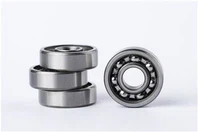
Hey there! If you're dealing with a 20mm roller bearing, proper lubrication is crucial. I'm a supplier of these 20mm roller bearings, and I've seen firsthand how the right lubrication can extend the bearing's lifespan and keep it performing at its best. So, let's dive into how you can ensure the proper lubrication of a 20mm roller bearing.
Why Lubrication Matters
First off, let's talk about why lubrication is so important for a 20mm roller bearing. The main job of the lubricant is to reduce friction between the moving parts of the bearing. When there's less friction, there's less wear and tear on the bearing components. This means the bearing can run smoother, quieter, and for a longer time.
Without proper lubrication, the heat generated by the friction can cause the bearing to overheat. Overheating can lead to all sorts of problems, like the lubricant breaking down, the bearing material expanding and deforming, and eventually, the bearing failing. So, getting the lubrication right is a no - brainer if you want your 20mm roller bearing to last.
Choosing the Right Lubricant
The first step in ensuring proper lubrication is choosing the right lubricant. There are two main types of lubricants for bearings: grease and oil.
Grease
Grease is a popular choice for 20mm roller bearings. It's easy to apply and stays in place well. Grease contains a base oil, a thickener, and additives. The base oil is what actually reduces friction, while the thickener keeps the oil in place. Additives are used to enhance the performance of the grease, like improving its resistance to oxidation or corrosion.
When choosing a grease, you need to consider factors like the operating temperature, speed, and load of the bearing. For a 20mm roller bearing, if it's operating at moderate speeds and loads, a general - purpose grease with a high dropping point (the temperature at which the grease turns to liquid) might be a good choice. For high - temperature applications, you'll need a grease with special high - temperature additives. Check out our 20mm Roller Bearing page for more information on the types of lubricants suitable for our bearings.
Oil
Oil lubrication is another option for 20mm roller bearings, especially in high - speed or high - precision applications. Oil provides better heat dissipation than grease, which is important when the bearing is running at high speeds and generating a lot of heat.


There are different types of oils, such as mineral oils, synthetic oils, and vegetable oils. Synthetic oils are often preferred for 20mm roller bearings because they have better performance in terms of temperature range, oxidation resistance, and viscosity stability. However, oil lubrication systems are usually more complex than grease lubrication, as they require a proper oil circulation system.
Applying the Lubricant
Once you've chosen the right lubricant, the next step is to apply it correctly.
Grease Application
When applying grease to a 20mm roller bearing, you need to be careful not to over - or under - grease it. Over - greasing can cause the bearing to overheat because the excess grease can create additional resistance and generate more heat. Under - greasing, on the other hand, won't provide enough lubrication to reduce friction effectively.
The amount of grease you apply depends on the size and type of the bearing. As a general rule, for a 20mm roller bearing, you should fill about one - third to one - half of the bearing's internal space with grease. You can use a grease gun to apply the grease evenly around the bearing.
Oil Application
If you're using oil lubrication, you can apply the oil through an oil bath, oil mist, or oil jet system. In an oil bath system, the lower part of the bearing is submerged in the oil. This is a simple and effective way to lubricate the bearing, but it's not suitable for high - speed applications because the drag of the oil can cause energy losses.
Oil mist and oil jet systems are more suitable for high - speed applications. In an oil mist system, the oil is atomized into tiny droplets and carried by compressed air to the bearing. In an oil jet system, the oil is sprayed directly onto the bearing at high pressure.
Maintaining the Lubrication
Proper lubrication isn't a one - time thing. You need to maintain the lubrication over the life of the 20mm roller bearing.
Regular Inspections
Regular inspections are essential to ensure that the lubricant is still in good condition. Check the lubricant for signs of contamination, such as dirt, water, or metal particles. If the lubricant is contaminated, it needs to be replaced immediately.
You should also check the level of the lubricant. In a grease - lubricated bearing, you might need to re - grease it periodically. In an oil - lubricated system, you need to make sure the oil level is within the recommended range.
Replacing the Lubricant
The lubricant will eventually break down over time, especially in high - temperature or high - load applications. When the lubricant breaks down, it loses its ability to reduce friction, and the bearing can be damaged. So, you need to replace the lubricant at regular intervals.
The replacement interval depends on factors like the type of lubricant, the operating conditions of the bearing, and the manufacturer's recommendations. For example, in a high - temperature application, you might need to replace the grease every few months, while in a normal - temperature application, it could last for a year or more.
Other Considerations
There are a few other things to keep in mind when lubricating a 20mm roller bearing.
Environmental Conditions
The environmental conditions can also affect the lubrication of the bearing. If the bearing is operating in a dirty or dusty environment, you need to take extra precautions to prevent contamination of the lubricant. For example, you can use seals or shields on the bearing to keep dirt and dust out.
If the bearing is operating in a humid environment, you need to choose a lubricant with good corrosion - resistance properties. Some lubricants contain additives that can protect the bearing from corrosion caused by moisture.
Compatibility
Make sure the lubricant you choose is compatible with the bearing material and other components in the system. Incompatible lubricants can cause chemical reactions that damage the bearing. For example, some lubricants might react with the seals on the bearing and cause them to swell or shrink.
Conclusion
Ensuring the proper lubrication of a 20mm roller bearing is essential for its performance and longevity. By choosing the right lubricant, applying it correctly, and maintaining the lubrication over time, you can keep your bearing running smoothly and avoid costly breakdowns.
If you're in the market for high - quality 20mm roller bearings or need more advice on lubrication, don't hesitate to reach out to us. We're here to help you with all your bearing needs and can guide you through the process of choosing the best lubrication solutions for your 20mm roller bearings. Also, check out our other related products like Small Rollers with Bearings and Bearing 6203llu.
References
- Harris, T. A., & Kotzalas, M. N. (2007). Rolling Bearing Analysis. John Wiley & Sons.
- Boyde, T. M. (2013). Handbook of Lubrication and Tribology: Volume III: Applications. CRC Press.