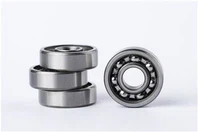
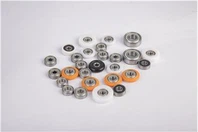
Hey there! As a supplier of Big Ball Bearings, I often get asked the question, "How often should I lubricate Big Ball Bearings?" It's a crucial query because proper lubrication is key to keeping these bearings running smoothly and extending their lifespan. In this blog, I'll break down the factors that influence lubrication frequency and give you some practical tips.
First off, let's understand why lubrication is so important for Big Ball Bearings. These bearings are designed to reduce friction between moving parts. When you have a big ball bearing in action, there's a lot of mechanical stress and heat generated. Lubrication acts as a protective layer between the balls and the raceways. It reduces friction, which in turn cuts down on wear and tear, and helps dissipate heat. Without proper lubrication, the bearings can overheat, wear out quickly, and even fail prematurely.
Now, the frequency of lubrication depends on several factors. One of the most significant factors is the operating environment. If the bearings are in a clean, dry environment with stable temperatures, they might not need lubrication as often as those in harsher conditions. For example, if your Big Ball Bearings are used in a factory where there's a lot of dust, dirt, or moisture, the lubricant can get contaminated more quickly. In such cases, you'll need to lubricate more frequently to ensure that the protective layer remains effective.
Another factor is the load on the bearings. Big Ball Bearings that are subjected to heavy loads have more pressure between the balls and the raceways. This increased pressure can cause the lubricant to break down faster. So, if your application involves high - load operations, like in heavy machinery or large industrial equipment, you'll need to lubricate more often.
The speed at which the bearings are rotating also plays a role. Higher rotational speeds generate more heat and friction. This means that the lubricant can degrade more rapidly. If your Big Ball Bearings are spinning at high speeds, you'll likely need to lubricate them more frequently compared to those operating at lower speeds.
Let's talk about some general guidelines. For light - duty applications in a clean environment, lubricating every 3 - 6 months might be sufficient. These could be applications like small - scale conveyor systems or some light - duty automation equipment. However, for medium - duty applications, such as in some manufacturing machinery, you might want to lubricate every 1 - 3 months.
When it comes to heavy - duty applications in harsh environments, like mining equipment or large construction machinery, lubrication might be required weekly or even more often. In these cases, the bearings are under extreme stress, and the operating conditions can quickly degrade the lubricant.
Now, how do you know when it's time to lubricate? One way is to monitor the temperature of the bearings. If the temperature starts to rise, it could be a sign that the lubricant is breaking down and not providing enough protection. You can use infrared thermometers to check the temperature regularly. Another method is to listen for any unusual noises coming from the bearings. Grinding, squealing, or rattling sounds can indicate that there's not enough lubrication and the metal parts are rubbing against each other.
It's also important to use the right type of lubricant. There are different types of lubricants available, such as grease and oil. Grease is a popular choice for Big Ball Bearings because it stays in place better and provides good sealing against contaminants. However, it can get stiff at low temperatures and might not be suitable for high - speed applications. Oil, on the other hand, has better heat - dissipation properties and is more suitable for high - speed operations.


As a supplier, I've seen firsthand the difference that proper lubrication can make. Many of our customers who follow the right lubrication schedule have reported longer bearing life and fewer breakdowns. This not only saves them money on replacement parts but also reduces downtime, which is crucial in any business.
If you're using Big Ball Bearings in your application, I highly recommend referring to the manufacturer's guidelines. They usually provide specific lubrication recommendations based on the bearing's design and intended use.
Now, I want to mention one of our great products, the Track Bearing Roller. This is a high - quality track bearing roller that's designed to work well in various applications. It's built to last, but like all Big Ball Bearings, it needs proper lubrication to perform at its best.
If you're in the market for Big Ball Bearings or have any questions about lubrication or our products, don't hesitate to reach out. Whether you're a small business owner looking for bearings for a new project or a large industrial company in need of a reliable bearing supplier, we're here to help. We can provide you with the right bearings for your application and offer advice on lubrication and maintenance.
In conclusion, the frequency of lubricating Big Ball Bearings depends on the operating environment, load, and speed. By understanding these factors and following the right lubrication schedule, you can ensure that your bearings last longer and perform better. If you have any further questions or want to discuss your bearing needs, feel free to get in touch. We're always happy to assist you in finding the best solutions for your business.
References
- "Bearing Lubrication Handbook" - A comprehensive guide on bearing lubrication published by a leading bearing industry association.
- Manufacturer's manuals of various Big Ball Bearings for specific lubrication recommendations.