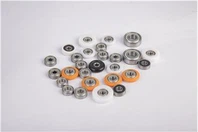
Hey there! As a supplier of Bearing 6305, I've seen firsthand how the tolerance class of this bearing can have a huge impact on its installation and operation. In this blog, I'm gonna break down what tolerance classes are, how they affect Bearing 6305, and why it matters to you.
First off, let's talk about what tolerance class means. In the world of bearings, tolerance class refers to the allowable variation in the bearing's dimensions and performance characteristics. Every bearing is manufactured with a certain level of precision, and the tolerance class defines how much deviation from the ideal specifications is acceptable. The International Organization for Standardization (ISO) has established a standard system for bearing tolerance classes, which ranges from P0 (the lowest precision) to P2 (the highest precision).
So, how does the tolerance class of Bearing 6305 specifically affect its installation? Well, when you're installing a bearing, you need to make sure it fits properly in its housing and on the shaft. If the bearing's dimensions are too far off from the ideal specifications, it can lead to a whole host of problems. For example, if the bearing is too loose, it might move around inside the housing, causing vibrations and premature wear. On the other hand, if it's too tight, it can cause excessive stress on the bearing and the surrounding components, leading to overheating and failure.
Let's say you're using a Bearing 6305 with a lower tolerance class, like P0. This bearing will have a relatively larger allowable variation in its dimensions. That means when you're installing it, you might have to do a bit more adjusting to get a proper fit. You might need to use shims or other adjustment methods to make sure the bearing is centered and seated correctly. This can add some time and complexity to the installation process.
In contrast, if you're using a Bearing 6305 with a higher tolerance class, like P5 or P2, the bearing will be manufactured to much tighter specifications. This means it will fit more precisely in the housing and on the shaft right out of the box. Installation will be quicker and easier, and you'll have less risk of alignment issues. For high - speed or high - precision applications, a higher tolerance class bearing can be a real game - changer.
Now, let's look at how the tolerance class affects the operation of Bearing 6305. During operation, a bearing is subjected to a lot of forces and stresses. The tolerance class can influence how well the bearing can handle these conditions.
A bearing with a lower tolerance class might not be able to maintain its accuracy as well under load. The larger dimensional variations can cause uneven distribution of forces, which can lead to increased friction and wear. This can result in reduced bearing life, higher operating temperatures, and more frequent maintenance requirements.

On the other hand, a Bearing 6305 with a higher tolerance class is designed to handle these forces more evenly. The precise dimensions ensure that the load is distributed more uniformly across the bearing's surfaces. This reduces friction, which in turn lowers operating temperatures and extends the bearing's lifespan. For applications where reliability and long - term performance are crucial, such as in industrial machinery or automotive engines, a higher tolerance class bearing is often the better choice.
Let's take a real - world example. Suppose you're running a conveyor system that operates at high speeds for long periods. If you use a Bearing 6305 with a low tolerance class, you might start to notice vibrations and increased noise after a relatively short time. This is a sign that the bearing is wearing out faster than it should. You'll have to stop the conveyor, replace the bearing, and deal with the downtime and associated costs.
However, if you use a Bearing 6305 with a high tolerance class, the bearing will be more stable and reliable. It will run smoothly for a longer time, reducing the frequency of maintenance and replacement. This can save you a significant amount of money in the long run.
Another aspect to consider is the cost. Higher tolerance class bearings are generally more expensive to manufacture because of the tighter manufacturing processes and quality control required. But when you factor in the reduced installation time, longer lifespan, and lower maintenance costs, the investment in a higher tolerance class Bearing 6305 can actually be cost - effective.
So, when you're choosing a Bearing 6305 for your application, you need to carefully consider the tolerance class. Think about the operating conditions, the required level of precision, and your budget. If you're working on a high - precision project where even the slightest deviation can cause problems, a higher tolerance class bearing is probably the way to go. But if you're on a tight budget and the application doesn't require extreme precision, a lower tolerance class bearing might be sufficient.
As a Bearing 6305 supplier, I can help you make the right choice. I've got a wide range of Bearing 6305 with different tolerance classes in stock. You can check out our Bearing 6305 on our website to see the options available.
Whether you're an engineer looking for the perfect bearing for a new project or a maintenance technician in need of a replacement, I'm here to assist you. Don't hesitate to get in touch if you have any questions or if you're ready to start a purchase. We can have a detailed discussion about your specific requirements and find the best Bearing 6305 tolerance class for your needs.
In conclusion, the tolerance class of Bearing 6305 is a critical factor that can significantly impact its installation and operation. By understanding how tolerance classes work and choosing the right one for your application, you can ensure optimal performance, reliability, and cost - effectiveness. So, if you're in the market for Bearing 6305, give me a shout, and let's find the perfect fit for you.
References:
- ISO standards for bearing tolerance classes
- Industry literature on bearing selection and application