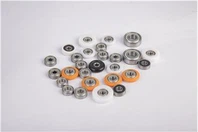
Hey there! As a supplier of pulley bearings, I'm super stoked to dive into how these nifty little components work. Pulley bearings are everywhere, from industrial machinery to everyday household items, quietly doing their job to make things run smoothly. So, let's get right into it!
The Basics of Pulley Bearings
First off, what exactly are pulley bearings? Well, they're a type of bearing that's designed to support and guide a pulley. A pulley is a simple machine that consists of a wheel with a groove around its circumference, and a rope, cable, or belt runs along this groove. The bearing's job is to reduce friction between the pulley and its shaft, allowing the pulley to rotate freely.
Think of it like this: when you try to spin a wheel on a rough surface, it's going to be pretty hard to get it going, and it'll stop quickly. But if you put that wheel on a smooth surface or use some kind of lubricant, it'll spin much more easily. That's basically what a pulley bearing does. It creates a smooth surface for the pulley to rotate on, so it can do its job efficiently.
How Pulley Bearings Reduce Friction
Now, let's talk about how pulley bearings actually reduce friction. There are a few different types of pulley bearings, but most of them work on the principle of rolling contact. Instead of having two surfaces slide against each other, which creates a lot of friction, the bearing uses rolling elements like balls or rollers.
For example, in a ball bearing, there are a bunch of small steel balls between the inner and outer races. When the pulley rotates, these balls roll between the races, reducing the amount of friction. It's like pushing a heavy box on a bunch of marbles instead of dragging it along the floor. The marbles (or balls in this case) make it much easier to move the box (or rotate the pulley).
Another type of pulley bearing is the roller bearing. Roller bearings use cylindrical or tapered rollers instead of balls. These rollers have a larger contact area with the races, which can handle more load. They're often used in heavy-duty applications where there's a lot of weight or force on the pulley.
Different Types of Pulley Bearings and Their Applications
There are many different types of pulley bearings, each with its own unique features and applications. Let's take a look at a few of the most common ones.
U Type Groove Pulley
The U Type Groove Pulley is a popular type of pulley bearing. It has a U-shaped groove that's designed to hold a belt or rope securely. This type of pulley is often used in conveyor systems, where it helps to move materials from one place to another. The U-shaped groove keeps the belt or rope in place, so it doesn't slip off during operation.
Paper Roller Bearing
The Paper Roller Bearing is specifically designed for use in the paper industry. It's used in paper machines to guide and support the paper as it moves through the machine. These bearings need to be very precise and reliable, as even a small amount of misalignment can cause problems with the paper quality.
Industrial Roller Bearings
Industrial Roller Bearings are used in a wide range of industrial applications. They're designed to handle heavy loads and high speeds, making them ideal for use in machinery like cranes, conveyors, and manufacturing equipment. These bearings come in different sizes and configurations to suit different applications.
The Importance of Lubrication
Lubrication is also an important part of how pulley bearings work. Lubricant helps to reduce friction even further and protects the bearing from wear and corrosion. There are different types of lubricants that can be used, such as oil and grease.


Oil lubrication is often used in high-speed applications because it can provide better cooling and can flow more easily through the bearing. Grease lubrication, on the other hand, is more commonly used in low-speed applications. It stays in place better and can provide long-term protection.
Proper lubrication is crucial for the performance and lifespan of the pulley bearing. If the bearing isn't lubricated enough, it can overheat and wear out quickly. On the other hand, if there's too much lubricant, it can cause problems like leakage or contamination. So, it's important to use the right amount and type of lubricant for the specific application.
Maintenance and Care of Pulley Bearings
To keep pulley bearings working properly, they need to be maintained and cared for. This includes regular inspections, cleaning, and lubrication.
Inspections should be done regularly to check for any signs of wear, damage, or misalignment. If you notice any problems, it's important to address them right away. For example, if a bearing is making a strange noise or vibrating, it could be a sign that something is wrong.
Cleaning the bearings is also important to remove any dirt, debris, or contaminants that could cause damage. You can use a clean cloth or a special cleaning solution to clean the bearings. Just make sure to dry them thoroughly before applying new lubricant.
As I mentioned earlier, lubrication is crucial. You should follow the manufacturer's recommendations for the type and amount of lubricant to use. And don't forget to re-lubricate the bearings at the recommended intervals.
Why Choose Our Pulley Bearings
As a supplier of pulley bearings, we take pride in offering high-quality products. Our bearings are made from the best materials and are manufactured to the highest standards. We have a wide range of pulley bearings available, including the U Type Groove Pulley, Paper Roller Bearing, and Industrial Roller Bearings.
We also offer excellent customer service. Our team of experts is always ready to help you choose the right pulley bearing for your application. We can answer any questions you have and provide you with technical support.
If you're in the market for pulley bearings, we'd love to hear from you. Whether you're a small business or a large industrial company, we can provide you with the products and services you need. Contact us today to start a conversation about your pulley bearing needs.
References
- "Bearing Handbook" by SKF
- "Mechanical Design Handbook" by Robert C. Juvinall and Kurt M. Marshek
- Various industry publications and websites on pulley bearings and related topics.