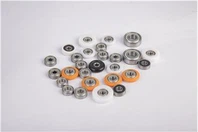
As a trusted supplier of Bearing 6305, I've been deeply involved in the world of bearings for years. One question that frequently pops up in my conversations with customers is, "Can the vibration of Bearing 6305 be reduced?" In this blog post, I'll explore this question from multiple perspectives, drawing on my industry experience and knowledge.
Understanding the Basics of Bearing 6305
Before delving into the topic of vibration reduction, it's essential to understand what Bearing 6305 is. Bearing 6305 is a type of deep - groove ball bearing, which is one of the most widely used bearing types in various industrial applications. You can find more detailed information about Bearing 6305 on our official website Bearing 6305.
These bearings are designed to accommodate both radial and axial loads, making them suitable for a wide range of machinery, including electric motors, pumps, and conveyors. However, like any mechanical component, Bearing 6305 can experience vibration during operation, which may lead to several issues such as noise, premature wear, and even mechanical failure if not addressed properly.

Causes of Vibration in Bearing 6305
To reduce the vibration of Bearing 6305, we first need to understand its root causes. There are several factors that can contribute to bearing vibration:
Manufacturing Defects
During the manufacturing process, imperfections can occur. For example, uneven raceway surfaces, out - of - roundness of the rings, or improper ball sizing can all lead to increased vibration. High - quality manufacturing processes with strict quality control measures can minimize these defects. At our company, we use advanced manufacturing technologies and conduct rigorous inspections to ensure the quality of our Bearing 6305 products.
Installation Errors
Incorrect installation is another common cause of bearing vibration. If the bearing is not installed properly, such as being misaligned, over - tightened, or under - tightened, it can generate excessive vibration. For instance, when the bearing is over - tightened, it can cause internal stress, which in turn leads to abnormal vibration. On the other hand, under - tightening can result in the bearing moving within its housing, also causing vibration.
Lubrication Issues
Proper lubrication is crucial for the smooth operation of bearings. Insufficient lubrication can increase friction between the rolling elements and the raceways, leading to vibration and heat generation. Over - lubrication, on the other hand, can cause churning losses and also contribute to vibration. The type of lubricant used also matters. Using the wrong lubricant for the specific application can lead to poor performance and increased vibration.
External Load and Misalignment
External factors such as excessive or uneven loads, as well as misalignment of the shaft and the housing, can put additional stress on the bearing. This stress can cause the bearing to vibrate. For example, in a conveyor system, if the load is not evenly distributed on the conveyor belt, it can transfer uneven forces to the bearings, resulting in vibration.
Strategies to Reduce Vibration in Bearing 6305
Quality Manufacturing and Inspection
As mentioned earlier, high - quality manufacturing is the first step in reducing bearing vibration. We invest heavily in state - of - the - art manufacturing equipment and a team of experienced engineers. Our manufacturing process includes precision machining, heat treatment, and surface finishing to ensure the highest quality of Bearing 6305. After manufacturing, each bearing undergoes a series of inspections, including dimensional checks, surface roughness measurements, and vibration testing. Only bearings that meet our strict quality standards are released to the market.
Correct Installation Procedures
Proper installation is essential for minimizing vibration. We provide detailed installation guidelines to our customers. When installing Bearing 6305, it's important to use the correct tools and follow the recommended procedures. For example, using a press - fit method to install the bearing on the shaft can ensure a proper fit. Alignment tools should be used to ensure that the shaft and the housing are properly aligned. Our technical support team is also available to assist customers with installation if needed.
Optimal Lubrication
Selecting the right lubricant and maintaining the proper lubrication level are key to reducing vibration. We offer a range of lubricants suitable for different applications of Bearing 6305. The lubricant should have the right viscosity, additives, and performance characteristics for the operating conditions. Regular lubrication checks and replacements are necessary to ensure that the bearing is always properly lubricated.
Vibration Monitoring and Maintenance
Implementing a vibration monitoring system can help detect early signs of vibration problems. By regularly monitoring the vibration levels of Bearing 6305, we can identify potential issues before they become serious. If abnormal vibration is detected, maintenance actions such as re - greasing, realignment, or bearing replacement can be taken promptly.
Case Studies
Let me share a few case studies to illustrate the effectiveness of these vibration reduction strategies.
Case 1: Electric Motor Application
A customer was experiencing high vibration levels in an electric motor that used our Bearing 6305. After a detailed inspection, we found that the issue was due to incorrect installation. The bearing was slightly misaligned, which caused uneven loading and vibration. We provided the customer with installation training and assisted them in realigning the bearing. After the realignment, the vibration levels were significantly reduced, and the motor's performance improved.
Case 2: Pump Application
In a pump application, the customer reported excessive noise and vibration. We analyzed the situation and determined that the problem was related to lubrication. The lubricant used was not suitable for the high - temperature operating conditions of the pump. We recommended a high - temperature lubricant and helped the customer replace the old lubricant. As a result, the vibration and noise levels decreased, and the pump's reliability increased.
Conclusion
In conclusion, the vibration of Bearing 6305 can indeed be reduced. By addressing the root causes such as manufacturing defects, installation errors, lubrication issues, and external factors, and implementing appropriate strategies such as quality manufacturing, correct installation, optimal lubrication, and vibration monitoring, we can effectively minimize bearing vibration.
If you are facing vibration issues with Bearing 6305 or are interested in purchasing high - quality Bearing 6305 products, please feel free to contact us for a detailed discussion. Our team of experts is ready to provide you with the best solutions for your specific needs.
References
- Harris, T. A., & Kotzalas, M. N. (2007). Rolling Bearing Analysis. Wiley.
- Zaretsky, E. V. (2007). Ball and Roller Bearing Engineering. CRC Press.
- ISO 10816 - 3:2018, Mechanical vibration — Evaluation of machine vibration by measurements on non - rotating parts — Part 3: Industrial machines with nominal power above 15 kW and nominal speeds between 120 r/min and 15 000 r/min when measured in situ.