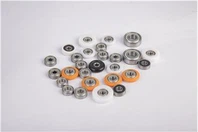
Can door bearing wheels withstand extreme temperatures? That's a question I get asked a lot as a supplier of Door Bearing Wheels. You see, in my line of work, I deal with all sorts of customers who have different needs and environments for their doors. Some are in scorching hot deserts, while others are in freezing cold mountains. So, let's dive into this topic and see what's what.
First off, let's talk about what extreme temperatures mean. Extreme heat can be anything above 100°F (38°C), and extreme cold can be below 0°F (-18°C). These temperatures can really take a toll on door bearing wheels, and it's important to understand how they might affect them.
When it comes to extreme heat, the main issue is expansion. Most materials expand when they get hot, and door bearing wheels are no exception. If the wheels expand too much, they can start to bind in their tracks, making it difficult for the door to open and close smoothly. This can lead to increased wear and tear on the wheels and the door mechanism, and it can even cause the door to get stuck.
Another problem with extreme heat is that it can cause the lubricants in the wheels to break down. Lubricants are essential for reducing friction and keeping the wheels spinning freely. But when they get too hot, they can start to evaporate or become too thin, which can lead to increased friction and wear.
On the other hand, extreme cold can cause the materials in the wheels to contract. This can make the wheels smaller, which can lead to a loose fit in their tracks. A loose fit can cause the wheels to rattle or vibrate, which can also lead to increased wear and tear.
Cold temperatures can also make the lubricants in the wheels thicker, which can make it harder for the wheels to spin. This can put extra strain on the door mechanism and can cause the door to open and close more slowly.
So, can door bearing wheels withstand extreme temperatures? The answer is, it depends. There are several factors that can affect a wheel's ability to handle extreme temperatures, including the material it's made of, the type of lubricant it uses, and the design of the wheel.
Let's start with the material. Some materials are better suited for extreme temperatures than others. For example, steel is a popular choice for door bearing wheels because it's strong and durable. But steel can expand and contract a lot in extreme temperatures, so it might not be the best choice for environments with very high or very low temperatures.
Aluminum is another option. It's lighter than steel and doesn't expand and contract as much, so it can be a good choice for extreme temperatures. However, aluminum is not as strong as steel, so it might not be suitable for heavy-duty doors.
There are also some specialty materials that are designed to withstand extreme temperatures. For example, ceramic bearings are known for their high temperature resistance. They can operate at much higher temperatures than steel or aluminum bearings without expanding or losing their strength. However, ceramic bearings are more expensive than traditional bearings, so they might not be the best choice for every application.
The type of lubricant used in the wheels is also important. There are different types of lubricants available, each with its own temperature range. For extreme heat, you'll want to use a high-temperature lubricant that won't break down or evaporate easily. For extreme cold, a low-temperature lubricant that won't thicken too much is essential.
The design of the wheel can also play a role in its ability to withstand extreme temperatures. For example, some wheels are designed with a larger clearance between the wheel and the track, which can allow for some expansion and contraction without causing binding. Others are designed with a special seal to keep the lubricant in and the dirt and moisture out, which can help to protect the wheel from the effects of extreme temperatures.
At our company, we offer a range of door bearing wheels that are designed to handle different temperature conditions. For example, our 6200zz Garage Door Rollers are made of high-quality steel and are lubricated with a high-temperature grease. They're designed to handle the rigors of daily use in a variety of environments, including those with extreme temperatures.
Our Sliding Gate Roller Bearings are another option. They're made of aluminum, which makes them lightweight and resistant to expansion and contraction. They also use a special low-temperature lubricant that allows them to operate smoothly in cold weather.


In conclusion, while door bearing wheels can be affected by extreme temperatures, there are ways to minimize the damage. By choosing the right material, lubricant, and design, you can ensure that your wheels will be able to handle the temperature conditions in your environment.
If you're in the market for door bearing wheels and need to find a solution that can withstand extreme temperatures, don't hesitate to get in touch. We have the expertise and the products to help you find the right wheels for your needs. Whether you're dealing with a scorching hot desert or a freezing cold mountain, we can provide you with high-quality door bearing wheels that will last. Contact us today to start the conversation and let's find the perfect solution for your door.
References
- "Engineering Materials and Their Applications" by Lawrence G. Askeland and Pradeep P. Phule
- "Handbook of Lubrication and Tribology, Volume I: Applications" edited by Bhushan Bharat