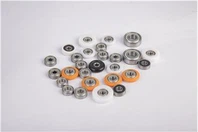
Hey there! As a supplier of Bearing 6203llu, I often get asked whether this bearing can be used in axial load applications. It's a great question, and today, I'm gonna dive deep into this topic to give you all the info you need.
First off, let's talk a bit about what Bearing 6203llu is. You can check out more details about it here. This bearing is a type of small - sized roller bearing, which is commonly used in a variety of machinery. It's known for its reliability and good performance in many different settings.
Understanding Axial Loads
Before we decide if Bearing 6203llu can handle axial loads, we need to understand what axial loads are. Axial loads are forces that act parallel to the axis of rotation of a bearing. Think of it like pushing or pulling a shaft straight along its length. These loads can be caused by things like belt tension, gear meshing, or the weight of a component that's attached to the shaft.
The Design of Bearing 6203llu
The design of Bearing 6203llu plays a crucial role in determining its ability to handle axial loads. This bearing is a deep - groove ball bearing. Deep - groove ball bearings are primarily designed to handle radial loads, which are forces that act perpendicular to the axis of rotation. The internal structure of these bearings has a raceway that allows the balls to roll smoothly under radial forces.
However, deep - groove ball bearings also have some limited capacity to handle axial loads. The balls in the bearing can transfer a certain amount of axial force between the inner and outer races. But this capacity is much lower compared to their radial load - handling ability.
Factors Affecting the Axial Load Capacity of Bearing 6203llu
There are several factors that can affect how well Bearing 6203llu can handle axial loads:
- Ball Size and Number: The size and number of balls in the bearing influence its load - carrying capacity. Larger balls or more balls can generally handle more load. In Bearing 6203llu, the ball size and quantity are designed to optimize its performance under radial loads, which means its axial load capacity is somewhat restricted.
- Internal Clearance: The internal clearance of the bearing is the amount of free movement between the balls and the races. A bearing with the right amount of clearance can better distribute loads. If the clearance is too small, it can cause excessive stress on the balls and races when an axial load is applied.
- Lubrication: Proper lubrication is essential for any bearing. In the case of axial load applications, good lubrication helps reduce friction and wear. If there's not enough lubrication, the bearing can overheat and fail more quickly under axial loads.
When Can Bearing 6203llu Be Used in Axial Load Applications?
Bearing 6203llu can be used in axial load applications under certain conditions:
- Light Axial Loads: If the axial load is relatively light, Bearing 6203llu can work just fine. For example, in some small - scale machinery where the axial forces are minimal, this bearing can handle the job without any major issues.
- Combined Loads: In many real - world situations, bearings are subjected to both radial and axial loads. Bearing 6203llu can handle a combination of these loads as long as the axial load is within its capacity. For instance, in a small motor where there's a small amount of axial thrust due to the fan attached to the shaft, along with a significant radial load from the motor itself, this bearing can be a suitable choice.
When Not to Use Bearing 6203llu in Axial Load Applications
There are also cases where it's not advisable to use Bearing 6203llu for axial load applications:
- Heavy Axial Loads: If the axial load is heavy, Bearing 6203llu is not the right choice. The bearing may experience excessive wear, overheating, and premature failure. In such situations, it's better to use a bearing that's specifically designed for high - axial - load applications, like a thrust bearing.
- High - Precision Applications: In applications where high precision is required, the limited axial load capacity of Bearing 6203llu can lead to inaccuracies. For example, in some precision manufacturing equipment, any small amount of bearing deformation due to axial loads can affect the quality of the product being made.
Alternatives for Axial Load Applications
If Bearing 6203llu isn't suitable for your axial load application, there are other options available. You might want to consider Small Rollers with Bearings or 20mm Roller Bearing. These bearings are designed to handle different types of loads, including axial loads, more effectively.
Conclusion
So, can Bearing 6203llu be used in axial load applications? The answer is yes, but with limitations. It can handle light axial loads and combined loads within its capacity. However, for heavy axial loads or high - precision applications, it's best to look for other bearing options.
If you're still not sure whether Bearing 6203llu is the right choice for your application, don't hesitate to reach out. We're here to help you make the best decision for your machinery. Whether you need more information about this bearing or want to discuss other bearing options, we're just a message away. Let's have a chat and find the perfect bearing solution for your needs.


References
- Harris, T. A., & Kotzalas, M. N. (2007). Rolling Bearing Analysis. Wiley.
- SKF Bearing Handbook. (2019). SKF Group.