


FLANGED BEARING
What is Flanged Bearing?
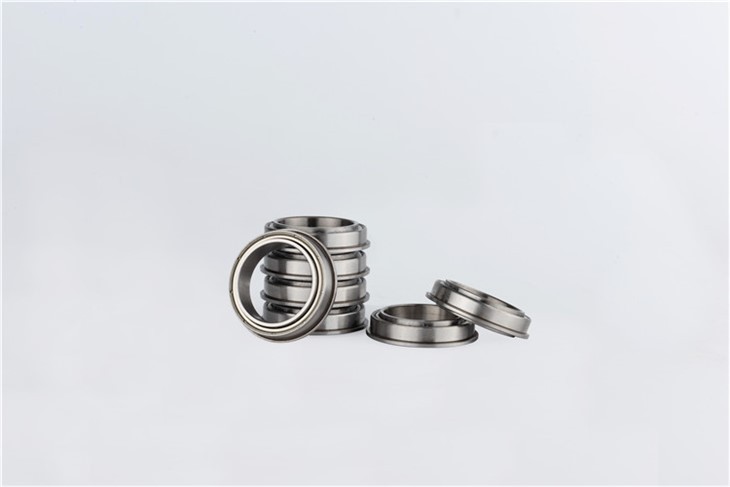
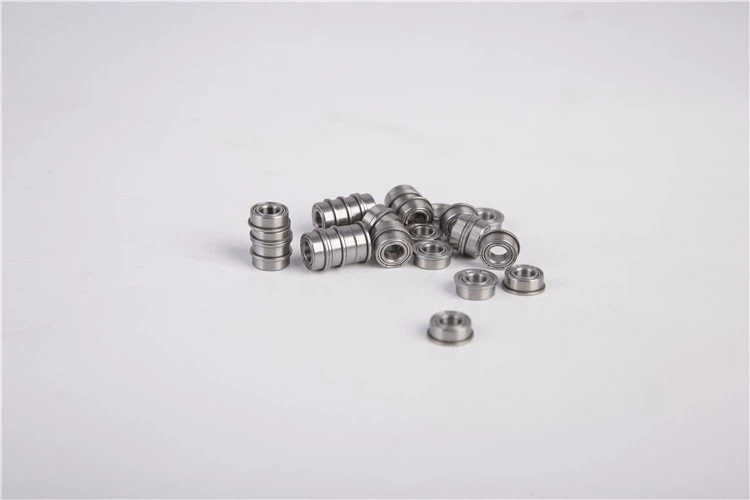
Flange bearings, also known as flange mounted bearings or flange units, are used to mount ball bearings to a perpendicular surface. The term ‘flange’ refers to a projecting flat rim, collar, or rib on an object, serving for strengthening or attachment or for maintaining position on a rail.With flange bearings, the sealed bearing is contained inside a preassembled flanged housing, allowing the inner ring to rotate freely within a robust and stable environment.
Advantages of Flanged Bearing
Minimal space required
One of the main advantages of the flange bearing technology is that it requires a minimal amount of space. This is because the installation process is much simpler than with a traditional ball-bearing system. The bearing can be secured with just a few bolts, making it ideal for applications that require a compact installation, such as in aerospace and automotive applications.
Easy to install
The installation of a flange bearing is also much easier than a traditional ball-bearing system. In most cases, it can be done in a fraction of the time, with less effort required to secure it. This makes the flange bearing an ideal solution for applications that need to be installed quickly and with minimal disruption.
High reliability and durability
Flange bearings are highly reliable and durable compared to traditional ball-bearings. They are designed to withstood even the most punishing environments, and can handle heavy-duty loads with ease. They have also been proven to outlast traditional ball-bearings, thus providing greater reliability over a longer period of time.
Improved performance
The use of flange bearing technology has been proven to improve performance, with lower heat and vibration emissions than a traditional ball-bearing system. This is due to the flange bearing being designed to better dissipate heat and reduce mechanical stresses, leading to smoother operation and increased efficiency.
-
![Print Machine Used Bearing 6704ZZ]()
Print Machine Used Bearing 6704ZZ
The series of products with flanges on the outer wheel make the axial positioning simple; theAdd to Inquiry -
![Money Counter Bearings F688ZZ]()
Money Counter Bearings F688ZZ
F688ZZ Flanged Ball Bearing,is made of Chrome Steel, the bearing is metal shielded from both sides.Add to Inquiry -
![Metric Roller Bearings]()
Metric Roller Bearings
Two rubber seal (2RS), also workable with a single rubber seal(RS),that is R10.Add to Inquiry -
![Ball Bearing Single Row Deep Groove]()
Ball Bearing Single Row Deep Groove
It is the most widely used type of bearing in the machinery industry. Mainly bear radial load, butAdd to Inquiry -
![Flanged Conveyor Bearings]()
Flanged Conveyor Bearings
The series of products with flanges on the outer wheel make the axial positioning simple; theAdd to Inquiry


Why Choose Us
Our factory
The company mainly produces ball bearings made of miniature gcr15 steel as raw materials and carbon steel. Bearings, plastic-coated bearings, etc. The bearings produced by the company are widely used in micro motors, mobile doors and windows, and mobile two-wheeled trams.
Production equipment
Grinding equipment, cleaning equipment, automatic riveting and pressing equipment, automatic inspection equipment-s0910 and bvt all-in-one machine.
Production market
The current market is mainly in the middle east, europe, america, southeast asia, etc. Our company's matching motorcycle accessories for the southeast asian market have received a good response.
Our service
Provide pre-sales technical consultation, drawing design and other services, from customer consultation, order placement, tracking production, shipment declaration and a series of related 7/24 hours services, follow-up service tracking to customer feedback on products used.

Flange bearings work in association with other bearing types. The flange design assists in the mounting, positioning, and operating of miniature bearings. When the application requires the locking up of bearings at a specific position, flange bearings are used.
When the shaft axis is perpendicular to the mounting surface, heavy loads are trouble to contend with. Normal individual bearings fail to keep up with the axial load. Hence, for any axial load or push, the flange will prevent the bearing from moving along.
This use can be observed in the automobile industry where there is a lot of vibration. Using flanged bearings, proper bearing positioning is ensured in automobiles. This is the ideal use case of flanged bearings as per any bearing manufacturing company.
Plain bearings (journal bearings)
Also known as journal bearings, plain bearings offer frictionless motion, making them ideal for linear applications.
Needle roller bearings
These bearings handle radial motion while maintaining a low profile. They are identical to cylindrical roller bearings but have a smaller diameter.
Roller bearings
Depending on the application, roller bearings have a rolling element between their inner and outer ring which can be a cylindrical, tapered or spherical ball.
Cylindrical roller bearings
These bearings have a high radial load capacity and can handle moderate thrust loads.
Spherical roller bearings
The most common roller bearings used in flange mount bearings contain two rows of friction-reducing, barrel-shaped rollers between an outer ring that has a spherical raceway and an inner ring composed of two inclined raceways.
Tapered roller bearings
With an inner ring, outer ring, and tapered rollers, these bearings can withstand heavy axial and radial loads due to their large surface area contact.
Needle roller bearings
These bearings have a smaller diameter-to-length ratio and are designed for radial load applications where a low profile is desired.

Application of Flanged Bearing
Aerospace
In the aerospace field, flange bearings are also one of the indispensable components. Flange bearings are required in various aspects such as aero engines, aircraft landing gear, and flight control systems. It has the characteristics of high strength, high precision and high wear resistance, which can ensure the safety and reliability of the aircraft.
Auto industry
Flange bearings are also one of the essential components in the automotive industry. Flange bearings are required in all aspects of automobile engines, transmissions, wheels, etc. It has the characteristics of high load-bearing capacity, high precision and high wear resistance, which can ensure the safety and reliability of the car.
Electrical equipment
In power equipment, flange bearings are also one of the commonly used components. Flange bearings are required in various aspects such as generators, water turbines, and wind turbines. It has the characteristics of high load-bearing capacity, high precision, and high wear resistance, which can ensure the safety and reliability of power equipment.
Metallurgical industry
In the metallurgical industry, flange bearings are also one of the essential components. In harsh environments such as high temperature, high pressure, and high speed, flange bearings can withstand extreme loads and pressures. Flange bearings are required in various aspects such as metallurgical equipment, steel rolling mills, and high-speed trains.
Mechanical equipment
Flange bearings are widely used in mechanical equipment, such as wind turbines, machine tools, metallurgical equipment, etc. These mechanical equipment usually need to withstand high-speed rotation and large loads, and flange bearings can provide reliable support and load transmission functions.
Electric power industry
Bearings in power generation equipment are required to be able to withstand high-speed rotation and large loads while also having low friction and wear to improve power generation efficiency and extend equipment life. Flange bearings can meet these requirements, so in the power industry be widely used.
Agricultural machinery
The application of flange bearings in agricultural machinery is mainly concentrated in the transmission systems of agricultural machinery such as agricultural machinery, seeders, and harvesters. They can withstand the load of agricultural machinery during high-speed operation and ensure the normal operation of agricultural machinery.
How to Install Flanged Bearing
The first step in installing a flange bearing is the same as the first step for installing just about anything else: Read the documentation. But while you’re waiting for the bearing and the docs to arrive, let’s walk through the process so you can plan for what’s ahead.
Start with a visual inspection of the surface that you’ll mount the bearing on, the bearing itself and the shaft.
Make sure the mounting surface is flat, that the flange bearing surface is clean and that the shaft is clean and smooth. If the shaft has any burrs or rough areas, you can take care of those with emery paper or an abrasive pad. Make sure, though, that you don’t leave behind any debris from the cleaning or smoothing process. Emery paper, in particular, can solve one problem and leave another, namely, the little specks that do the abrasive work.
Flange bearingsnext, verify all the measurements and tolerances between the shaft and the bearing. It’s not enough to rely on the product labels or “what we ordered.” the bearing’s documentation will include all the specs.
Depending on the application and your in-house standards, you may be taking multiple measurements around the shaft. This ensures adequate clearance to prevent excessive friction and premature bearing damage, and the appropriate tightness to prevent vibration and the shaft “walking” along the bearing.
Tolerances are not the only thing you’re verifying with the shaft measurements. You’re also ensuring the shaft is truly circular. Obviously, if we’re working with a circle, the distances will be the same at any point. If you detect one that varies, the shaft has deformed in some way – become a bit eccentric – and is unfit for use.
Once everything is verified, the actual installation begins. Lubricate the shaft, if called for, and slide the bearing onto the shaft and into position. Ensure that the bearing housing is facing the right way to be mounted onto whichever surface. Position the bearing at the proper place on the shaft, and then secure the housing to the mounting surface. If the bearing housing has two set screws, alternate tightening them until the set screws reach the required torque. If the bearing housing has four or more set screws, check the documentation to see what the tightening pattern is (like rotating tires on a car).
Precautions of Flanged Bearing
Material
It is critical to select bearings made of materials compatible with your application because they can affect overall performance and durability. Several factors — operating temperature, exposure to corrosive substances, load requirements, and more — play a role in determining the best material for a specific purpose.
Load capacity
Load capacity refers to the maximum load a bearing can withstand without failing. It is typically determined by various attributes, such as the size, material, and design of the bearing. Before selecting a flanged bearing, you must identify your application’s anticipated radial and axial loads. This information can be obtained from the manufacturer or by using engineering calculations.
Size
The size of the flanged bearing determines the load capacity and the shaft size it can support. Therefore, check whether or not the bearing size matches the shaft and mounting dimensions. It is also recommended to consider the clearances between all parts and components to ensure that everything operates smoothly without excessive wear.
Sealing
Flanged bearings are available in two main types: Open and sealed. Every kind of sealing offers distinct advantages and disadvantages, making it important to choose the right type for your application.
Open bearings
Open bearings are the most economical option and do not have seals or covers to protect against contamination. However, they do require regular lubrication to keep them functioning properly. They are also susceptible to contamination from dirt, dust, and other particles that can reduce their lifespan.
Sealed bearings
Sealed bearings have seals or covers that protect against contamination and require less maintenance. They are more expensive than open bearings but provide better protection against contamination and typically have a longer lifespan. There are various types of sealed bearings, including contact seals, non-contact seals, and labyrinth seals.
Lubrication
Proper lubrication is crucial for the performance and longevity of flanged bearings, as it helps to reduce friction, minimize heat generation, and prevent contamination. They can be lubricated in various ways, including grease, oil, and a combination of the two.
Speed
Flanged bearings operate at specific speeds, making it critical to select the appropriate speed rating for your application. When a bearing operates at speeds faster than its rated velocity, it generates excessive heat, shortening its lifespan and potentially leading to failure. Meanwhile, if it runs at bandwidths lower than its rated speed, it may not provide the required performance.
Flange mount bearing is widely used in different instruments of different fields. Then users will care about how long does it use and how to maintain it to extend its serving life.
Under normal circumstances, the rising temperature of flange mount bearing will keep 1 or 2 days after lubrication, as the bearing is sensitive to the stability and functions of the flange mount bearing. Then it will be better to have measurement and analysis before its using, then people can have a good comparison and make correct judgments after its using.
To keep clean of the bearing. Any tiny dust people can see will have a bad influence for the bearing. So it is necessary to protect the flange mount bearing from the dust entering.
Carefully use. The impresses can appear in the process of heavy impact, in severe cases, it will cause the bearing fracture.
Professional tool. It is necessary to use professional tools instead of temporary tools for repairing. For any casual damage will cause irreversible damage.
Gloves: It is necessary to wear gloves for what kind of operation on flange mount bearing, as the dirt and sweat on hand will cause the rust of the bearing.
Certifications

Video
FAQ
Q: Where are flange bearings used?
Q: What are the advantages of flange bearings?
Q: What is the difference between a pillow block bearing and a flange bearing?
Q: How do flanged bearings work?
Q: Why do we need flange?
Q: What are flange bearings made of?
Q: What are the different types of flange bearings?
Q: What are flanged connections?
Q: How to mount a flanged bearing?
Q: What are the advantages of flanged connection?
Q: How to measure a flange bearing?
Q: What is a bolt flange bearing?
Q: How are bearings mounted?
Q: How do you determine a flange?
Q: What is the difference between flange and bolt?
Q: What is the difference between a nut and a flange?
Q: How does a flange work?
Q: Where are flange bearings used?
Q: What is the main application of bearing?
Q: Which industries use flanges?
As one of the most professional flanged bearing manufacturers and suppliers in China, we're featured by quality products and low price. Please rest assured to wholesale cheap flanged bearing made in China here and get pricelist from our factory. Contact us for customized service.
Precision Conveyor Bearings, stainless steel sealed bearings, large diameter thrust bearing