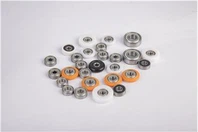
Hey there, folks! As a supplier of Pulley Bearings, I've seen a lot of people scratching their heads when it comes to replacing pulley bearings. It's not the most straightforward task, but with the right tools and a bit of know - how, you can get the job done. So, let's dive into what tools are needed to replace pulley bearings.


1. Socket Set
The very first tool on your list should be a good socket set. You'll often find that the bolts holding the pulley in place are of different sizes. A complete socket set with a variety of metric and standard sizes will ensure that you can loosen and tighten those bolts without any hassle. Whether you're working on a small - scale DIY project or a large industrial one, a socket set is indispensable. You don't want to be in the middle of the job only to realize that you don't have the right size socket for that one stubborn bolt.
2. Wrenches
In addition to a socket set, wrenches are equally important. Open - end wrenches can be used in situations where a socket can't reach. They're handy for getting into tight spaces and giving you that extra leverage. Box - end wrenches, on the other hand, provide a more secure grip around the nut or bolt, reducing the risk of rounding off the edges. And of course, an adjustable wrench can come in handy when you're dealing with non - standard sizes. So, make sure you have a good selection of wrenches in your toolbox.
3. Puller
You can't replace a pulley bearing without a puller. A pulley puller is specifically designed to remove the pulley from the shaft. There are different types of pullers available, such as two - jaw and three - jaw pullers. The three - jaw puller is usually more reliable as it provides a more even distribution of force, reducing the risk of damaging the pulley or the shaft. When using a puller, make sure to follow the manufacturer's instructions carefully. Incorrect use can lead to serious damage and might even cause the pulley to break.
4. Press or Hammer
Once you've removed the pulley, you'll need to get the old bearing out. This is where a press or a hammer comes in. A bearing press is the ideal tool for this job as it applies a controlled amount of force to push the old bearing out and the new one in. If you don't have a press, you can use a hammer, but you need to be extremely careful. You'll need to use a block of wood or a punch to avoid damaging the pulley. Tap gently and evenly around the edge of the bearing to gradually remove it.
5. Measuring Tools
Accuracy is key when replacing pulley bearings. Measuring tools like a caliper can help you determine the exact size of the bearing you need. You'll need to measure the inner diameter, outer diameter, and width of the old bearing. This ensures that you get a replacement bearing that fits perfectly. A micrometer can also be useful for more precise measurements. Don't rely on guesswork; using the right measuring tools will save you a lot of time and headaches in the long run.
6. Cleaning Supplies
Before installing the new bearing, it's crucial to clean the pulley and the shaft thoroughly. You can use a degreaser to remove any dirt, grease, or debris. A wire brush can be used to scrub away stubborn grime. After cleaning, make sure to dry the parts completely. Any remaining dirt or moisture can cause premature wear and tear on the new bearing.
7. Lubricant
Once the new bearing is in place, you'll need to lubricate it. Lubrication reduces friction and heat, which can extend the life of the bearing. There are different types of lubricants available, such as grease and oil. The type of lubricant you choose depends on the application. For most pulley bearings, a high - quality grease is a good choice. Make sure to apply the lubricant evenly and in the right amount. Too much lubricant can cause the bearing to overheat, while too little can lead to excessive wear.
Now, I know you might be thinking, "Where can I get high - quality pulley bearings?" Well, we've got you covered! At our company, we offer a wide range of top - notch pulley bearings. Whether you need Industrial Roller Bearings for heavy - duty industrial applications, Sliding Gate Roller Bearings for your gate, or Door Bearing Wheels for a smooth - operating door, we have the perfect solutions for you.
If you're interested in purchasing our pulley bearings or have any questions about the replacement process, we're here to help. Just reach out to us, and our team of experts will be more than happy to assist you. We're committed to providing you with the best products and customer service. So, don't hesitate to contact us and start your journey with high - quality pulley bearings.
References
- "Maintenance and Repair of Mechanical Components" - A technical handbook on machinery maintenance.
- Manufacturer's guides for pulley bearings and related tools.