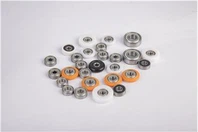
What is the material hardness of small bearings?
As a supplier of Small Bearings, I've been frequently asked about the material hardness of these crucial components. Small bearings, like those you can explore on our Small Bearings page, play a pivotal role in a wide range of applications, from precision instruments to small motors. Understanding their material hardness is essential for ensuring optimal performance and longevity.
Material hardness is a measure of a material's resistance to permanent deformation, such as indentation, scratching, or wear. In the context of small bearings, hardness directly impacts their ability to withstand the loads and stresses they encounter during operation. A bearing with appropriate hardness can maintain its shape and surface integrity, reducing friction, preventing premature failure, and ensuring smooth and efficient rotation.
The most common materials used in small bearings are steel and ceramic. Each material has its own unique hardness characteristics and is suitable for different applications.
Steel Bearings
Steel is the most widely used material for small bearings due to its excellent combination of strength, toughness, and cost - effectiveness. The hardness of steel bearings is typically determined by the type of steel used and the heat treatment process applied.
- Chrome Steel (AISI 52100): This is one of the most popular materials for small bearings. Chrome steel bearings are known for their high hardness and wear resistance. After heat treatment, AISI 52100 steel can achieve a Rockwell hardness (HRC) of around 60 - 64. This high hardness allows the bearings to withstand heavy loads and high - speed operation. For example, our Bearing 6001ZZ is often made from AISI 52100 steel, making it suitable for a variety of industrial and automotive applications.
- Stainless Steel (AISI 440C): Stainless steel bearings are preferred in applications where corrosion resistance is a primary concern, such as in food processing, medical equipment, and marine environments. AISI 440C stainless steel can be heat - treated to a hardness of approximately 58 - 62 HRC. While slightly less hard than chrome steel in some cases, its corrosion - resistant properties make it an ideal choice for harsh operating conditions.
Ceramic Bearings
Ceramic bearings are becoming increasingly popular in high - performance applications due to their unique properties, including high hardness, low density, and excellent chemical stability.
- Silicon Nitride (Si₃N₄): Silicon nitride is a common ceramic material used in small bearings. It has a very high hardness, typically around 1500 - 1800 HV (Vickers hardness). This extreme hardness gives ceramic bearings superior wear resistance compared to steel bearings. Additionally, silicon nitride has a low density, which reduces the centrifugal forces generated at high speeds. This makes ceramic bearings ideal for high - speed applications, such as in machine tools and aerospace equipment.
The hardness of small bearings also affects their manufacturing process. For example, harder materials may require more advanced machining techniques and longer processing times. During the grinding process, which is crucial for achieving the precise dimensions and surface finish of bearings, harder materials can cause more wear on the grinding wheels. However, the benefits of using high - hardness materials often outweigh these challenges, especially in applications where performance and reliability are critical.
In addition to the base material hardness, the surface hardness of small bearings can also be enhanced through various surface treatment processes. For instance, carburizing is a heat treatment process that adds carbon to the surface of the bearing, increasing its hardness and wear resistance. Nitriding is another process that introduces nitrogen into the surface layer, resulting in improved hardness and fatigue resistance.
The choice of bearing material and its hardness should be based on the specific requirements of the application. Factors such as load, speed, temperature, and environmental conditions all need to be considered. For light - load and low - speed applications, a bearing with a relatively lower hardness may be sufficient. However, in high - load, high - speed, or harsh environments, a bearing with higher hardness is necessary.
Let's take a closer look at some real - world examples. In a small electric motor, the bearings need to support the rotating shaft and ensure smooth operation. If the motor operates at a high speed, a bearing with high hardness, such as a ceramic bearing or a heat - treated steel bearing, would be a better choice. On the other hand, in a low - speed, low - load application like a small household appliance, a chrome steel bearing with a standard hardness may be more than adequate.
Our Bearing 6200 is a versatile small bearing that can be used in a variety of applications. Depending on the customer's requirements, we can provide it in different materials and hardness levels. For general industrial applications, a chrome steel version with a hardness of around 60 - 64 HRC is commonly used. But for applications with special needs, such as high - temperature or corrosive environments, we can offer alternative materials like stainless steel or ceramic.
As a supplier of Small Bearings, we understand the importance of providing high - quality products with the right material hardness. We work closely with our customers to understand their specific needs and recommend the most suitable bearings. Our team of experts can provide technical support and guidance on bearing selection, installation, and maintenance.
If you are in the market for small bearings and need to find the perfect solution for your application, we invite you to get in touch with us. Whether you require standard bearings or customized solutions, we have the expertise and resources to meet your requirements. Our commitment to quality and customer satisfaction ensures that you will receive the best products and services. Contact us today to start a discussion about your small bearing needs and let us help you find the ideal solution for your project.


References
- "Bearing Handbook" by SKF
- "Materials Science and Engineering: An Introduction" by William D. Callister Jr. and David G. Rethwisch
- Technical literature from bearing manufacturers such as Timken and NSK