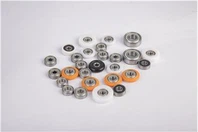
As a supplier of Bearing 6311, I have witnessed firsthand the profound impact that the manufacturing process has on the quality, performance, and longevity of this essential component. In this blog post, I will delve into the various aspects of the manufacturing process and explore how they shape the characteristics of Bearing 6311.
Material Selection
The journey of manufacturing Bearing 6311 begins with the careful selection of materials. The choice of material is crucial as it directly influences the bearing's hardness, toughness, and resistance to wear and corrosion. For Bearing 6311, high - quality chrome steel is often the material of choice. Chrome steel offers excellent hardness, which allows the bearing to withstand high loads without deforming. It also has good wear resistance, ensuring a long service life even under harsh operating conditions.
The purity of the steel is also of utmost importance. Impurities in the steel can lead to internal stress concentrations, which may cause premature failure of the bearing. Therefore, strict quality control measures are in place during the steel - making process to ensure that the steel meets the required standards. For example, advanced refining techniques are used to reduce the content of sulfur, phosphorus, and other harmful elements.
Forging
Once the appropriate material is selected, the next step is forging. Forging is a process that involves shaping the metal by applying compressive forces. In the case of Bearing 6311, forging helps to refine the grain structure of the steel, which improves its mechanical properties. A well - forged bearing has a more uniform grain structure, which enhances its strength and toughness.
During forging, the billet of steel is heated to a specific temperature and then shaped using a forging press. The forging process is carefully controlled to ensure that the dimensions of the bearing blank are accurate. Any deviation in the dimensions at this stage can lead to problems in subsequent manufacturing processes. Moreover, proper forging can also eliminate internal defects such as porosity and cracks, which can significantly affect the performance of the bearing.
Machining
After forging, the bearing blank undergoes a series of machining operations. Machining is used to achieve the precise dimensions and surface finish required for Bearing 6311. The main machining operations include turning, grinding, and honing.
Turning is the first step in machining the bearing. It is used to remove the excess material from the bearing blank and to create the basic shape of the bearing. The turning process is carried out on a lathe, where the bearing blank rotates while a cutting tool removes the material. The accuracy of the turning operation is crucial as it sets the foundation for the subsequent machining processes.

Grinding is a precision machining process that is used to achieve the final dimensions and surface finish of the bearing. Grinding is used to remove a small amount of material from the bearing surface to achieve the required tolerance. A high - quality grinding process can produce a smooth surface finish, which reduces friction and wear during the operation of the bearing. The grinding wheels used in this process are carefully selected based on the material and the required surface finish of the bearing.
Honing is a finishing process that is used to further improve the surface finish and the roundness of the bearing. Honing uses abrasive stones to remove a very small amount of material from the bearing surface, resulting in a super - smooth surface. A well - honed bearing has better lubrication properties, which can reduce the operating temperature and extend the service life of the bearing.
Heat Treatment
Heat treatment is one of the most critical steps in the manufacturing process of Bearing 6311. Heat treatment is used to modify the mechanical properties of the steel by changing its microstructure. The main heat - treatment processes for bearings include quenching and tempering.
Quenching is a process in which the bearing is heated to a high temperature and then rapidly cooled. This process hardens the steel by transforming its microstructure into a hard martensitic phase. However, quenching can also introduce internal stresses in the bearing, which can lead to cracking if not properly managed. Therefore, after quenching, the bearing undergoes tempering.
Tempering is a process in which the quenched bearing is heated to a lower temperature and then held at that temperature for a specific period. Tempering helps to relieve the internal stresses introduced during quenching and to improve the toughness of the bearing. A well - tempered bearing has a good balance between hardness and toughness, which is essential for its performance.
Heat Treatment
Heat treatment is one of the most critical steps in the manufacturing process of Bearing 6311. Heat treatment is used to modify the mechanical properties of the steel by changing its microstructure. The main heat - treatment processes for bearings include quenching and tempering.
Quenching is a process in which the bearing is heated to a high temperature and then rapidly cooled. This process hardens the steel by transforming its microstructure into a hard martensitic phase. However, quenching can also introduce internal stresses in the bearing, which can lead to cracking if not properly managed. Therefore, after quenching, the bearing undergoes tempering.
Tempering is a process in which the quenched bearing is heated to a lower temperature and then held at that temperature for a specific period. Tempering helps to relieve the internal stresses introduced during quenching and to improve the toughness of the bearing. A well - tempered bearing has a good balance between hardness and toughness, which is essential for its performance.
Surface Treatment
Surface treatment is an important step in enhancing the performance of Bearing 6311. Surface treatment can improve the corrosion resistance and the wear resistance of the bearing. One common surface - treatment method is nitriding. Nitriding is a process in which nitrogen is diffused into the surface of the bearing to form a hard nitride layer. This layer provides excellent wear resistance and corrosion protection.
Another surface - treatment method is coating. Coatings can be applied to the bearing surface to reduce friction and to improve the lubrication properties. For example, a thin layer of PTFE (polytetrafluoroethylene) coating can be applied to the bearing surface to reduce the coefficient of friction, which can improve the efficiency of the bearing and reduce the energy consumption.
Assembly
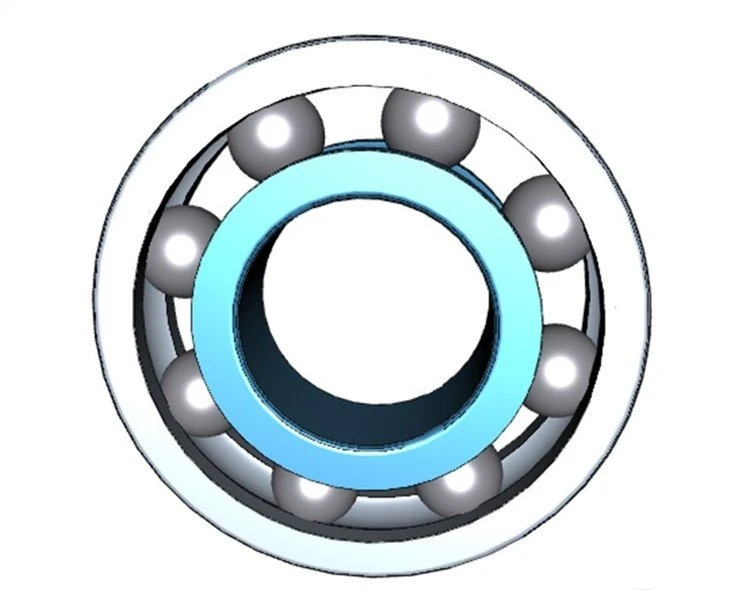
The final step in the manufacturing process of Bearing 6311 is assembly. Assembly involves putting together the various components of the bearing, such as the inner ring, outer ring, balls, and cage. The assembly process is carried out in a clean environment to prevent the ingress of contaminants, which can cause premature wear and failure of the bearing.
During assembly, the components are carefully inspected to ensure that they meet the required quality standards. The balls are checked for their size, roundness, and surface finish. The cage is also inspected to ensure that it can properly hold the balls in place and allow for smooth rotation. Once all the components are inspected, they are assembled using a special assembly tool. The assembly process is carefully controlled to ensure that the bearing has the correct pre - load and clearance, which are essential for its proper operation.
Impact on Performance
The manufacturing process has a significant impact on the performance of Bearing 6311. A bearing that is manufactured using high - quality materials and advanced manufacturing processes will have better performance and a longer service life.
In terms of load - carrying capacity, a well - manufactured bearing can withstand higher loads without deformation. The refined grain structure achieved through forging and heat treatment, along with the precise dimensions obtained through machining, contribute to the high load - carrying capacity of the bearing.
The smooth surface finish obtained through grinding and honing reduces friction and wear. This not only improves the efficiency of the bearing but also reduces the operating temperature, which can extend the service life of the bearing. Moreover, proper surface treatment can further enhance the wear resistance and corrosion resistance of the bearing, making it suitable for use in harsh environments.
Conclusion
In conclusion, the manufacturing process of Bearing 6311 is a complex and multi - step process that involves material selection, forging, machining, heat treatment, surface treatment, and assembly. Each step in the manufacturing process plays a crucial role in determining the quality and performance of the bearing.
As a supplier of Bearing 6311, we are committed to using the latest manufacturing technologies and strict quality control measures to ensure that our bearings meet the highest standards. If you are in the market for high - quality Bearing 6311, we invite you to contact us for a procurement discussion. We believe that our expertise and commitment to quality will make us your reliable partner in the supply of bearings.
References
- Harris, T. A., & Kotzalas, M. N. (2007). Rolling Bearing Analysis. Wiley.
- Bhushan, B. (2013). Handbook of Tribology: Materials, Coatings, and Surface Treatments. Wiley.
- Schipper, D. J., & Gupta, P. K. (1997). Rolling Bearing Fatigue Life Prediction. CRC Press.