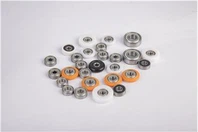
In the realm of industrial machinery and equipment, bearings play a pivotal role in ensuring smooth operation and efficient performance. Among the various types of bearings available, big ball bearings stand out for their ability to handle high radial and axial loads, making them indispensable in a wide range of applications. When it comes to big ball bearings, two common configurations are single - row and double - row designs. As a trusted big ball bearings supplier, I am here to delve into the differences between these two types to help you make an informed decision for your specific needs.
Structural Differences
The most obvious difference between single - row and double - row big ball bearings lies in their internal structure. A single - row big ball bearing consists of a single row of balls arranged between an inner and an outer race. This simple design allows for a relatively compact bearing, which can be beneficial in applications where space is limited. The balls are typically retained in a cage that helps to maintain their proper spacing and alignment, ensuring smooth rotation.


On the other hand, a double - row big ball bearing has two rows of balls. These two rows can be arranged in different ways, such as back - to - back, face - to - face, or tandem. The back - to - back arrangement provides high resistance to overturning moments, while the face - to - face arrangement is suitable for applications where precise axial guidance is required. The tandem arrangement is used when high axial loads need to be carried in one direction. The double - row design adds an extra layer of complexity to the bearing but also enhances its load - carrying capacity and performance characteristics.
Load - Carrying Capacity
One of the key factors that differentiate single - row and double - row big ball bearings is their load - carrying capacity. Single - row big ball bearings are designed to handle moderate radial and axial loads. They are well - suited for applications where the loads are relatively light to medium, such as in some types of conveyor systems or small - scale machinery. The single row of balls provides a certain amount of contact area with the races, which determines the bearing's ability to distribute and withstand loads.
Double - row big ball bearings, however, offer significantly higher load - carrying capacity. The presence of two rows of balls effectively doubles the contact area between the balls and the races, allowing the bearing to handle much heavier radial and axial loads. This makes double - row big ball bearings ideal for applications in heavy - duty machinery, such as large - scale industrial presses, mining equipment, and construction machinery. For example, in a mining operation, where equipment is subjected to extreme loads and vibrations, double - row big ball bearings can provide the reliability and durability needed to keep the machinery running smoothly.
Axial and Radial Stiffness
Axial and radial stiffness are important considerations when selecting a big ball bearing. Stiffness refers to the ability of the bearing to resist deformation under load. Single - row big ball bearings generally have lower axial and radial stiffness compared to double - row bearings. The single row of balls allows for a certain degree of flexibility, which can be an advantage in applications where some misalignment or vibration absorption is required.
Double - row big ball bearings, due to their more complex structure and increased contact area, offer higher axial and radial stiffness. This means that they can maintain their shape and position more accurately under load, reducing the amount of deflection and ensuring more precise operation. In applications such as machine tools, where high precision is crucial, double - row big ball bearings are often the preferred choice.
Installation and Maintenance
Installation and maintenance requirements also differ between single - row and double - row big ball bearings. Single - row big ball bearings are relatively easier to install due to their simpler structure. They require less space and can often be installed with standard tools and procedures. Maintenance is also generally straightforward, as there is only one row of balls to inspect and lubricate.
Double - row big ball bearings, on the other hand, may require more careful installation. The correct arrangement of the two rows of balls, whether back - to - back, face - to - face, or tandem, needs to be ensured to achieve optimal performance. Special tools and techniques may be required for installation, especially in applications where precise alignment is critical. Maintenance of double - row big ball bearings also involves more thorough inspections, as there are more components to check, including the two rows of balls and the cage.
Cost Considerations
Cost is always an important factor in any purchasing decision. Single - row big ball bearings are generally more cost - effective than double - row bearings. Their simpler design and lower manufacturing complexity result in a lower price point. This makes them a popular choice for applications where budget is a constraint and the load requirements are not extremely high.
Double - row big ball bearings, with their higher load - carrying capacity and enhanced performance characteristics, come at a higher cost. However, in applications where the benefits of a double - row bearing, such as increased durability and reliability, outweigh the additional expense, the investment is often justified. For example, in a critical industrial process where downtime can result in significant losses, the use of double - row big ball bearings can be a wise long - term investment.
Application Suitability
The choice between single - row and double - row big ball bearings ultimately depends on the specific application requirements. Single - row big ball bearings are suitable for a variety of applications, including:
- Light to medium - duty conveyor systems
- Small - scale electric motors
- Some types of agricultural machinery
Double - row big ball bearings are better suited for heavy - duty applications, such as:
- Large - scale industrial presses
- Mining and quarrying equipment
- Construction machinery
- Machine tools
If you are looking for a specific type of bearing for your application, you might want to check out our Track Bearing Roller, which offers high - quality solutions for various industrial needs.
Conclusion
In conclusion, single - row and double - row big ball bearings have distinct differences in terms of structure, load - carrying capacity, stiffness, installation, maintenance, cost, and application suitability. As a big ball bearings supplier, I understand that choosing the right bearing is crucial for the optimal performance and longevity of your machinery. Whether you need a single - row bearing for a light - duty application or a double - row bearing for a heavy - duty task, we can provide you with the high - quality products and expert advice you need.
If you have any questions or are interested in purchasing big ball bearings, please feel free to reach out to us. Our team of professionals is ready to assist you in selecting the most suitable bearing for your specific requirements and to discuss the details of your procurement. We look forward to the opportunity to work with you and contribute to the success of your projects.
References
- Harris, T. A., & Kotzalas, M. N. (2007). Rolling Bearing Analysis. Wiley.
- Schaeffler Group. (2019). Rolling Bearings: Basics, Design, Application. Schaeffler Technologies AG & Co. KG.