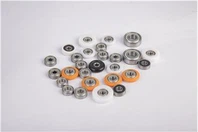
When it comes to the food industry, every component used in food processing and handling equipment must meet strict safety standards. This includes 608 roller bearings, which are commonly used in various food - related machinery. As a 608 Roller Bearing supplier, I understand the importance of adhering to food - grade requirements. In this blog, we will explore what these requirements are and why they matter.


Understanding 608 Roller Bearings
Before delving into food - grade requirements, let's briefly understand what 608 roller bearings are. The 608 roller bearing is a type of miniature bearing. It has a bore diameter of 8mm, an outer diameter of 22mm, and a width of 7mm. These bearings are known for their high precision, low noise operation, and ability to handle both radial and axial loads. They are widely used in applications such as small motors, fans, and, importantly, food processing equipment. You can learn more about 608 Roller Bearing on our website.
Food - Grade Requirements for 608 Roller Bearings
Material Selection
The choice of materials for 608 roller bearings in food - grade applications is crucial. The materials must be non - toxic, corrosion - resistant, and able to withstand the harsh cleaning and sanitizing agents used in the food industry.
- Stainless Steel: One of the most common materials for food - grade 608 roller bearings is stainless steel, specifically grades like 304 and 316. Stainless steel 304 is a general - purpose austenitic stainless steel with good corrosion resistance. It contains 18% chromium and 8% nickel, which provides a protective oxide layer on the surface, preventing rust and corrosion. Stainless steel 316, on the other hand, has a higher level of molybdenum (2 - 3%), which enhances its corrosion resistance, especially in environments with exposure to saltwater or acidic substances. This makes it suitable for food processing equipment that may come into contact with various food products and cleaning solutions.
- Ceramic: Ceramic materials are also used in food - grade bearings. Silicon nitride (Si₃N₄) is a popular choice. Ceramic bearings have several advantages. They are extremely hard, which means they have a longer service life compared to steel bearings. They are also non - magnetic, electrically insulating, and have a low coefficient of thermal expansion. In the food industry, ceramic bearings are resistant to corrosion and can operate in high - temperature environments, which is beneficial for some food processing operations.
Lubrication
Proper lubrication is essential for the smooth operation of 608 roller bearings. In food - grade applications, the lubricant must meet strict requirements.
- Food - Grade Lubricants: These lubricants are specifically formulated to be safe for incidental contact with food. They are typically made from synthetic oils or greases that are non - toxic, odorless, and tasteless. The lubricants must also have good anti - wear and anti - corrosion properties. For example, some food - grade lubricants are based on polyalphaolefin (PAO) synthetic oils, which provide excellent lubrication and stability over a wide range of temperatures.
- Lubrication Sealing: To prevent the lubricant from leaking into the food product, proper sealing is required. Sealed bearings are commonly used in food - grade applications. The seals are designed to keep the lubricant inside the bearing and prevent contaminants from entering. They can be made from materials such as nitrile rubber (NBR) or fluorocarbon rubber (FKM), which are resistant to the cleaning agents and chemicals used in the food industry.
Cleanability
Food - grade 608 roller bearings must be easy to clean. This is important to prevent the accumulation of food particles, bacteria, and other contaminants.
- Smooth Surface Finish: The bearings should have a smooth surface finish to minimize the adhesion of food particles. A rough surface can trap food debris, which can lead to the growth of bacteria. By having a smooth surface, the bearings can be easily cleaned using standard cleaning methods in the food industry.
- Design for Easy Cleaning: The design of the bearing should also facilitate cleaning. For example, some bearings are designed with a non - porous structure, which makes it difficult for contaminants to penetrate. Additionally, the bearing housing and other components should be designed in a way that allows for easy access during the cleaning process.
Regulatory Compliance
608 roller bearings used in the food industry must comply with various regulations.
- FDA Regulations: In the United States, the Food and Drug Administration (FDA) has strict regulations regarding materials and substances that come into contact with food. The bearings and their components must meet the FDA's requirements for food - contact materials. This includes restrictions on the use of certain chemicals and heavy metals.
- EU Regulations: In the European Union, the bearings must comply with regulations such as Regulation (EC) No 1935/2004, which sets out the general safety requirements for materials and articles intended to come into contact with food.
Why Food - Grade Requirements Matter
Meeting food - grade requirements for 608 roller bearings is not just a legal obligation; it is also crucial for ensuring food safety.
- Preventing Contamination: By using food - grade bearings, the risk of food contamination is significantly reduced. Contaminants such as metal particles, lubricants, or bacteria from non - compliant bearings can pose a serious health risk to consumers.
- Maintaining Equipment Performance: Food - grade bearings are designed to withstand the harsh conditions in the food industry. They are more resistant to corrosion and wear, which means they have a longer service life and can maintain the performance of the food processing equipment. This reduces downtime and maintenance costs for food manufacturers.
Other Related Miniature Roller Bearings
In addition to 608 roller bearings, we also offer Micro Roller Bearings and Mini Roller Bearings that meet food - grade requirements. These bearings are suitable for different food processing applications, depending on the specific requirements of the equipment.
Conclusion
As a 608 Roller Bearing supplier, we are committed to providing high - quality bearings that meet the strict food - grade requirements. Our bearings are made from the right materials, properly lubricated, easy to clean, and comply with all relevant regulations. If you are in the food industry and are looking for reliable 608 roller bearings or other miniature roller bearings, we invite you to contact us for procurement and further discussion. We can provide you with detailed product information and help you choose the best bearings for your specific application.
References
- "Food - Grade Lubricants: A Guide to Selection and Use", National Lubricating Grease Institute (NLGI)
- "Stainless Steel in Food Processing Equipment", The Nickel Institute
- "Ceramic Bearings in Industrial Applications", ASM International