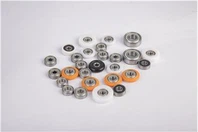
Determining the replacement time of a 608 roller bearing is a crucial task that directly impacts the performance and longevity of machinery. As a supplier of 608 Roller Bearing, I understand the significance of this decision. In this blog, I will share some insights and methods to help you accurately determine when it's time to replace a 608 roller bearing.
Understanding the 608 Roller Bearing
Before delving into the replacement time, it's essential to have a basic understanding of the 608 roller bearing. The 608 roller bearing is a type of miniature roller bearing that is widely used in various applications, including skateboards, small motors, and precision instruments. It is known for its high precision, low friction, and ability to handle radial loads.
The structure of a 608 roller bearing typically consists of an inner ring, an outer ring, a set of rolling elements (rollers), and a cage to keep the rollers evenly spaced. These components work together to ensure smooth rotation and efficient power transmission.
Factors Affecting the Lifespan of a 608 Roller Bearing
Several factors can influence the lifespan of a 608 roller bearing. Understanding these factors is key to determining when replacement is necessary.
1. Operating Conditions
- Load: The magnitude and type of load the bearing is subjected to play a significant role. Excessive loads can cause premature wear and fatigue of the rolling elements and raceways. For example, if a 608 roller bearing is used in a high - load application such as a heavy - duty conveyor, it will experience more stress compared to a bearing in a low - load application like a hobbyist's small - scale model.
- Speed: High rotational speeds generate more heat and friction, which can accelerate wear. If the bearing is operating at speeds close to or beyond its recommended limit, the lubricant may break down faster, leading to increased wear and potential failure.
- Temperature: Extreme temperatures can affect the material properties of the bearing. High temperatures can cause the lubricant to thin out, reducing its effectiveness in reducing friction. Low temperatures, on the other hand, can make the lubricant more viscous, increasing the power required to rotate the bearing.
2. Lubrication
Proper lubrication is essential for the smooth operation of a 608 roller bearing. The lubricant reduces friction between the rolling elements and the raceways, dissipates heat, and protects against corrosion. Insufficient or improper lubrication can lead to increased wear, noise, and even seizure of the bearing.
There are different types of lubricants available, such as grease and oil. The choice of lubricant depends on factors like operating temperature, speed, and load. For example, high - speed applications may require a low - viscosity oil, while low - speed and high - load applications may benefit from a high - consistency grease.
3. Contamination
Contamination from dust, dirt, water, or other foreign particles can have a detrimental effect on the bearing's lifespan. These contaminants can act as abrasives, causing wear on the rolling elements and raceways. They can also mix with the lubricant, reducing its effectiveness. In environments where the bearing is exposed to a lot of dust, such as in a construction site or a mining operation, the risk of contamination is higher.
4. Installation
Incorrect installation can also lead to premature bearing failure. Improper fitting of the bearing onto the shaft or into the housing can cause misalignment, which puts uneven stress on the bearing components. This can result in increased wear, noise, and reduced performance. It is important to follow the manufacturer's installation guidelines carefully.
Methods to Determine the Replacement Time
Now that we understand the factors affecting the lifespan of a 608 roller bearing, let's look at some methods to determine when it's time for replacement.
1. Visual Inspection
Regular visual inspection is one of the simplest and most effective ways to assess the condition of a 608 roller bearing. Look for signs of wear, such as scratches, pitting, or discoloration on the rolling elements and raceways. Check for any signs of damage to the cage, such as cracks or deformation. Also, inspect the lubricant for signs of contamination or degradation.
If you notice any of these signs during a visual inspection, it may be an indication that the bearing needs to be replaced. However, visual inspection may not always detect internal damage that is not visible on the surface.
2. Noise and Vibration Analysis
Unusual noise or vibration during the operation of the machinery can be a sign of a problem with the 608 roller bearing. A healthy bearing should operate smoothly and quietly. If you hear grinding, rattling, or other abnormal noises, it could indicate wear, misalignment, or damage to the bearing.
Vibration analysis can be used to quantify the level of vibration in the bearing. By measuring the vibration amplitude and frequency, it is possible to detect early signs of bearing problems. Specialized vibration sensors can be used to collect data, and the results can be analyzed using software to determine the condition of the bearing.
3. Temperature Monitoring
Monitoring the temperature of the bearing during operation can provide valuable information about its condition. An increase in temperature can be a sign of increased friction, which may be due to wear, improper lubrication, or misalignment. Infrared thermometers or temperature sensors can be used to measure the bearing temperature.
If the temperature exceeds the normal operating range, it is a warning sign that the bearing may be in distress and may need to be replaced.
4. Lubricant Analysis
Analyzing the lubricant can also help determine the condition of the 608 roller bearing. By examining the lubricant for wear particles, contaminants, and changes in its chemical properties, it is possible to detect early signs of bearing wear.


For example, the presence of metal particles in the lubricant can indicate wear on the bearing components. A decrease in the lubricant's viscosity or an increase in its acidity can also be signs of degradation. Regular lubricant analysis can provide valuable insights into the bearing's condition and help determine the appropriate time for replacement.
Industry Standards and Calculations
In addition to the above methods, there are industry - standard calculations that can be used to estimate the lifespan of a 608 roller bearing. The most commonly used formula is the L10 life calculation, which is based on the load, speed, and basic dynamic load rating of the bearing.
The L10 life is defined as the number of revolutions or hours that 90% of a group of identical bearings can be expected to operate without the occurrence of fatigue failure under a given set of operating conditions. The formula for calculating the L10 life is:
[L_{10}=\left(\frac{C}{P}\right)^p\times10^6\text{ revolutions}]
where (C) is the basic dynamic load rating of the bearing, (P) is the equivalent dynamic load acting on the bearing, and (p) is an exponent (usually 3 for ball bearings and 10/3 for roller bearings).
However, it's important to note that the L10 life is only an estimate, and actual bearing life can vary significantly depending on the factors mentioned earlier.
Conclusion
Determining the replacement time of a 608 roller bearing is a complex process that requires considering multiple factors. By regularly monitoring the bearing's condition through visual inspection, noise and vibration analysis, temperature monitoring, and lubricant analysis, you can detect early signs of wear and damage. Industry - standard calculations can also provide a rough estimate of the bearing's lifespan.
As a supplier of 608 Roller Bearing, we are committed to providing high - quality products and technical support. If you are unsure about when to replace your 608 roller bearing or need more information about our Micro Roller Bearings and Mini Roller Bearings, please feel free to contact us for a detailed discussion. We look forward to collaborating with you to ensure the optimal performance of your machinery.
References
- Harris, T. A., & Kotzalas, M. N. (2007). Rolling Bearing Analysis. Wiley.
- SKF Bearing Handbook. SKF Group.
- Timken Engineering Handbook. The Timken Company.